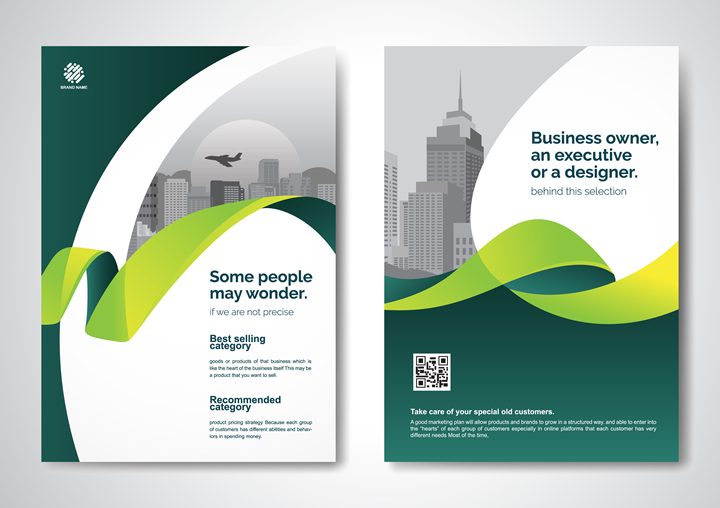
Brochures continue to be one of the most reliable marketing aids for Indian businesses—whether it’s hosting a corporate function, selling real estate, or introducing a new product range. However, despite their promise, most brochures fail due to a lack of a cohesive Brochure Design.

That’s not a design failure—it’s a strategy failure.

A well-made brochure does not only convey information—it convinces, directs, and converts. But when executed poorly, it can damage your brand more than it helps.
In this blog, we dissect 10 of the most common mistakes companies make in their marketing collateral, as well as smart ways to steer clear of them. If you’re a startup or expanding business, these tips can guarantee your next brochure makes a lasting impression.

The Must-Know Traps: 10 Common Mistakes

A brochure can either be a persuasive storyteller or an expensive piece of clutter. Here are the pitfalls you’ll want to steer clear of:

  1. Overcrowded Content
    Trying to say too much in one space is one of the most common issues. When the layout is overwhelmed with text, images, and icons, the message gets lost.
    How to avoid it: Keep the content focused and clean. Use white space effectively to help the reader navigate.
  2. Neglect of Brand Identity
    Many brochures fail to reflect the company’s branding—missing consistent colours, fonts, or tone.
    How to avoid it: Stick to brand guidelines. Visual consistency builds brand recognition and trust.
  3. Poor Information Hierarchy
    If the reader can’t identify what’s important at a glance, the layout has failed.
    How to avoid it: Use headings, bullet points, and typography to guide the eye. Hierarchy matters.
  4. Low-Quality Images
    Blurry or pixelated visuals immediately downgrade credibility.
    How to avoid it: Use high-resolution, print-optimised images. Invest in custom photography if possible.
  5. Too Many Fonts
    Using a wide variety of fonts creates confusion rather than creativity.
    How to avoid it: Limit font choices to two or three that complement your brand tone.
  6. Missing Call to Action (CTA)
    A great design without a CTA is a missed opportunity.
    How to avoid it: Make sure the next step is clear—be it visiting a site, making a call, or booking a consultation.
  7. Poor Colour Choices
    Random or clashing colours can distract the reader and dilute your message.
    How to avoid it: Align your palette with brand colours and apply colour psychology for emotional impact.
  8. Ignoring Print Specifications
    Designs that look good digitally may not print well without proper setup.
    How to avoid it: Pay attention to margins, bleed, and resolution. Work with professionals who understand both formats.
  9. No Proofreading
    Typos or errors reflect carelessness and affect credibility.
    How to avoid it: Review content multiple times and get a fresh pair of eyes to scan for mistakes.
  10. Misunderstanding the Audience
    Even a stunning visual fails if it doesn’t connect with its intended viewers.
    How to avoid it: Understand your audience—what matters to them and what motivates action.

Why Expert Help Matters

An effective brochure is more than avoiding missteps—it’s about creating an immersive brand asset that reflects quality and strategy. Here’s what a professional service brings to the table:

  • Strategic Layout: Clear flow of information that retains interest.
  • Print Expertise: Proper formatting for different materials and finishes.
  • Creative Consistency: Ensures all elements—from visuals to copy—work in harmony.

By investing in expert brochure design, you’re not just printing paper—you’re building a visual experience that can drive decisions, increase recall, and strengthen engagement.

Wrapping Up

In today’s cluttered marketing space, subpar designs go unnoticed—or worse, damage brand reputation. Avoid these common mistakes to ensure your material delivers results.

Whether you’re promoting services, launching a product, or inviting clients to a business event, a thoughtfully crafted design can make all the difference. If you want your marketing to speak volumes, don’t take chances.

Collaborate with a team that understands not just visual design, but the principles of persuasive communication. Honeycomb Creative Support excels at creating marketing pieces that are as effective as they are elegant.

Ready to create something impactful?
Discover how Honeycomb’s design expertise can help bring your brand story to life.
Visit honeycombindia.net or connect with us today.

Continue Reading

Have you ever closed a website or app because it was too confusing and clunky? Then you understand exactly why businesses need UX (User Experience) and UI (User Interface) to deliver an exceptional customer experience.

What are UX & UI? 

Before diving deep into the intricacies of working with a UI UX design agency in Bangalore, let us get a quick refresher:

  • UX (User Experience): it refers to how the user feels when interacting with a product. It can range from seamlessly smooth to borderline frustrating.
  • UI (User Interface): It is the look, feel, and layout of the product, like colours, designs, typography, placement of buttons, and more.

Both of these together ensure whether the customer sticks with the particular platform or bounces. A well-designed UI makes the user feel the experience is intuitive, while a great UX ensures that users can find what they are looking for without much friction. 

Bangalore, the Silicon Valley, witnesses the bloom of startups and tech companies daily. Where the competition is intense across all domains, and even the smallest advantage can decide the survivability of your business. Here, your product’s UX can make or break your growth trajectory.

UI UX and Digital Growth

Here’s how:

1. Conversion Rates: 

A frictionless user experience that is intuitive and easy to understand can significantly reduce the drop-off rate, which in turn leads to higher purchases, sign-ups or whatever you are prompting the customer to do.

2. Customer Retention: 

Getting new users or customers to try your app or website is hard, but getting them to come back is even harder. An initial impression that keeps the customers engaged can be a tremendous benefit in driving long-term retention.

3. Brand Credibility: 

Regardless of how good your product or service is, if the overall user experience is clunky, it in turn would translate to the perception about the product and the credibility of the brand. 

4. Development Costs:

The initial investment in UX from start to finish is necessary, as it costs less to build with customers in mind from the start rather than fixing it later when customers complain.

Why Work with a UI UX Design Agency in Bangalore 

Unlike the popular belief that developers can handle UX too, in reality, UI UX is a specialised craft that needs a lot of expertise and experience. Here’s why partnering up with UI UX design agencies in Bangalore gives you an edge:

  • In-depth Understanding of the Market: Top UI UX design agencies in Bangalore have worked with numerous clients and have a deep grasp of the user behaviour specific to Indian and global audiences. 
  • Faster Time to Market: On partnering with an experienced agency, the total number of iterations needed to get your product to market will be drastically reduced. 
  • Hub of Experts: When it comes to top UI UX design agencies in Bangalore, they bring together a team of experienced professionals who can cover every UX angle.
  • Data-centric Approach: Unlike a single UI UX developer, most agencies can rely on data-driven approaches like A/B testing and analytics to optimise the experience with each interaction.

How to Choose the Right UI UX Design Agency in Bangalore

There are a few core things to keep in mind when choosing the right UI UX design agency in Bangalore:

  • A diversified portfolio: An agency with experience in working with clients across multiple domains would have a much broader perspective.
  • Strong understanding of business goals: The top UI UX agencies not only create screens or wireframes but also design to support your business goals. 
  • Prototyping and user testing: Instead of merely relying on existing frameworks, they would help you in creating an optimised experience under the guidance of beta testers. 
  • End-to-End Production Capabilities: Your chosen agency should be able to take care of the project from scratch to finish, not just in isolated phases. 

The Best UI UX Design Agency in Bangalore 

In this era of digitalization, investing in UI/UX is a strategic investment that can provide really high long-term returns. 

So, if you are searching for a UI UX design agency in Bangalore that can turn your digital products into something more than just another product in the market, and ensure a balance between aesthetics, usability, and business impact. Then you have found your answer. 

At Honeycomb, we strive for excellence across all angles of UI UX design. Whether you’re building an app, a website, or a SaaS product, our team ensures your users have an experience they’ll want to come back to.

Want to discuss your UX needs? 

Contact Honeycomb today.

#UI/UXDesignServicesBangalore #UI/UXDesignServices  #UI/UXDesignAgencyBangalore #UI/UXDesignAgency #MobileAppDesign #Honeycomb

Continue Reading

So you’ve made a great video. It’s got solid edits, nice music, maybe even a drone shot or two. You upload it, sit back, and wait for the views to roll in.

But they don’t.

And then you’re left wondering, “What am I missing?”

Here’s the thing. You might be killing it on the creative front, but if your video SEO game is weak, even the best content can disappear into the YouTube void. Or worse—page 2 of Google. (Nobody scrolls that far. Not even your mom.)

If you’re a brand, a creator, or even a Video Production Company trying to help your clients get found, this list is for you. I’m not here to sell magic formulas, just real strategies that actually work—especially as we tumble into 2025.

Let’s get into it.

1) Don’t Ignore the Title. Seriously.

This sounds basic, but it’s where most people go wrong. Your title is your first impression. If it’s vague or too clever for its own good, people (and algorithms) will skip it.

Be clear. Be searchable. Say what the video is about, and include your main keyword naturally.
If it’s a product review, say so. If it’s a tutorial, don’t hide that fact in some poetic phrase.

Bad: “Unleashing Power in Style”
Good: “2025 Tesla Model X Review – Performance, Design & Features”

Google loves clarity. So does YouTube.

 2) Keywords Aren’t Dead. They’ve Just Evolved.

Yep, you still need to do keyword research. Use tools like TubeBuddy, VidIQ, or even just YouTube search suggestions.

What are people actually searching for? And how are they phrasing it?

You might call it “vlog editing workflow,” but they’re typing “how to edit travel vlog fast.” Meet them where they are. Use that phrasing in your title, description, and tags—but naturally. No stuffing. Don’t turn your description into a thesaurus of keywords.

If you’re offering Video Editing Services, even casually dropping what tools or tricks you’re using can help you land in the right search.

3) Thumbnails: Your 2-Second Ad Space

People judge thumbnails like they judge book covers—instantly and emotionally. You could spend hours shooting a masterpiece, but if the thumbnail looks dull or confusing? People scroll past.

Use bold fonts. Close-up faces. High contrast. Keep the composition clean.
Test two versions if you can. You’d be surprised what a simple tweak can do.

And no, don’t just take a random freeze frame from the video. We can all tell.

4) Say Your Keywords Out Loud (Yep, Literally)

This one’s sneaky.

YouTube’s auto-captions are getting smarter, and guess what? They help with ranking. So when you actually say your focus keyword or phrase in the video—like “best DSLR cameras in 2025” or “our video production company process”—YouTube picks that up.

It’s like SEO you don’t even have to write. Just speak it.

5) Descriptions Matter More Than You Think

I used to rush through this part. “Here’s the video, enjoy, don’t forget to like and subscribe!”

Now? I treat it like a mini blog post.

A solid description should:

  • Summarize what the video covers
  • Include a few natural keywords
  • Link to your website or socials
  • Maybe even tease other videos

Google scrapes this stuff. So if you’re offering video editing services, this is prime real estate to mention it. Casually, not sales-y.

6) Tags Aren’t Dead (But Don’t Obsess)

Tags are like breadcrumbs. They help YouTube understand the context of your video, especially when your channel is still growing.

Use a mix of broad and specific tags. For example:

  • “How to edit videos”
  • “Premiere Pro 2025”
  • “Video editing services India”
  • “Beginner video editing tutorial”

But don’t overdo it. YouTube’s smarter now—it doesn’t need 50 near-duplicate tags to figure out your video is about editing.

7) Playlists = SEO Power-Ups

Weirdly underrated. Playlists don’t just organize your content; they actually rank in search too.

Create playlists around themes or problems your audience is searching for.

Like:

  • “How to Start a YouTube Channel in 2025”
  • “Video Editing Tips for Small Business Owners”
  • “Behind the Scenes: Our Video Production Company Workflow”

And yes, include your own videos multiple times across playlists. Totally allowed.

8) Watch Time & Engagement = Secret Ranking Sauce

YouTube wants people to stay on the platform. The longer they watch your video (and others after it), the better you’ll rank.

So, how do you boost watch time?

  • Hook them in the first 10 seconds. Seriously.
  • Cut the fluff.
  • Add movement—transitions, zooms, B-roll.
  • Use pattern interruptions (a change in music, a joke, a shift in energy)

The pros—yeah, like your local video production company—know how to pace and cut content for retention. But even DIY creators can learn this.

9) End Screens & Cards: Nudge the Binge

Once someone’s watched your video, give them somewhere to go.

Use cards to link to related videos mid-way.

Use end screens to keep them on your channel.

Don’t just drop them off a cliff with “that’s it, bye.” Keep the journey going. More watch time = more love from the algorithm. It’s like feeding a monster.

10) Embed, Share, Repeat

After you upload, don’t ghost your own video.

Embed it in blog posts. Share it in newsletters. Post clips on LinkedIn, Instagram, wherever your audience hangs out.

Every extra viewer—even if they don’t come from YouTube search—sends a signal. It’s like telling the algorithm, “Hey, this thing is worth watching.”

I once embedded a random tutorial video in a blog post that started ranking on Google months later. The video blew up. Total surprise. But that’s how it works sometimes. 

And yeah, sometimes it’s just slow.

You can do everything “right” and still get crickets for a while. That’s normal. SEO is weird like that.

But when it starts working, it really works. Your views compound. Your older videos start pulling weight. Your brand—or your video production company—starts looking like a legit authority.

And suddenly, that one tutorial you almost didn’t post? It’s your top lead magnet.

Wild.

So if you’ve been feeling stuck or invisible on YouTube or Google, don’t panic. Just go down this list, tweak what you can, and keep publishing.

No magic. No growth hacks.

Just real strategies that actually move the needle.

Kinda like everything else in life.

Continue Reading

If you walk into a co-working space in Bangalore, chances are you’ll spot a couple of EdTech founders huddled over a pitch deck, a UX flow, or maybe debating the shade of blue on their new app logo. It’s not surprising. Bangalore is bursting at the seams with EdTech startups, and honestly? It’s thrilling. But also a little chaotic.

EdTech is fast. Competitive. And everyone’s trying to do something different while racing against timelines, investors, and the next big update.

In the middle of all this? Graphic design.

You might not immediately think of design when you think of education tech. Maybe the first words that come to mind are “learning outcomes” or “content delivery” or “gamification” — all the techie, strategy-heavy stuff. But here’s the thing: good design is what holds it all together.

Let’s talk about what that actually looks like.

 Why EdTech Needs a Graphic Design Company Early On

Say you’re building an app to teach coding to kids. You’ve got the curriculum sorted. The backend is running smooth. But your interface? It looks like a spreadsheet had a meltdown.

That’s where a Graphic Design Company steps in.

Because you can’t just throw content at people anymore. Not when attention spans are thinner than a dosa. The way your app looks, how your dashboard feels, the icons you use, the way the loading screen animates – it all speaks. It either keeps someone engaged or nudges them away.

A strong visual identity doesn’t just look good. It builds trust.

And in EdTech? Trust is everything. Parents are trusting you with their kids’ learning. Students are trusting you with their time. Teachers are trusting that your product won’t make them pull their hair out.

So, when a startup partners with a graphic design company that gets this, you start seeing the difference. The branding feels more intentional. The social media doesn’t look like it was made in WordArt. The videos actually make you want to watch till the end.

That’s what design does. It translates your big idea into something people can actually connect with.

Graphic Design Services vs. Piecemeal Solutions

Here’s the catch though.

Most EdTech startups don’t have an in-house design team in their early stages. And hiring freelancers for every single project? Tiring. Inconsistent. Sometimes, downright risky.

This is where proper Graphic Design Services can be a game-changer.

I’m talking about a team that’s been around the block. One that doesn’t just push pixels around, but actually listens. Understands what the startup is trying to do. Asks questions like, “Who’s your learner?” or “Where does your content live most – app, web, print?”

Because the right design doesn’t just land up magically. It’s built. Layer by layer.

 How Graphic Design Shapes Brand Identity in EdTech

Take logos, for instance.

Yeah, it’s just a little symbol. But it sits everywhere – on your app, your YouTube intros, your certificates. It has to feel like you. Not just another round icon with a graduation cap.

Or think about pitch decks. Every EdTech founder has at least three versions on their desktop. A good design partner helps make those slides feel sharp. Cohesive. Not something stitched together five minutes before the call with investors.

And then there’s marketing.

Social media. Landing pages. Emailers. Banners for events. Google ads. It’s an endless loop. And everything needs to look aligned. On-brand. Clean. Scroll-stopping, if possible.

You see how Graphic design services become less of a luxury and more of a necessity.

 Design Alone Won’t Fix a Broken Product – But It Can Elevate a Great One

Design doesn’t solve everything. Let’s be honest. If your pedagogy is weak, or your tech keeps crashing, no amount of gradients and rounded fonts can save you.

But when everything else is in place, design is what makes people stay.

It’s what makes a student click one more lesson. A parent to trust your flyer. A teacher to recommend your platform. An investor say, “Looks sharp. Let’s talk.”

Especially in Bangalore’s hyper-saturated EdTech space, where 10 new startups are born every week, and maybe only 2 survive the year.

Having a strong design backbone can tip the scales.

 Finding the Right Graphic Design Company in Bangalore

So if you’re an EdTech startup founder sitting in Koramangala or HSR Layout or Whitefield, juggling a million things, maybe it’s time.

Find a graphic design agency that gets your journey. Like Honeycomb Creative Support,  who has been in the game for 17+ years and has been a tried, tested and trusted partner for corporates with a vision to make an impact in the society.

Not just the fonts and colors – but your mission. Your learners. Your hustle.

Because at the end of the day, design isn’t fluff. It’s not decoration. It’s how you show up in the world.

And in the education space, where the stakes are this high?

Showing up well might just make all the difference.


Continue Reading

If you’re searching for web design companies in Bangalore, you likely want a website that’s not merely good-looking. You need a website that doesn’t just get random visitors; it converts them into leads, customers, or more—in other words, a website that works for your business.

But what exactly transforms a website into a high-converting one? What separates the top web design companies in Bangalore from the rest in helping their clients succeed online? And let’s dissect the big best practices they follow without all that technical jargon to stump you.

1. Mobile-First Responsive Design 

No surprises here, when mobile phone usage is reaching an all-time high. It is no wonder that more than half of all web traffic now happens on mobile devices. So the best web design companies in Bangalore no longer just make websites look decent on phones; they design for mobile first. The site is sharp, fast, and responsive at any size, from tiny phones to big desktop monitors.

If your site isn’t responsive and mobile-first, you’re essentially passing visitors off to your competition.

2. User-Friendly & Intuitive Navigation

Your site must be easy to navigate. Top web design companies in Bangalore focus on creating clean and intuitive page flows. Thereby reducing the number of clicks it takes for a customer to find what they need, be it a product, service info, or contact details.

3. Faster Loading Times 

Speed is king. Even one second’s delay could shoot up the bounce rates. That is the reason why the majority of leading web design companies in Bangalore clean up the backend and select rock-solid hosting to guarantee pages load before you can even blink.

Quicker websites not only please users—they are also a way to raise search rankings.

4. SEO Optimisation 

It doesn’t matter how beautiful or how fast your site is if nobody can find it. Web design companies in Bangalore weave SEO into the fabric of the website—clean URLs, meta tags, schema markup, and keyword-rich content are all included.

5. Unique Design and Branding 

Your website serves as your digital store. Top Bangalore web design companies create visual images of your brand to differentiate you and make your product more memorable. 

Remember: generic templates won’t cut it. Visitors need authentic designs that feel like you.

6. Clear Calls-to-Action (CTAs)

A website with no clear CTAs is akin to a shop without a checkout counter. Be it “Get a Quote,” “Book a Demo,” or “Buy Now,” CTAs should be placed in persuasive and strategic places.

Great designers balance contrasting colours with compelling copy to make CTAs impossible to miss, turning browsers into buyers.

7. Conversion-Focused Content 

Content still rules the marketing industry. Even with the most optimised and uniquely designed site, it would be all worthless without apt content to support it. Top web design companies in Bangalore know it and showcase unique selling points of the product or the service by leveraging content that sells. 

A clear, compelling copy integrated with testimonials can exponentially increase conversion. 

8. Frequent Updates & Maintenance

Websites aren’t a one-and-done deal. Top-rated web design companies in Bangalore and others around the world all offer continuous maintenance, tackling bugs, content updates, and ensuring security. 

Absence of a well-maintained website can be detrimental to your credibility in the eyes of consumers. 

9. Social Proof and Security 

The best web design companies in Bangalore understand that trust plays a pivotal role in conversions. That’s why they prominently feature client logos, customer testimonials, certifications, and secure payment badges on the site.

Visitors feel safer when they are assured of your trust and see that other people are trusting you. Thereby helping them take the first step towards doing business with you.

10. Personalised User Experience

The top websites don’t give everyone the same experience. Bangalore web designing companies are increasingly opting for personalised content, smart recommendations, or dynamic sections based on user behaviour.

This has the effect of making the experience personalised, increasing engagement, and leading visitors down the conversion funnel.

Ready to Build a Website That Actually Converts?

Ultimately, the top web design companies in Bangalore aren’t just website designers—they are business asset builders who guarantee to draw and convert visitors into customers.

From your mobile-first design and intuitive navigational structure to your SEO-optimised pages, ultra-fast speeds, and persuasive CTAs, it’s about building a website that works, not one that simply is.

If that’s the kind of site you’re going for, then Honeycomb can help. We marry creativity, strategy, and technical know-how to develop websites that aren’t only beautiful but also meet your business goals!

Let’s build your high-converting website together.

Contact Honeycomb today, and let’s get started.

Continue Reading

Let’s be honest. Most people looking for web design services in Bangalore don’t really care about industry jargon. They care about one thing: does it work?

And by “work,” I don’t mean just looking pretty. I mean websites that load fast, say the right things, are easy to manage, and don’t make your head spin every time you want to update a banner. You probably know what I mean.

I’ve spoken to a bunch of folks who’ve hired agencies before. Some had a good time, others… not so much. The ones who had it rough? They just wanted their website to do the thing – show up right, represent their brand well, and not break after a few weeks.

So, what do clients want from web design services in Bangalore? I made a list. Not perfect. But real.

1. A Website That Loads Fast

It’s 2025. People bounce if it takes longer than three seconds to load. Sometimes even two. We’re all impatient now. If your homepage spins like a broken CD (remember those?), it doesn’t matter how great your content is.

Clients want speed. No drama.

2. Something They Can Update Themselves

Look, not everyone knows how to code. Or wants to.

Clients want to change banners, update blogs, maybe fix a typo in the About page, without calling the agency for every small thing. If your CMS feels like you need a diploma to operate, it’s a no.

WordPress, Webflow, whatever. Just make it manageable.

3. Mobile-First, Not Mobile-After

Still shocking how many websites don’t look great on phones. And that’s where most of the traffic is coming from now.

When someone says they’re looking for web design services in Bangalore, they assume mobile-responsiveness is included. It should be. It has to be.

4. Clean, Clear Navigation

No one wants a website that feels like a maze.

Clients want users to land on their site and get it in the first few seconds. Where to click. What to read. Where to go next? That should be obvious without thinking too much.

5. Real Design – Not Just Templates

Templates are fine for some things. But businesses want their website to feel like them, not like a thousand others.

A cookie-cutter site makes it look like you didn’t try. And people can tell. The best web design services in Bangalore get this – they blend custom design with smart structure so it works both ways: unique and usable.

6. SEO Basics Built-In

No one wants to hear about SEO after the site is done.

Clients expect the fundamentals to be there: title tags, alt text, keyword-friendly URLs, decent site speed, and mobile optimization (again). They might not say it upfront, but they notice when it’s missing.

It’s like expecting a car to come with seatbelts. Don’t make it an extra.

7. Local Support That Responds

This one’s big.

Outsourcing to another country or waiting two days for a reply just doesn’t cut it anymore. When people search for web design services in Bangalore, they’re hoping to find someone who’ll pick up the phone or drop by for a quick meeting if things go sideways.

Because sometimes, you just want to talk to a real human.

8. Content Help (Because Writing Is Hard)

Everyone says, “We’ll provide the content.”

Then the project gets stuck for three weeks because no one has the time to write anything.

More clients now want agencies that can also help with writing. Not the boring corporate stuff. Real copy that sounds like them. That sounds human.

Because most of us stare at a blank Google Docs and panic.

9. Flexibility with Scope (Not a “That’s Extra” Agency)

Things change. It happens.

Clients don’t want to be nickel-and-dimed every time they ask for one more banner or an extra landing page. Within reason, of course.

They appreciate agencies that are a little flexible. That feels more like partners than vendors. You know?

10. A Site That Doesn’t Feel Old in a Year

Design trends change fast. But some basics stay the same.

Clients want a site that still feels fresh six months down the line. That means using good fonts, white space, and clarity. Not trying to cram every single thing above the fold.

Sometimes, simple wins.

 So, what does a client want from Web Design Services in Bangalore?

I think what people want from web design services in Bangalore is someone who gets it.

Someone who listens to what they’re trying to do. Who doesn’t overcomplicate things? Who stays on top of timelines, doesn’t ghost after the deposit, and cares about the outcome.

At Honeycomb, we try to be that.

We’ve been around long enough to know what clients need before they even ask. And yeah, we’ve made mistakes too – learned from them. Improved. We work with businesses who want a creative partner, not just a vendor ticking boxes.

So if you’re someone looking for web design services in Bangalore, maybe give us a shout. Or just browse around and see if we feel like the right fit.

No pressure. Just putting it out there.

localhost/honeycomb/

And that’s about it. No perfect wrap-up here. Just a list from one real human to another.

Continue Reading