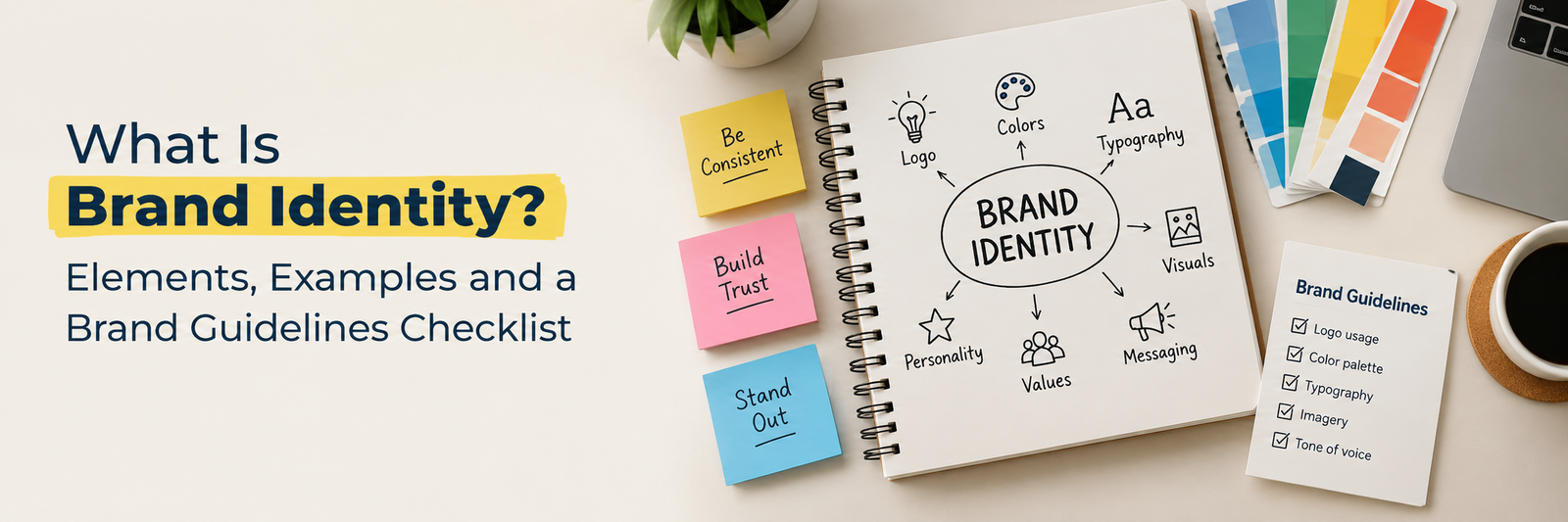
Cover your logo with your thumb. Can a stranger still tell it is you? The colour on the shelf, the tone of the caption, the feel of the brochure in their hand: that quiet recognition is brand identity at work. It decides whether customers remember you or scroll past you. At Honeycomb India, we have spent 18+ years and 50+ brand transformations learning one thing: businesses rarely lose because of effort. They lose because of inconsistency. Read on and fix that.
What Is Brand Identity?
Brand identity is the set of visual and verbal signals a business chooses to express who it is. It includes your logo, colours, typography, imagery, voice and the experiences built around them. Brand image is what people think of you. Brand identity is what you deliberately do to shape that thought. Good brand identity design turns a business name into a personality people recognise and trust.
Why Does Brand Identity Matter for Business Results?
Because recognition compounds. Every inconsistent touchpoint forces a buyer to re-evaluate you. Every consistent one adds a small deposit of trust. Over time, that trust shortens sales cycles, improves lead quality and lets you compete on value instead of price. A clear identity also makes every rupee of marketing work harder, since your ads, website and sales decks reinforce one idea instead of five.
What Are the Core Elements of Brand Identity?
Think of these seven elements as a system, not a menu.
- Brand strategy: Purpose, positioning, audience and values. Everything else stands on this.
- Logo system: Primary mark, secondary versions, icon and clear space rules.
- Colour palette: A deliberate set with defined roles, not a pile of favourites.
- Typography: Typefaces and a hierarchy for headlines, body text and captions.
- Imagery and iconography: The photography, illustration and icon style that signals your world.
- Voice and messaging: How you sound, including words you use and words you avoid.
- Brand applications: Packaging, website, social media, decks and print.
Strong graphic design branding ties these together so they feel like one voice.
Which Brand Identity Examples Show It Working?
Amul has spoken in the same witty, topical voice for decades, and Indians recognise its hoardings in a second. Nike’s swoosh needs no name beside it. Apple’s restraint is itself the message. Different industries, same principle: one idea, repeated with discipline.
Now a story from our own studio. Anamala Homestays in Thiruvilwamala, Kerala, carries a 70-year hospitality legacy, yet its visuals were purely functional. We began with brand strategy and landed on the positioning “Live a little more Kerala.” The logo mark merged a Nalukettu courtyard form, an Athangudi-inspired motif and a circle of harmony. The palette came from the property’s own landscape: brick red, verdant green and sunlit yellow. We paired Playfair Display with the Malayalam typeface Anakha for bilingual consistency, then designed welcome letters, postcards and room cards to carry the idea through.
The result gave the Summer 2026 campaigns a strong creative foundation, which contributed to 2,036 leads and a 32% year-on-year rise in seasonal revenue, from ₹24.1 lakh to ₹31.9 lakh. Identity done properly is not decoration. It is commercial infrastructure.
What Do Most Brands Get Wrong?
They start with the logo. Our opinion, shaped by work with 200+ clients: a logo is a signature, not a strategy. We are an insight-led agency that diagnoses first, uncovering the real business challenge before a single sketch begins. Aques Technology Solutions came to us without a cohesive identity or clear visual direction, and the brand identity we built gave their marketing a much stronger foundation. Because strategy, design, copywriting and video sit under one roof at Honeycomb, the identity never gets diluted between vendors.
What Should a Brand Guidelines Checklist Include?
Brand guidelines are the rulebook that protects your identity as more people start using it. Use this checklist:
- Brand story, mission, vision and values
- Positioning statement and target audience
- Logo versions, clear space, minimum sizes and misuse examples
- Colour palette with HEX, RGB and CMYK values
- Typography hierarchy with fallback fonts
- Imagery, photography and icon style
- Voice, tone and a words-to-use list
- Layout grids for print and digital
- Social media and website usage rules
- Packaging, stationery and presentation templates
- An approval process and a named brand owner
How Do You Build a Brand Identity Step by Step?
Follow five moves: diagnose your market and audience, define your positioning, design the visual and verbal system, document it in guidelines, then deploy it across every touchpoint. Skip a step and the identity wobbles.
Conclusion: Your Brand Is Already Talking. Is It Saying the Same Thing Everywhere?
Every business has an identity, whether designed or accidental. The accidental kind sends mixed signals: one colour on the website, another on the brochure, a different tone on LinkedIn. The designed kind compounds trust, sharpens positioning and makes marketing spend go further. The case is simple. Customers buy what they recognise and trust, and recognition is built by consistency.
At Honeycomb India, we combine brand strategy, brand identity design and brand guidelines with web, digital and print, so your brand speaks with one confident voice everywhere. Ready to be unmistakable? Visit Honeycomb India to explore our branding services and case studies, or call +91 90352 90915 to start your brand transformation today.
Frequently Asked Questions
What is the difference between brand identity and branding?
Brand identity is the tangible set of assets and rules, such as logo, colours and voice. Branding is the ongoing process of building perception using those assets.
How long does brand identity design take?
It usually takes several weeks, depending on research depth, the number of applications and how quickly approvals come in.
What is the difference between brand guidelines and a brand strategy?
Brand strategy defines who you are and why you matter. Brand guidelines document how that strategy looks and sounds in practice.
When should a business update its brand guidelines?
Update them when you rebrand, enter new markets, launch new channels or notice inconsistent output across teams and vendors.
Can a small business invest in brand identity design?
Yes. Start with strategy, a logo system, palette, typography and lean guidelines, then expand as the business grows.
Does brand identity affect SEO and website performance?
Indirectly, yes. A consistent identity builds trust and recall, which supports branded searches, click-through rates and conversions.