Online video is undoubtedly changing the way audiences engage with content, ads, and brands, and small businesses and enterprises alike are starting to take advantage. As more and more platforms are allowing for video, and more devices are putting cameras in the hands of consumers, videos are becoming a new way for people to communicate, and a way for small businesses and brands to communicate online and on mobile. Here are why and how you can use video to better tell your brand story.
 
promotional video company


People Love Online Video

 
In 2014, audiences engaged with video at a 43% growth rate, and 3/5 of their viewing was on a mobile device. Youtube attracted the most unique visits per month (800 million), making it the #1 video site, however, Netflix is the site where viewers spend most of their time. When you watch a YouTube video, you may see a pre-roll or mid-roll ad run by Google’s own ad platform. More small businesses are interested in the unique targeting capabilities that Google affords.
 
Not only do people love online video, but millennials are now accord cutters choosing to end their relationship with traditional cable companies and migrating to Netflix and Hulu. Traditional TV viewing is down by 17% by teens and millennials, as they are opting to use digital sources rather than cable.                                       
 
Video Engages Audiences
 
According to a 2013 UK study, online video is far more engaging than a text article, with adults reporting adults are more likely to share (39%), comment (36%) and like (56%) online video over a basic text blog. I recently spoke to an agency head in LA who informed me that brands are willing to pay between $15,0000 to $1 million for a 15 second SnapChat commercials due to the value of the audience and the novelty of the engagement.
What makes a video engaging? In my experience, you have 10 seconds to engage your audience before you lose them, so those first few seconds are incredibly precious, and you must have a solid hook. Never have a video longer than 2 minutes if you’re on desktop, and with mobile you’ve got an extra 30 seconds. Videos that are 15 seconds are more likely to get shared, so the shorter, the more viral.
 
Corporate video Production services
Video Production Company
 
Courtesy: Forbes
 
Author: John Rampt
 
Honeycomb Creative Support is a communication design agency based in Bangalore. We help companies for making their marketing communication materials like, Web-design & Development, Digital Marketing, Product & Corporate Video, Print collaterals, News Paper Proofing, Fine-art (Giclee) printing for photo/painting exhibitions. It also provide gallery space to showcase Artist’s works at Honeycomb Art Gallery. 
For requirements contact: 9845128760 or you can visit our website for more information.

 

Continue Reading

Creativity works in mysterious and often paradoxical ways. Creative thinking is a stable, defining characteristic in some personalities, but it may also change based on situation and context. Inspiration and ideas often arise seemingly out of nowhere and then fail to show up when we most need them, and creative thinking requires complex cognition yet is completely distinct from the thinking process. 
 
“It’s actually hard for creative people to know themselves because the creative self is more complex than the non-creative self,” Scott Barry Kaufman, a psychologist at New York University who has spent years researching creativity, told The Huffington Post. “The things that stand out the most are the paradoxes of the creative self … Imaginative people have messier minds.
1.      They daydream.
Creative types know, despite what their third-grade teachers may have said, that daydreaming is anything but a waste of time.
According to Kaufman and psychologist Rebecca L. McMillan, who co-authored a paper titled “Ode To Positive Constructive Daydreaming,” mind-wandering can aid in the process of seemingly out of the blue when our minds are elsewhere.
2. They observe everything.
The world is a creative person’s oyster — they see possibilities everywhere and are constantly taking in information that becomes fodder for creative expression. As Henry James is widely quoted, a writer is someone on whom “nothing is lost.”
3.They work the hours that work for them.
Many great artists have said that they do their best work either very early in the morning or late at night. Vladimir Nabokov started writing immediately after he woke up at 6 or 7 a.m., and Frank Lloyd Wright made a practice of waking up at 3 or 4 a.m. and working for several hours before heading back to bed. No matter when it is, individuals with high creative output will often figure out what time it is that their minds start firing up, and structure their days accordingly.
 
5.They take time for solitude.
 
In order to be open to creativity, one must have the capacity for constructive use of solitude. One must overcome the fear of being alone,” wrote the American existential psychologist Rollo May.
“You need to get in touch with that inner monologue to be able to express it,” he says. “It’s hard to find that inner creative voice if you’re … not getting in touch with yourself and reflecting on yourself.
 
6.They turn life’s obstacles around.
 
A lot of people are able to use that as the fuel they need to come up with a different perspective on reality,” says Kaufman. “What’s happened is that their view of the world as a safe place, or as a certain type of place, has been shattered at some point in their life, causing them to go on the periphery and see things in a new, fresh light, and that’s very conducive to creativity.
 
7.They seek out new experiences.
 
Creative people love to expose themselves to new experiences, sensations and states of mind — and this openness is a significant predictor of creative output.
 
“Openness to experience is consistently the strongest predictor of creative achievement,” says Kaufman. “This consists of lots of different facets, but they’re all related to each other: Intellectual curiosity, thrill seeking, openness to your emotions, openness to fantasy. The thing that brings them all together is a drive for cognitive and behavioral exploration of the world, your inner world and your outer world.”
 
8 .They “fail up.”
 
Resilience is practically a prerequisite for creative success, says Kaufman. Doing creative work is often described as a process of failing repeatedly until you find something that sticks, and creatives — at least the successful ones — learn not to take failure so personally.
“Creatives fail and the really good ones fail often,” Forbes contributor Steven Kotler wrote in a piece on Einstein’s creative genius.
 
9.They take risks.
 
Part of doing creative work is taking risks, and many creative types thrive off of taking risks in various aspects of their lives.
 
“There is a deep and meaningful connection between risk taking and creativity and it’s one that’s often overlooked,” contributor Steven Kotler wrote in Forbes. “Creativity is the act of making something from nothing. It requires making public those bets first placed by imagination. This is not a job for the timid. Time wasted, reputation tarnished, money not well spent — these are all by-products of creativity gone awry.”
 
10.They view all of life as an opportunity for self-expression.
 
Creative expression is self-expression,” says Kaufman. “Creativity is nothing more than an individual expression of your needs, desires and uniqueness.
 
11.They follow their true passions.
 
Creative people tend to be intrinsically motivated — meaning that they’re motivated to act from some internal desire, rather than a desire for external reward or recognition. Psychologists have shown that creative people are energized by challenging activities, a sign of intrinsic motivation, and the research suggests that simply thinking of intrinsic reasons to perform an activity may be enough to boost creativity.
12.They surround themselves with beauty.
 
Creatives tend to have excellent taste, and as a result, they enjoy being surrounded by beauty.
A study recently published in the journal Psychology of Aesthetics, Creativity, and the Arts showed that musicians — including orchestra musicians, music teachers, and soloists — exhibit a high sensitivity and responsiveness to artistic beauty.
 
In the words of Steve Jobs:
“Creativity is just connecting things. When you ask creative people how they did something, they feel a little guilty because they didn’t really do it, they just saw something. It seemed obvious to them after a while. That’s because they were able to connect experiences they’ve had and synthesize new things.”
Author:Carolyn Gregoire
Honeycomb Creative Support is a communication design agency based in Bangalore. We help companies for making their marketing communication materials like, Web-design & Development,  Digital Marketing, Product & Corporate Video, Print collaterals, News Paper Proofing, Fine-art (Giclee) printing for photo/painting exhibitions. It also provide gallery space to showcase Artist’s works at Honeycomb Art Gallery. 
For requirements contact: 9845128760 or you can visit our website for more information.

Continue Reading

Video is taking content marketing by storm, but you’ll have to do more than just make one to realise its full potential If it were five years in the future, would you be reading this article or would you be watching it? As online video continues its inimitable rise, it’s an interesting question to ponder.
By 2017, video will account for 69% of all consumer internet traffic, according to Cisco. Video-on-demand traffic alone will have almost trebled. Leafing through a swathe of statistics on the subject, I’m hard pressed to find any indicator that doesn’t suggest rapid growth.With online video quickly becoming a key means for people to satisfy their information and entertainment needs, small businesses that fail to include it in their internet marketing strategies will do so at their peril.
Video Production Company in Bangalore
Video is the future of content marketing. That is, if it’s not the here and now. Various studies show more than half of companies are already making use of the medium is a figure that’s predicted to rise as more and more realise the possibilities. Nielsen claims 64% of marketers expect video to dominate their strategies in the near future. It’s not difficult to see why.
When it comes to potential reach, video is peerless. YouTube receives more than one billion unique visitors every month is that’s more than any other channel, apart from Facebook. One in three Britons view at least one online video a week is that’s a weekly audience of more than 20 million people in the UK alone. Video can give you access to all this. Video done well can give you a slice of it. What other form of content can do the same?
corporate video production company in bangalore
The success stories of videos that have gone viral are legend. A recent campaign from Volkswagen, for example, saw a trio of its videos viewed a combined 155 million times. If such numbers seem out of reach for companies without 12-figure revenue streams, they at least demonstrate video’s inherent shareability. Engage viewers and they will share the video with others. They will spend longer on your website and more time interacting with your brand. For any social media campaign, any SEO exercise, video is without doubt one of the best tools in the kit.
It is naturally engaging and, in an age of information overload, it’s vital for small businesses to offer content that is easy to digest; if not, consumers will simply move on. Video does this very well. If a picture paints 1,000 words then one minute of video is worth 1.8 million, so say Forrester’s researchers. Little wonder then that Axonn Research found seven in 10 people view brands in a more positive light after watching interesting video content from them.
But is video really possible for small businesses? Absolutely. Production costs have fallen significantly in recent years and you no longer need to be a technical whiz to work out how to use it. Apps such as Twitter’s Vine, with its six-second maximum clip length, have dramatically increased the opportunity for businesses on a limited budget to get stuck in. Nevertheless, if you’re to realise a decent return on your investment, you will need to bear the following in mind.
corporate video production bangalore
Always consider the audience you are trying to reach and ensure the video is relevant to them. If it’s not the most appropriate means of getting your message across, you are probably wasting your time.
Do not neglect social media and be sure to promote across multiple channels. If you want to fully realise video’s potential, you must make it easy for users to find and share it. Don’t neglect mobile either. Ooyala has claimed a tenth of all video plays happen on mobiles and tablets, and it’s an increasingly important segment, with mobile phones holding 41% more share of video consumption at the end of June 2013 than at the start of that year.
 
Finally, be creative, not only with the videos themselves but in the campaign strategy you build around them. As my head of marketing likes to say, creativity wins over the cost of production every time. Get that bit right and video won’t just be the future of content marketing, it’ll be the future of content marketing for you.
Courtesy: www.theguardian.com
Honeycomb Creative Support is a communication design agency based in Bangalore. We help companies for making their marketing communication materials like, Web-design & Development,  Digital Marketing, Product & Corporate Video, Print collaterals, News Paper Proofing, Fine-art (Giclee) printing for photo/painting exhibitions. It also provide gallery space to showcase Artist’s works at Honeycomb Art Gallery. 
For requirements contact: 9845128760 or you can visit our website for more information.

Continue Reading

Video should be used on your landing pages whenever possible. It provides a passive engagement medium where visitors can experience your message with very little effort. A study by eyeviewdigital.com shows that using video on landing pages can increase conversion by 80%.
 
 
People have been glued to TV screens since the middle of the 20th century. Video on the web has had a similarly dramatic impact on the way content is consumed, resulting in YouTube becoming the web’s second search engines.
 
Some reasons why video can lift your landing page conversion rates
 
  • Videos increase the length of time people stay on your page, giving your brand message longer to sink in.
  • If you feature yourself or company employees in the video, the trust factor is raised significantly.
  • People are lazy and prefer to watch vs. read.
 
Courtesy : www.unbounce.com

Honeycomb Creative Support is a communication design agency based in Bangalore. We help companies for making their marketing communication materials like, Web-design & Development, Digital Marketing, Product & Corporate Video, Print collaterals, News Paper Proofing, Fine-art (Giclee) printing for photo/painting exhibitions. It also provide gallery space to showcase Artist’s works at Honeycomb Art Gallery. 
For requirements contact: 9845128760 or you can visit our website for more information.

Continue Reading

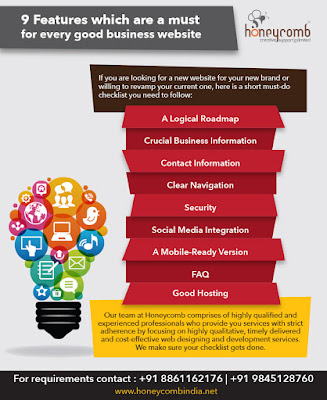
A Logical Roadmap
A website should be aesthetically pleasing, but it’s more important for it to be useful. Before you even pick a server or type an HTML tag, you should map out how you’d like the website to work. This is important both for user experience and for SEO, since Google considers the content and structure of a site when it ranks for search.
Crucial Business Information
“The biggest failure that people have is that they try to build the website they want, not necessarily the website they need,” says designer Josh Frankel. Take a restaurant, for example Frankel says “everyone wants music and this giant ‘about’ page,” but they neglect the basic things like the menu, contact information and directions.
Depending on your business, you should have a few things on your website that fall into the realm of “information.” We know restaurants need a menu and a list of locations (ideally with directions or a map), but every industry has its necessary items. If you’re an etailer, you need product images.
Contact Information
We can’t stress enough that most crucial business detail is contact informations which is why it has its own section. Have a number, email, address and a contact form easily accessible and visible. It makes a difference because there’s nothing more frustrating than being unable to get in touch with a needed business or service.


Clear Navigation
A map is useless without a legend and a website is useless without clear navigation. Make sure you use easy-to-understand and logical names for the various pages of your site contact, about, FAQ, etc
Pepper the site with action items to help customer easily do what you want them to do. Birchbox has done a good job of this, encouraging users to “learn more” and directing them to claim a gifted Birchbox, since it’s a popular gift item and giftees are likely to be first-time visitors.


Security

If you’re selling anything online, you need to put some effort into securing your site with an SSL certificate. The SSL will encrypt communications between you and your clients (i.e. a credit card number, Social Security number), which will allay their fears of providing such information, since there’s so much identity theft on the web. VeriSign, TrustE, Entrust and GeoTrust are good options to explore.

                       
Social Media Integration
Twitter. Facebook. Tumblr. YouTube. Pinterest. Google+. LinkedIn. Instagram. Foursquare. There are a lot of social platforms out there, and you should promote your presence on them on your website, because social media is critical part of marketing your business.Integrating these platforms into your website will help boost your SEO, improve your business’ footprint on the social web and build your following across numerous social platforms.
A Mobile-Ready Version
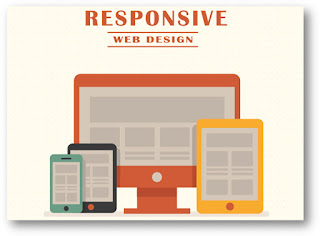
Smartphones and tablets are driving an increasing amount of web traffic, and the numbers are only going to grow as mobile devices become cheaper and more mainstream. Responsive website design enables you to use fluid widths, so that your website layout will adapt to the screen on which it’s being browsed.
 

 FAQ

People have a lot of questions. As you hear concerns from customers and receive feedback via email, gather up the most frequently asked questions into a list and offer clear, concise answers.
 
Good Hosting
Not having good hosting can cost you in many ways. A slow site is frustrating, one that fails to load is obnoxious and both could turn off customers. But beyond annoying your users and increasing your bounce rate, poor hosting can also affect your rank in search engines

Courtesy : www.mashable.com

Photo Credit: www.cartoonstock.com

Honeycomb Creative Support is a communication design agency based in Bangalore. We help companies for making their marketing communication materials like, Web-design & Development,  Digital Marketing, Product & Corporate Video, Print collaterals, News Paper Proofing, Fine-art (Giclee) printing for photo/painting exhibitions. It also provide gallery space to showcase Artist’s works at Honeycomb Art Gallery. 

For requirements contact: 9845128760 or you can visit our website for more information.

Continue Reading

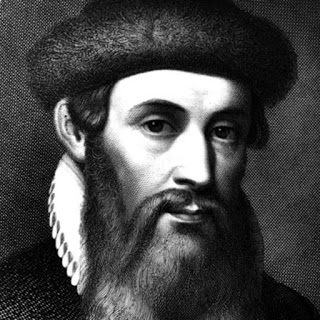
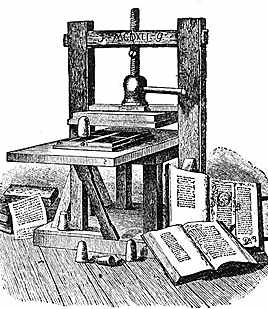
German inventor Johannes Gutenberg developed a method of printing from movable type. He printed the first book via movable type, the Forty-Two-Lines Bible.
 
Johannes Gutenberg was born 1395, in Mainz, Germany. He started experimenting with printing by 1438. He obtained backing in 1450 from the financier Johann Fust, whose impatience and other factors led to Gutenberg’s loss of his establishment to Fust in 1455. Gutenberg’s masterpiece, and the first book ever printed from movable type, is the Forty-Two-Lines Bible, completed no later than 1455.
 
Born into a modest merchant family in Mainz, Germany, in 1395, Johannes Gutenberg’s work as an inventor and printer would have a major impact on communication and learning worldwide. He was the third son of Freile zum Gensfleisch and his second wife, Else Wirick zum Gutenberg, whose maiden name Johann later adopted. There is little recorded history of this early life, but local records indicate he apprenticed as a goldsmith while living in Mainz.
 
 
When a craftsman revolt erupted in Mainz against the noble class in 1428, Johannes Gutenberg’s family was exiled and settled in Strasburg, where his experiments with printing began. Already familiar with bookmaking, Gutenberg perfected small metal type. Infinitely more practical than carving complete wood blocks for printing, each type was a single letter or character. Movable type had been used in Asia hundreds of years earlier, but Gutenberg’s innovation was developing a casting system and metal alloys which made production easier.
 
In 1448, Johannes Gutenberg moved back to Mainz and by 1450 was operating a print shop. He had borrowed 800 guilders from local financier Johan Fust to purchase specific tools and equipment needed for his unique typography method. By December, 1452, Gutenberg was heavily in debt and unable to pay Fust’s loan. A new agreement was drawn up making Fust a partner in Gutenberg’s business. By 1455, Gutenberg was still unable to pay the debt and Fust sued. Court records are sketchy, however scholars believe that while the trial was going on, Gutenberg was able to print his masterpiece, the 42-Line Bible, also called the Gutenberg Bible.
 
Fust won the suit and took over most of Johannes Gutenberg’s printing business including the production of the Bibles. Peter Schoeffer, Gutenberg’s son-in-law who had testified against him during the trial, now joined Fust as a partner in the business. In addition to the Bible, Gutenberg’s other major achievement was the Psalter (the book of Psalms) which was also given to Fust as part of the settlement. The Psalter is decorated with hundreds of 2-color initial letters and delicate scroll borders using an ingenious method based on multiple inking on a single metal block. The Psalter was the first book to display the name of its printers, Fust and Schoffer, but historians believe that neither could have developed such a sophisticated method alone and that Gutenberg must have been working for the pair in the business he once owned.
 
In 1462, Mainz was sacked by Archbishop Adolph II in a dispute over control of the city. Fusta and Gutenberg’s printing businesses were destroyed. Many of the city’s topographers fled to other parts of Germany and Europe taking their techniques and technology with them. Gutenberg remained in Mainz but once again fell into poverty. The Archbishop granted him the title of Hofmann (gentleman of the court) in 1465, which provided a salary and privileges for services rendered. Gutenberg carried on his printing activities for several more years, but little evidence exists of what he actually published because he didn’t put his name on any of his printings.
 
Records of Johannes Gutenberg’s later years are as sketchy as his early life. Still living in Mainz, it is believed that he went blind in the last months of his life. He died on February 3, 1468, and was buried in the church of the Franciscan convent in the nearby town of Eltville, Germany.
For more details visit www.photostop.in or Contact Us @ 9845128760

Continue Reading

Effective marketing collateral can mean the difference between a near-sale and a loyal customer for life. Here are 10 tips for creating market collateral or revising the content you already have so that it performs better.

Design Tip 1: Make Marketing Collateral a Main Focus of Your Marketing Strategy

The content you use for marketing collateral needs to be outlined before you begin your next big marketing campaign. It will help you focus your marketing more effectively by preventing you from losing focus on the themes and types of content you want to promote.

For example, a business focusing on printed brochures for a vacation should take note of what their selling points are. This will allow them to reiterate these points with different collateral, such as the content that they use on their website.

  Design Tip 2: Create a Style Guide
 

A style guide is another way of sorting out the various elements that make up your collateral. It allows you to outline your theme elements, which includes your logo and any key graphics, your fronts, key phrases and brand-oriented words.

It also allows you to develop a focus for your content as you create it. This lets you keep your audience in mind, which in turn allows your marketing collateral to be that much more effective with your target demographics.

Design Tip 3: Revise Your Current Materials

Regardless of what you might think, your current marketing materials have certain strong points. The simple elimination of the weak points that work to dissuade readers should be your goal, rather than revising and creating entirely new content from scratch.

Examine your current materials. Do they have a consistent theme? Do they talk to the right audience? Do they use the correct words and graphics? Would a different arrangement of the elements create a stronger dialogue with your potential customers?

Design Tip 4: Step Through the Process of How Your Materials Will be Viewed

Creating effective marketing materials requires that you understand the thought process your potential customers go through when they view your content. Things like how your content flows, what attracts a viewer’s sight and how quickly your content can be read all work towards successfully selling your goods or services to a customer.


If you want to take this one step further, then look for people whom fit within your target demographic. Conduct studies to see how your content is viewed by a real person to eliminate the guesswork.

Design Tip 5: Develop Slightly Different Variations of Your Logos

Each type of collateral has a different intended audience, which means that each type of collateral has a slightly different purpose. Your logo should stay relatively consistent across these pieces, but you should develop alternative logos that fit the best on certain pieces of collateral.

For example, you might need a rectangular logo that fits in line with on an envelope or in the header of a letter. If you have a style guide set in place, then making these alternate and more effective versions of your business logo will be easier.

Design Tip 6: Use Quality Base Materials

The type of paper you use, how quickly your website loads and even the quality of your recorded video all contribute to how well your audiences respond to your marketing collateral. You want your company to appear professional and reputable, which means that you need to have the highest quality paper and printing that is economically feasible.

If this seems too expensive to maintain in the short term, then consider saving costs by taking advantage of things like the economics of scale
by printing your materials in bulk.


Design Tip 7: Use the Right Amount of Graphics

Graphics can help dictate the flow of your content, and keep the attention of your audience on your materials. There is a certain balance of graphics that needs to be observed in order to effectively do this.

For example, the amount of graphics that a plumber or roof repair business might need differs from the amount that a technical business like IT services might need. The right amount depends on what your audience wants.

Design Tip 8: Don’t Be Afraid to Ask for Help

A professional graphic designer or the eyes of a veteran marketing firm can be helpful in determining how effective the use of graphics and overall layout of your materials are. Don’t be afraid to hire their help, as you can save money and increase your business’s profits in the short run with material that works the start.

Design Tip 9: Integrate Physical with Digital Collateral

Businesses tend to forget that it can be a good idea to blur the line between physical and digital marketing collateral. Things like web addresses and QR codes printed on physical media can help customers access your business’s digital side, which in turn gives another opportunity for them to purchase from you.
Design Tip 10: Make Sharing Easy

Referrals, social media promotion and anything else that you can think of to trick your audience into promoting your business for you will expand your marketing efforts. You’ll reach a wider audience than you did before, which translates for more opportunities to make sales.

Make it easy and rewarding for your target demographics to share your marketing collateral with other people.

Honeycomb Creative Support
 is
a communication design agency based in Bangalore. We help companies for making their marketing communication materials like, Web-design & Development, Digital Marketing, Product & Corporate Video, Print collaterals, News Paper Proofing, Fine-art (Giclee) printing for photo/painting exhibitions. It also provide gallery space to showcase Artist’s works at Honeycomb Art Gallery. 
For requirements contact: 9845128760 or you can visit our website for more information.

Continue Reading

Printing has become an important part of our daily lives, from printing our precious photos to printing our important documents.

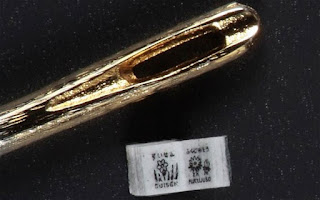
  1. World’s Smallest Printed Book: A 22 page Japanese book containing pictures of the flowers of the four seasons holds a Guinness World Book of Records entry. It may be a fast read, but we don’t advise you doing so without a magnifying glass unless you want to strain your eyes because this is no ordinary book; it’s the world’s smallest printed book, 0.74 x 0.75 mm (0.0291 x 0.0295 in).
  1. Fastest Printed Postage Stamp: It took less than one hour to print a postage stamp in Schaan, Liechtenstein, and that included the time it took to vote on the stamp’s design. The stamp was printed as part of a commemorative event of the 100th anniversary of the country’s first ever stamp.

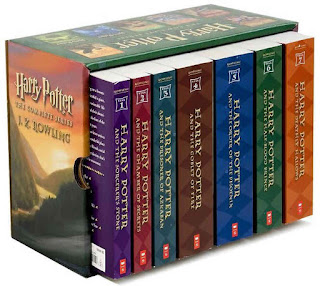
  1. Highest Initial Print Run For a Fiction Book: When J.K. Rowling’s Harry Potter books were published, they became more than just fiction’s the franchise’s influence stretched beyond the literary realm and quickly became a pop-culture phenomenon. Its popularity is also evidenced by the number of print copies for Harry Potter and the Deathly Hallows. The book had an initial print run of 12 million copies, making it the largest initial print run ever.
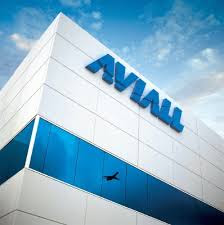
  1. Largest Printed Catalogue:  Remember when catalogues were the premier way to shop? People would spend hours pouring over the glossy pages. In 2005, Aviall Services Inc. released a behemoth that would put even the thickest catalogue to shame. They released their Aviall Product and Catalog Book’s on January 3, 2005. It has 2,656 pages, weighs 7.4 lb (3.4 kg) and is 7.1 cm (2.8 in) thick.
    
  1. Oldest Printing Publishing House: If you think most publishing houses like Random House and Penguin Group, have only been around for a couple of hundred years, think again. Cambridge University Press, the oldest printing and publishing house, has been around since 1537 it was started with the money from a royal charter granted by the infamous Henry VIII in 1534. It’s been operating non-stop since the first Press book was printed in 1584, publishing over 2,000 books and 150 journals a year across 200 countries around the globe.
             
  1. Oldest Mechanically Printed Book: The first mechanically printed book is arguably, but generally accepted to be, the Gutenberg Bible, printed in Mainz, Germany around the year 1455 by Johann Henne zum Gensfleisch zur Laden. However, some scholars debate that the Chinese beat him to the punch six or seven centuries prior.
  1. Fastest time to print 500 sheets by an office color desktop printer: If you own a printer, you know that searching for just the right one can take quite a bit of time.  However, seeing the above fact in a printer’s specs might help to speed up your decision. The Hewlett-Packard Officejet Pro X551dw Printer was pitted against five other printers in the same model class across several manufacturers, to determine which one could print 500 pages the fastest. The HP Officejet Pro X Series printed 500 color sheets in a record seven minutes and 18 seconds.


  1. Edible Sushi: Chef Homaro Cantu, of Moto in Chicago, starting printing out delightful sushi entrees using a Canon i560 inkjet printer with edible ink in 2005. The son of an engineer, some of his customers have described him as a cross between a mad scientist and gourmet chef. Regardless their opinion, they find his imagination admirable’s so much so that they’re willing to pay upwards of $240 for his experimental tasting menu.
  1. World’s most waste: Unfortunately, printers don’t just create information that helps us in our everyday lives; they create environmental waste as well. For example, did you know if the world’s discarded printer cartridges were stacked end-to-end in one year’s time, they would circle the earth over three times?.
  1. Expensive Ink: The retail cost of black printer ink is one of the most expensive liquids on the planet, far exceeding oil and even space shuttle fuel (on a per gallon basis). It costs over $2,700 per gallon!
 
Advancement in printing has started leaving its mark and this list suggests the same. Archival printing is one major advancement printing has entered into and have made realize photographers and art lovers how there work can be treasured for long through these prints. We at Photostop(www.photostop.in) help you get the best quality archival prints on various canvas and acid-free paper medias.
Courtesy : www.sepialine.com
 For requirements contact: 9845128760 or you can visit  our website for more info.

Continue Reading

No matter how big or small your Business, the marketing collateral’s impact the reach and visibility of your brand. A good brochure design is found to have a better conversion rate than the otherwise.  Here are three main reasons why you need a brochure design:
 

Folder Brochure

  ·     An Unrivalled Trustbuilder
We consumers can be a sceptical lot. When making a purchase, we want’s no, need today” trust who we are buying from. Making a purchase isn’t just something we do, it’s something we experience. An online presence undoubtedly helps to build these important relationships. But to lay the foundations for a strong rapport with your prospective buyers means embracing the power of one of the most prominent marketing tools around.
Open up a well-designed brochure, and immediately your prospect is met with clear, concise information, and consumers can quickly find the facts they want and need. This makes it easier for them to justify purchasing your product.

Brochure

           Enhanced Professionalism
     A brochure instantly adds credibility to your business, putting your brand directly in the hands of your customer. A beautifully designed brochure, used to accompany a sales pitch, handed out at your trade show stall, or left to take away from your reception can inject an incredible amount of interest in your company. To be able to physically hand over a brochure when face to face with a potential client is an invaluable early method of communication in the sales cycle. Plus, the company now benefits from a professional, organised image, and portrays you as a business ready for a sales conversation. 

Folder Brochure

 ·   Allows for Targeted Marketing
Targeted advertising works. Ensure you don’t waste your advertising cash broadcasting your messages to the wrong people. With a little research on your ideal demographic, plus the right design tailored to suit, a targeted brochure’s rewards are potentially huge.Consumers love being told a story, and the layout of a beautifully designed brochure allows you to do just that.And if it contains targeted, relevant content that speaks to your demographic in a way they can identify with, the sheer potency of the humble brochure can truly be realised.
Honeycomb Creative Support is a communication design agency based in Bangalore. We help companies for making their marketing communication materials like, Web-design & Development, Digital Marketing, Product & Corporate Video, Print collaterals, News Paper Proofing, Fine-art (Giclee) printing for photo/painting exhibitions. It also provide gallery space to showcase Artist’s works at Honeycomb Art Gallery. 
For requirements contact: 9845128760 or you can visit our website for more information.

Continue Reading

                                   
The history of printing goes back to the duplication of images by means of stamps in very early times. The use of round seals for rolling an impression into clay tablets goes back to early Mesopotamian civilization before 3000 BCE, where they are the most common works of art to survive, and feature complex and beautiful images. In both China and Egypt, the use of small stamps for seals preceded the use of larger blocks.
In China, India and Europe, the printing of cloth certainly preceded the printing of paper or papyrus. The process is essentially the same – in Europe special presentation impressions of prints were often printed on silk until the seventeenth century.
The earliest documented evidence of printing dates back to the 2nd century when the ancient Chinese started using wooden blocks to transfer images of flowers on silk. Around the 4th century, woodblock printing on cloth was practiced in Roman Egypt. The Chinese began printing on paper in the 7th century, and they created the Diamond Sutra, the first complete printed book, in 868. The first movable type printing system was invented by Pi Sheng in China around 1040. This printing device used movable metal type pieces to produce prints, and it made the process of printing more efficient and flexible. Nonetheless, since it was made of clay, it broke easily. In the 13thcentury, the Koreans created a metal type movable printing device, which applied the typecasting method that was used in coin casting.
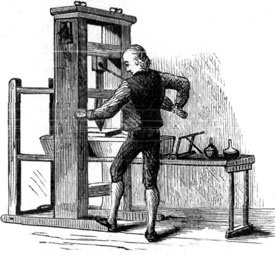
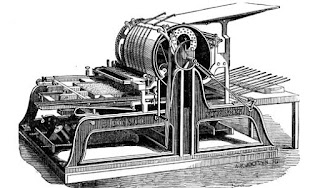
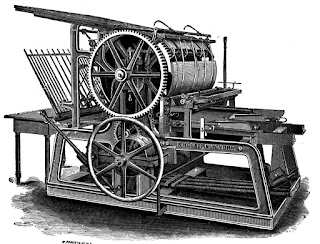
The key figure in the history of printing is Johann Gutenberg (1400 – 1468) of Mainz, Germany. He was a silversmith by profession. Around 1430-40 he invented movable, interchangeable, re-usable type, for printing on wooden press (adopted from wine or cheese using a printing ink of a composition invented by him. It was an oily, varnish-like ink made of soot, turpentine, and walnut oil.
His business was backed by a man called Fust (or Faust) and he had an assistant Peter Scha – the print shop probably had around 25 staff and aimed to print around six pages of a book per day. His masterpiece is the Bible printed in 1453-4 , 180 copies were made, each of 1282 pages with 42 lines in two columns. They were designed to be completed by colouring main capitals etc by hand. 48 copies are known to exist now ( a very fine copy is held in the John Rylands Library in Manchester).
Gutenberg’s actual technique of making movable type remains unclear; he was familiar with the craft of casting metal from a reverse impression. He may have made castings from sand or plaster, but we probably shall never know for certain. However we know that a few years after his death the process used involved the production of a metal punch, the end of which would have been cut to produce a reverse impression of the type.
His invention of the printing press is widely thought of as the origin of mass communication– it marked Western culture’s first viable method of disseminating ideas and information from a single source to a large and far-ranging audience. A closer look at the history of print, however, shows that the invention of the printing press depended on a confluence of both cultural and technological forces that had been unfolding for several centuries.

Print culture and technology also needed to go through centuries of change after Gutenberg’s time before the “massification” of audiences could fully crystallize.

Courtesy:
Photostop is into fine art printing. It is the one stop destination for the best Canvas & Fine art prints. Photostop is the preferred partner for many Professional photographers, Photography enthusiasts & even painters and artists who approach us with their finest of works and get it printed on our special media’s. The archival media’s which we use are long lasting and gives your print a life span of more than 50 years.
For more details visit www .photostop.in or Contact Us @ 9845128760

Continue Reading