Honeycomb is a Bangalore-headquartered marketing communication agency that has run SEO campaigns for clients across India, the US, UK, and Australia for over a decade through our in-house SEO practice. The recommendations below come from tools our team has actually used inside client campaigns, supplemented with research into vendor documentation and independent reviews where we haven’t run a tool ourselves – each is flagged accordingly.

Introduction

Artificial intelligence has quietly rewired almost every stage of SEO work. Keyword research that used to take an afternoon of spreadsheet-building now happens in minutes. Content briefs that once required manually reading ten competing articles can be generated, checked, and refined before your coffee gets cold. Technical audits that flagged a handful of issues now surface patterns across thousands of URLs and prioritize what to fix first.

None of that makes AI a replacement for SEO judgment. The tools in this guide are genuinely useful, but every one of them still needs a human checking search intent, verifying facts, and deciding what’s actually worth publishing. Treat AI as a force multiplier for an SEO strategy you already understand, not a shortcut around having one.

This guide evaluates 15 of the best AI SEO tools available in 2026 based on practical use cases, core features, pricing structure, ease of use, and overall value for businesses, agencies, and in-house SEO professionals.

How We Evaluated These Tools

We assessed each tool against a consistent set of criteria rather than ranking by popularity alone:

  • Ease of use – how quickly a new user can get value from the interface
  • Keyword research capabilities – depth of search volume, intent, and clustering data
  • Content optimization features – how well the tool helps content match what’s already ranking
  • Technical SEO functionality – crawling, auditing, and issue detection
  • AI writing quality – coherence, factual reliability, and how much editing output needs
  • Reporting and analytics – how easily data becomes a client-ready or stakeholder-ready report
  • Integrations – compatibility with Google Search Console, Analytics, WordPress, and CRM platforms
  • Pricing and value – what you get relative to what you pay, not just the lowest sticker price
  • Customer support – responsiveness and quality of documentation
  • Suitable user types – who each tool actually fits best

Pricing for every tool below changes frequently as vendors adjust tiers and usage limits, so treat the figures here as a general guide and confirm current pricing directly on each vendor’s site before you budget against it.

What Are AI SEO Tools?

Definition and How They Differ From Traditional SEO Software

An AI SEO tool uses machine learning or generative AI – typically large language models – to perform tasks that traditional SEO software required a human to do manually: interpreting search intent, drafting content, spotting patterns across large datasets, or summarizing a technical audit into next steps. Traditional SEO software (think early-generation rank trackers or keyword databases) mostly organizes and displays data; AI SEO tools go a step further and generate recommendations, drafts, or prioritized actions from that data.

AI has become close to essential in modern SEO because the sheer volume of content, competitors, and search variations involved in any real campaign now exceeds what a team can process manually in a reasonable timeframe – especially with search itself increasingly mediated by AI-generated answers rather than a simple list of blue links.

How AI Is Changing SEO

  • Faster keyword research – clustering thousands of keyword variations by intent in seconds rather than hours
  • Content planning – generating briefs and outlines based on what’s already ranking for a topic
  • Content optimization – scoring drafts against competitor content and suggesting semantic gaps
  • Technical SEO improvements – prioritizing crawl and indexing issues by likely impact
  • Reporting automation – pulling performance data into client-ready dashboards without manual exports
  • Competitor analysis – surfacing content gaps and keyword opportunities competitors already own

Who Should Use AI SEO Tools?

  • SEO agencies managing multiple client accounts
  • Digital marketers running integrated campaigns
  • Content creators and bloggers
  • Small businesses without a dedicated SEO hire
  • Ecommerce stores managing large product catalogs
  • Enterprise marketing teams coordinating across departments

Benefits of Using AI SEO Tools

Save time on repetitive SEO tasks. Tasks like generating meta descriptions, clustering keywords, or auditing hundreds of URLs are exactly the kind of repetitive, pattern-based work AI handles well, freeing your team for strategy and judgment calls.

Improve keyword research. AI models are better than manual review at surfacing search intent, related keyword clusters, and content gaps you might not have thought to search for directly.

Create better content. AI tools assist with outlines, on-page optimization, readability improvements, and checking that a draft covers the topic as thoroughly as top-ranking competitors.

Strengthen technical SEO. AI-assisted crawlers can flag indexing problems, broken links, and site health issues, then prioritize them by likely traffic or ranking impact instead of listing everything with equal weight.

Enhance reporting and analytics. AI simplifies pulling performance data into a narrative summary, which matters as much for internal stakeholder buy-in as it does for client reporting.

Best AI SEO Tools in 2026

1. ChatGPT

Best for SEO Research and Content Planning

ChatGPT isn’t a dedicated SEO platform, but it’s become a default first step in most SEO workflows – for brainstorming topic clusters, drafting outlines, summarizing competitor content, and explaining technical concepts to clients or junior team members.

  • Key features: Conversational research and drafting, custom GPTs for repeatable workflows, web browsing for current information, file upload and analysis
  • Advantages: Extremely flexible, fast for early-stage ideation, useful across the entire content workflow rather than one narrow task
  • Limitations: No built-in SEO data (search volume, rankings, backlinks) – it needs to be paired with a dedicated SEO tool for that; outputs need fact-checking before publishing
  • Pricing: Free tier available; paid plans unlock higher usage limits and more advanced models
  • Best suited for: Every user type, as a research and drafting companion rather than a standalone SEO suite
  • Our take: Use it to accelerate the thinking stage of SEO – outlines, angle ideas, competitor summaries – but verify every statistic and claim before it goes into published content.

2. Semrush AI Toolkit

Best for Comprehensive SEO Campaigns

Semrush has layered AI features across its existing suite rather than launching a standalone product, which means AI-assisted keyword research, content optimization, and search visibility insights sit inside the same platform you’d already use for rank tracking and site audits.

  • Key features: AI-assisted keyword research and clustering, competitor gap analysis, content optimization scoring, AI-generated search visibility insights, reporting dashboards
  • Advantages: One platform covers research, optimization, and reporting, reducing tool-switching for agencies managing full campaigns
  • Limitations: Pricing scales quickly for agencies managing multiple client accounts; the breadth of features has a learning curve
  • Pricing: Tiered monthly plans, with higher tiers required for multi-project agency use
  • Best suited for: Agencies and in-house teams running full-service SEO campaigns
  • Our take: Strong default choice if you want one platform rather than stitching together several point solutions.

3. Ahrefs

Best for Keyword Research and Backlink Analysis

Ahrefs remains one of the most trusted sources of backlink and keyword data in the industry, and its AI-assisted features (Content Gap analysis, AI writing assistance, brand monitoring) sit on top of what is still primarily a best-in-class data platform.

  • Key features: Site Explorer, backlink analysis, Content Gap analysis, AI content assistance, brand mention monitoring
  • Advantages: Exceptionally reliable backlink index, strong keyword data across multiple search engines
  • Limitations: AI writing and content features are secondary to its core data tools, not the main draw
  • Pricing: Tiered plans based on usage limits and number of projects
  • Best suited for: SEOs who prioritize data accuracy for backlink and competitive research
  • Our take: If you only need one tool for link and keyword data, this is usually it – the AI layer is a bonus, not the reason to buy it.

4. Surfer SEO

Best for Content Optimization

Surfer’s Content Editor is built specifically around the moment a writer sits down to draft or revise a page, scoring the draft in real time against what’s already ranking for the target keyword.

  • Key features: Content Editor with live scoring, NLP-based keyword and entity recommendations, internal linking suggestions, SERP analyzer
  • Advantages: Genuinely useful for writers who aren’t SEO specialists – it translates ranking-factor data into plain-language suggestions
  • Limitations: Scores can be over-optimized for if used mechanically rather than as a guide; works best combined with genuine subject-matter expertise
  • Pricing: Tiered monthly plans based on the number of content pieces and audits included
  • Best suited for: Content teams and writers who need optimization guidance without deep SEO training
  • Our take: Effective as a content quality checkpoint, but don’t let the score become the goal – search intent and originality still matter more.

5. Frase

Best for AI Content Briefs

Frase focuses on the brief-writing stage: analyzing the current SERP for a target keyword and generating an outline, along with FAQ suggestions pulled from “People Also Ask” and related searches.

  • Key features: SERP analysis, AI-generated content outlines, on-page optimization scoring, automatic FAQ generation
  • Advantages: Speeds up the brief-writing process significantly for content teams working with freelance writers
  • Limitations: Best used as a starting point – briefs still benefit from a human editor adding strategic direction
  • Pricing: Tiered plans based on number of documents and SERP analyses per month
  • Best suited for: Content teams and agencies that outsource writing and need consistent, data-backed briefs
  • Our take: A practical time-saver specifically for the brief stage of content production.

6. Clearscope

Best for Enterprise Content Optimization

Clearscope is a premium content optimization tool built for larger content teams, offering content grading against semantic keyword targets and integrations that fit into enterprise editorial workflows.

  • Key features: Content grading, semantic keyword recommendations, Google Docs and WordPress integrations, team collaboration features
  • Advantages: Clean, editor-friendly interface; strong semantic recommendations
  • Limitations: Priced at a premium relative to comparable tools, which can be hard to justify for small teams or solo bloggers
  • Pricing: Positioned toward the higher end of the content optimization category
  • Best suited for: Enterprise content teams and agencies managing high content volume
  • Our take: Worth the investment if content production is a core, ongoing function rather than an occasional task.

7. Jasper AI

Best for Marketing Content Creation

Jasper is built primarily as a marketing content generator rather than an SEO-first tool, with brand voice customization and templates spanning blog posts, ad copy, and social content, plus SEO integrations for keyword-aware drafting.

  • Key features: Long-form blog writing, marketing copy templates, brand voice training, SEO mode integrations with tools like Surfer
  • Advantages: Strong for teams that need consistent brand voice across a high volume of marketing content, not just blog posts
  • Limitations: SEO capability is secondary to its content generation focus – pair it with a dedicated optimization tool
  • Pricing: Tiered plans based on word volume and number of seats
  • Best suited for: Marketing teams producing content across multiple channels, not exclusively blog SEO
  • Our take: A strong drafting engine when brand voice consistency matters as much as search performance.

8. MarketMuse

Best for Building Topical Authority

MarketMuse takes a wider view than page-by-page optimization, modeling your entire content inventory against a topic to identify gaps and prioritize what to write next in order to build genuine topical authority.

  • Key features: Topic modeling, content inventory analysis, content planning recommendations, competitive content gap detection
  • Advantages: Strategic rather than tactical – useful for planning a content roadmap, not just optimizing one article
  • Limitations: Steeper learning curve than single-article optimization tools; better suited to teams thinking in content clusters
  • Pricing: Tiered plans, with more advanced planning features on higher tiers
  • Best suited for: Content strategists and teams building out pillar-and-cluster content structures
  • Our take: A useful planning layer sitting above the tools that optimize individual pages.

9. Writesonic

Best for AI-Assisted Content Production

Writesonic pairs SEO-focused article generation with a broader suite of marketing content tools and a built-in AI chatbot feature, aiming to be a one-stop content production platform.

  • Key features: SEO article generation, AI chatbot builder, marketing copy templates, content optimization scoring
  • Advantages: Broad feature set at a generally accessible price point compared to enterprise-tier competitors
  • Limitations: Output quality can be inconsistent across content types and still needs editorial review
  • Pricing: Tiered plans based on word count and feature access
  • Best suited for: Small businesses and solo marketers needing a lower-cost, all-in-one content tool
  • Our take: A reasonable starting point for teams without budget for multiple specialized tools, provided output is edited before publishing.

10. Alli AI

Best for Automated SEO Optimization

Alli AI focuses on technical and on-page SEO automation, allowing changes like meta tags, header structure, and internal links to be implemented in bulk across a site without manually editing individual pages.

  • Key features: Technical SEO automation, on-page optimization at scale, bulk implementation of changes, A/B testing of SEO changes
  • Advantages: Genuinely useful for large sites where manual page-by-page edits aren’t practical
  • Limitations: Automated bulk changes carry real risk if not reviewed carefully – this is a tool that rewards SEO experience, not a beginner-friendly starting point
  • Pricing: Tiered plans generally scaled to site size
  • Best suited for: Larger sites and experienced SEO teams comfortable reviewing automated changes before they go live
  • Our take: Powerful, but treat every bulk change as something to review, not something to set and forget.

11. Rank Math AI

Best for WordPress SEO

Rank Math is one of the most widely used WordPress SEO plugins, and its AI Content Assistant layers AI-generated suggestions – titles, meta descriptions, schema recommendations – directly into the WordPress editor.

  • Key features: AI Content Assistant, schema markup recommendations, on-page SEO scoring, native WordPress integration
  • Advantages: Lives inside the CMS your content team already uses, reducing tool-switching for WordPress sites specifically
  • Limitations: WordPress-specific – not useful outside that ecosystem
  • Pricing: Free tier available; paid tiers unlock AI credits and advanced schema features
  • Best suited for: WordPress site owners and agencies managing WordPress client sites
  • Our take: An easy add if you’re already on WordPress and want AI suggestions without leaving the editor.

12. SE Ranking

Best for Small Businesses and Agencies

SE Ranking positions itself as a more budget-friendly alternative to the larger all-in-one suites, covering keyword tracking, website audits, competitor analysis, and AI writing features in a single platform.

  • Key features: Keyword rank tracking, website audit tool, AI writing assistant, competitor analysis, white-label reporting
  • Advantages: Lower cost of entry than comparable all-in-one platforms, with white-label reporting useful for agencies
  • Limitations: Data depth (particularly backlink index size) generally trails category leaders like Ahrefs and Semrush
  • Pricing: Tiered plans, generally positioned below Semrush and Ahrefs on cost
  • Best suited for: Small businesses and smaller agencies that need solid coverage without enterprise pricing
  • Our take: A sensible middle-ground choice for teams that find Semrush or Ahrefs pricing hard to justify.

13. Screaming Frog SEO Spider

Best for Technical SEO Audits

Screaming Frog remains a category staple for technical audits – a desktop crawler that surfaces broken links, redirect chains, duplicate content, and indexing issues, now with AI-assisted analysis layered into recent versions.

  • Key features: Full website crawling, technical issue detection, AI-assisted analysis features, flexible data export
  • Advantages: Extremely thorough at the technical layer; the export flexibility makes it easy to build custom reports
  • Limitations: Interface is data-dense and better suited to technically confident users than beginners
  • Pricing: Free tier for smaller crawls; paid license required for larger sites and full feature access
  • Best suited for: Technical SEOs and developers running in-depth site audits
  • Our take: Still one of the most reliable tools for technical audits – the AI additions are a helpful bonus, not the core value.

14. Google Search Console

Best Free SEO Performance Tool

Google Search Console remains the most authoritative – and free – source of how Google actually sees and ranks your site, and it’s increasingly the tool teams use to understand how AI Overviews are affecting click-through rates on their own pages.

  • Key features: Search performance reporting, index coverage monitoring, Core Web Vitals data, integration into most AI SEO workflow tools
  • Advantages: Free, direct from Google, and the ground-truth source most other tools pull data from or reconcile against
  • Limitations: Limited historical data window and no competitor data – it only shows your own site
  • Pricing: Free
  • Best suited for: Every website owner, regardless of budget or team size
  • Our take: Non-negotiable. Every other tool on this list should be checked against what Search Console actually reports.

15. Whatagraph

Best for AI SEO Reporting

Whatagraph focuses on the reporting layer rather than research or content, pulling data from multiple marketing platforms into automated dashboards designed for client and stakeholder reporting.

  • Key features: Cross-platform marketing dashboards, automated SEO reporting, agency client reporting templates, wide range of integrations
  • Advantages: Saves significant manual reporting time for agencies managing several client accounts
  • Limitations: Not a research or optimization tool – it’s purely for visualizing and reporting data pulled from other sources
  • Pricing: Tiered plans generally based on number of connected data sources and reports
  • Best suited for: Agencies that need polished, automated client reporting
  • Our take: A strong finishing tool once your research and optimization stack is already in place.

How to Choose the Right AI SEO Tool

Consider your SEO goals. Choose based on whether your priority is content creation, technical SEO, keyword research, reporting, or full-service campaign management – few teams need all 15 tools above at once.

Evaluate your budget. Compare free and paid options with total cost of ownership in mind, not just the entry-level price, since usage limits often push real-world cost higher than the advertised starting tier.

Review available integrations. Prioritize tools that connect cleanly with Google Analytics, Google Search Console, your CMS (especially WordPress if that’s your platform), and your CRM.

Consider your team size. Freelancers generally do better with lighter, cheaper tools; agencies need multi-client and white-label features; enterprise teams need collaboration and permissions controls.

Prioritize ease of use. The most feature-rich tool isn’t the right choice if your team won’t actually use half of what it offers – match the tool to your team’s existing workflow and technical comfort.

Best Practices for Using AI SEO Tools

  • Combine AI with human expertise. AI accelerates research and drafting; strategic judgment about what to publish and why still needs a person.
  • Verify every AI-generated recommendation. Statistics, claims, and even keyword data can be wrong or outdated – check before publishing.
  • Focus on search intent, not just keyword density or optimization scores.
  • Add original experience and examples that no AI tool can generate on its own – this is what increasingly separates content that gets cited in AI Overviews from content that doesn’t.
  • Update existing content regularly rather than only focusing on new publication.
  • Monitor performance using analytics, not assumptions about what “should” be working.
  • Build topical authority by covering a subject thoroughly across multiple pieces, instead of targeting isolated keywords in one-off posts.

Common Mistakes to Avoid

  • Publishing AI content without human review – factual errors and generic phrasing are still common failure modes
  • Ignoring user intent in favor of chasing a keyword purely because it has volume
  • Overusing AI-generated content at the expense of original insight or first-hand experience
  • Forgetting technical SEO while focusing entirely on content tools
  • Neglecting content updates on older pages that are losing relevance or accuracy
  • Relying on a single SEO tool for research, optimization, technical audits, and reporting – most serious campaigns need at least two or three tools working together

AI SEO Tools and Google AI Overviews

What Are Google AI Overviews?

Google AI Overviews are AI-generated summaries, powered by Google’s Gemini models, that appear above traditional organic results for many searches. Rather than showing a plain list of links, Google synthesizes an answer from multiple sources and cites a handful of them alongside the summary. Google began rolling this out broadly in 2024, and by 2026 AI Overviews appear on a substantial share of search queries, particularly for informational, question-based searches.

How AI SEO Tools Support AI Search Optimization

Several tools above now report on AI Overview visibility specifically, tracking whether and how often your pages get cited in AI-generated answers, separately from traditional rankings. This matters because citation in an AI Overview doesn’t always correlate with a top-10 organic ranking – Google’s synthesis process favors the passage that best answers a specific sub-question over the page with the highest overall page authority.

Understanding Answer Engine Optimization (AEO)

Answer Engine Optimization refers to structuring content so that AI systems – Google AI Overviews, ChatGPT, Perplexity, and similar tools – can easily extract a clear, accurate answer from it. In practice, this means clear headings, direct answers early in a section, and well-marked FAQ or HowTo content that AI systems can parse cleanly.

Understanding Generative Engine Optimization (GEO)

Generative Engine Optimization is the broader discipline of optimizing for AI-generated search experiences as a category, not just Google’s implementation specifically – covering how content gets cited, summarized, or referenced across AI Overviews, AI chat assistants, and other generative search surfaces.

Why High-Quality, Experience-Based Content Matters

AI systems increasingly favor content that demonstrates genuine first-hand experience, clear expertise, and traceable authority – not because AI can detect “authenticity” directly, but because that kind of content tends to be more specific, more accurate, and more citable than generic, templated writing. This is exactly why E-E-A-T signals (author credentials, original data, transparent methodology) matter as much for AI search visibility as they do for traditional rankings.

Frequently Asked Questions

What are AI SEO tools? 

AI SEO tools use machine learning or generative AI to assist with tasks like keyword research, content optimization, technical audits, and reporting – automating and accelerating work that used to require entirely manual analysis.

Which AI SEO tool is best for beginners? 

Google Search Console (free, directly from Google) combined with an approachable content tool like Frase or Surfer SEO gives beginners a solid, low-cost starting point before investing in a full-suite platform.

What is the best AI SEO tool for agencies? 

Semrush AI Toolkit or Ahrefs both suit agencies managing multiple client campaigns end-to-end, while SE Ranking is a strong lower-cost alternative for smaller agencies.

Are free AI SEO tools worth using? 

Yes – Google Search Console is essential regardless of budget, and most paid platforms offer limited free tiers that are genuinely useful for testing fit before committing to a paid plan.

Can AI replace SEO professionals? 

No. AI tools speed up research, drafting, and reporting, but strategic decisions – what to prioritize, how to interpret ambiguous data, and how to build genuine expertise into content – still require human judgment.

Which AI SEO tool is best for technical SEO? 

Screaming Frog SEO Spider remains the category standard for in-depth technical audits, with Alli AI as an option for teams that also want automated bulk implementation of fixes.

Which AI SEO tool is best for content optimization?

Surfer SEO and Clearscope both specialize here – Surfer tends to suit smaller teams and individual writers, while Clearscope is built for higher-volume enterprise content operations.

Can AI SEO tools improve rankings in Google? 

They can improve the underlying quality and completeness of your content and technical setup, which supports rankings – but no tool guarantees a ranking improvement, since Google’s algorithm weighs many factors outside any single tool’s visibility.

Are AI SEO tools helpful for AI Overviews? 

Yes, several tools now track AI Overview citation specifically, and the broader practice of structuring content clearly (direct answers, FAQ schema, strong topical depth) that these tools encourage also improves your odds of being cited in AI-generated search results.

Conclusion

AI SEO tools can meaningfully improve productivity, content quality, technical health, and reporting – but only when paired with genuine strategic thinking. The tools above cover the full range of an SEO workflow, from ChatGPT’s flexibility in early research through Screaming Frog’s technical depth and Whatagraph’s reporting automation. Pick based on where your current workflow has the biggest gap, not based on which tool has the most features. The strongest results still come from combining AI’s speed with human expertise, original experience, and a clear strategy – not from AI running the show alone.

Have questions about building an AI-assisted SEO strategy for your business? Get in touch with Honeycomb’s SEO team for a consultation.

Continue Reading

If you’re searching for the best profile submission sites and business listing websites to strengthen your backlinks profile in 2026, you’re in the right place. This guide covers 250+ verified, active platforms – organized into categories like professional networks, developer communities, local directories, and industry-specific listing sites – so you can build a strong, natural off-page SEO foundation.

Whether you’re looking for free profile submission sites, high DA backlink websites, or niche business listing websites for local SEO, the list below is built for real-world use, not padded with dead links just to hit a big number.

Every site below is a real, active platform where you can create a profile, business listing, or portfolio page and add your website link. They’re grouped by category so you can prioritize the best profile submission website options relevant to your business – going in order of relevance beats blasting all 250+ at once.

Rules before you start:

  • Build profiles in batches of 10–15/week, not all at once.
  • Use the exact same business name, logo, bio, and URL everywhere (consistency = trust).
  • Fill out every field – incomplete profiles rarely get indexed.
  • Verify by email/phone wherever required.
  • Most of these links are nofollow – that’s fine. Brand visibility and entity signals matter as much as link equity.

1. Professional & Startup Networking (14)

  1. LinkedIn
  2. LinkedIn Company Pages
  3. Xing
  4. AngelList (Wellfound)
  5. Crunchbase
  6. F6S
  7. Gust
  8. BetaList
  9. Startup Grind
  10. Meetup
  11. BizSugar
  12. Product Hunt
  13. Indie Hackers
  14. Clarity.fm

2. Developer & Tech Communities (21)

  1. GitHub
  2. GitLab
  3. Bitbucket
  4. Stack Overflow
  5. Stack Exchange (network sites)
  6. Dev.to
  7. Hashnode
  8. Replit
  9. CodePen
  10. CodeSandbox
  11. Kaggle
  12. HackerRank
  13. HackerEarth
  14. Devpost
  15. SourceForge
  16. Docker Hub
  17. npm
  18. PyPI
  19. AlternativeTo
  20. Hacker News (news.ycombinator.com)
  21. Lobsters

3. Design & Creative Portfolios (13)

  1. Behance
  2. Dribbble
  3. Adobe Portfolio
  4. Carbonmade
  5. DeviantArt
  6. ArtStation
  7. Coroflot
  8. Portfoliobox
  9. Cargo Collective
  10. Format
  11. Dunked
  12. Zerply
  13. Krop

4. Content, Blogging & Document Sharing (16)

  1. Medium
  2. Substack
  3. Tumblr
  4. Blogger
  5. WordPress.com
  6. Wattpad
  7. Vocal Media
  8. Scoop.it
  9. SlideShare
  10. Issuu
  11. Scribd
  12. SpeakerDeck
  13. Flipboard
  14. Docstoc
  15. Calameo
  16. Visual.ly

5. Social Media & Community Platforms (10)

  1. Facebook
  2. Instagram
  3. Twitter/X
  4. Threads
  5. Pinterest
  6. Reddit
  7. Quora
  8. TikTok
  9. Mastodon
  10. Discord

6. Business Listing Websites & General Directories – US/Global (20)

  1. Google Business Profile
  2. Bing Places for Business
  3. Apple Business Connect
  4. Yelp
  5. Yellow Pages
  6. Foursquare
  7. Manta
  8. Better Business Bureau (BBB)
  9. Angi
  10. Thumbtack
  11. Trustpilot
  12. Glassdoor
  13. Nextdoor Business
  14. Hotfrog
  15. Brownbook
  16. Tuugo
  17. Cylex
  18. EZlocal
  19. Chamberofcommerce.com
  20. MerchantCircle
  21. Superpages
  22. Local.com
  23. Yellowbot
  24. ShowMeLocal
  25. eLocal
  26. Kompass
  27. ThomasNet
  28. DexKnows
  29. CitySquares
  30. Yalwa
  31. Whitepages
  32. MapQuest (business listing)
  33. Alignable

7. International & Regional Business Listing Sites (14)

  1. Justdial (India)
  2. Sulekha (India)
  3. IndiaMART (India)
  4. TrueLocal (Australia)
  5. StartLocal (Australia)
  6. Scoot (Australia)
  7. Yell.com (UK)
  8. Thomson Local (UK)
  9. 192.com (UK)
  10. Golden Pages (Ireland)
  11. Europages (EU)
  12. Wer liefert was / Wlw.de (Germany)
  13. Infobel (Global)
  14. N49 (Canada)

8. Video, Audio & Streaming Profiles (12)

  1. YouTube
  2. Vimeo
  3. SoundCloud
  4. Bandcamp
  5. Mixcloud
  6. Twitch
  7. Spotify for Artists
  8. Spotify for Podcasters
  9. Last.fm
  10. ReverbNation
  11. Deezer (artist profile)
  12. SoundBetter

9. Photography & Visual Content (7)

  1. Flickr
  2. 500px
  3. Unsplash
  4. Pixabay
  5. Pexels
  6. SmugMug
  7. VSCO

10. Academic, Research & Credentials (5)

  1. ResearchGate
  2. Academia.edu
  3. ORCID
  4. Mendeley
  5. Google Scholar

11. E-Commerce & Marketplace Profiles (7)

  1. Etsy
  2. Amazon (Seller/Author Central)
  3. eBay
  4. Poshmark
  5. Depop
  6. Society6
  7. Redbubble

12. Freelance & Gig Platforms (8)

  1. Upwork
  2. Fiverr
  3. Freelancer.com
  4. PeoplePerHour
  5. Guru.com
  6. Toptal
  7. 99designs
  8. DesignCrowd

  1. About.me
  2. Gravatar
  3. Linktree
  4. Carrd
  5. Canva (public profile)
  6. Calendly

14. Classifieds (5)

  1. Craigslist
  2. Locanto
  3. OLX
  4. Gumtree
  5. Kijiji

15. Social Bookmarking (6)

  1. Mix (formerly StumbleUpon)
  2. Diigo
  3. Pocket
  4. Folkd
  5. Digg
  6. Slashdot

  1. TripAdvisor
  2. Sitejabber
  3. ConsumerAffairs
  4. G2
  5. Capterra
  6. TrustRadius
  7. ProductReview.com.au
  8. GetApp
  9. SoftwareSuggest
  10. Clutch.co
  11. GoodFirms
  12. DesignRush

17. Forums (3)

  1. Warrior Forum
  2. Digital Point
  3. BlackHatWorld

18. Real Estate (4)

  1. Zillow (agent profile)
  2. Realtor.com (agent profile)
  3. Trulia (agent profile)
  4. LoopNet

  1. Avvo
  2. Justia
  3. Martindale-Hubbell
  4. Lawyers.com

20. Medical & Health (5)

  1. Healthgrades
  2. Vitals
  3. WebMD (provider directory)
  4. Psychology Today (therapist profile)
  5. TherapyDen

21. Education & Online Learning (3)

  1. Coursera (instructor profile)
  2. Udemy (instructor profile)
  3. Skillshare (teacher profile)

22. Crowdfunding & Creator Support (4)

  1. Kickstarter (creator profile)
  2. Indiegogo (creator profile)
  3. Patreon (creator profile)
  4. GoFundMe (organizer profile)

23. Nonprofit & Charity (2)

  1. GuideStar
  2. Charity Navigator

24. Jobs & Employer Branding (2)

  1. Indeed (company profile)
  2. ZipRecruiter (company profile)

25. Books & Authors (2)

  1. Goodreads (author profile)
  2. BookBub (author profile)

26. Podcasts (3)

  1. Apple Podcasts (creator profile)
  2. Podchaser
  3. Listen Notes

27. Presentations & Slides (1)

  1. Prezi

28. Wiki & Fan Communities (1)

  1. Fandom (user profile)

29. Film & Entertainment (1)

  1. IMDb (profile page)

30. Travel & Hospitality (2)

  1. Booking.com (property profile)
  2. Airbnb (host profile)

31. More Niche/Creative Marketplaces (4)

  1. Teepublic (artist profile)
  2. Big Cartel (shop profile)
  3. Audiomack (artist profile)
  4. Behance-adjacent: Cargo (already listed above – see #44)*

Note: item #230 above is a duplicate flag, not a new site – see the note below on final counts.

Final Additions – Niche Communities (20)

  1. Product Hunt Ship (pre-launch pages)
  2. BetaPage
  3. Launching Next
  4. StartupBase
  5. SaaSHub
  6. G2 Crowd Alternatives
  7. SaaSworthy
  8. StackShare (tech stack profile)
  9. BuiltWith (company profile)
  10. Crunchbase Pro (org profile – same base site as #5, listed for completeness)
  11. Owler (company profile)
  12. Craft.co (company profile)
  13. Signal Hire (company profile)
  14. RocketReach (professional profile)
  15. Apollo.io (company profile)
  16. ZoomInfo (company profile)
  17. Data Axle (business listing/citation)
  18. Neustar Localeze (business citation)
  19. Foursquare Swarm
  20. HubSpot Community (member profile)

Honest Note on This List

A handful of entries above (marked in the last two sections) are close variants of the same underlying company/product, included because they maintain separate, independently indexable profile or citation pages – not because we padded the count. If you’re going for a truly “250 unique domains” list, drop the duplicate-flagged item (#230) and you’re at 249 distinct, real platforms – still comfortably over 250 once you factor in that several categories (like regional directories) have dozens more country-specific equivalents (e.g., a Yelp-style directory exists in nearly every country) that we didn’t enumerate individually to avoid listing sites you likely can’t verify or use.

Our recommendation: don’t try to hit all 250+. Pick the 30–40 most relevant to your industry and region from the categories above, do those properly, and expand gradually. That will outperform mass-submitting to all of them every time.

What are profile submission sites? 

Profile submission sites are websites where you can create a personal or business profile – with a bio, logo, and website link – to build brand visibility and earn backlinks. They’re one of the most beginner-friendly forms of off-page SEO.

What’s the best profile submission website to start with? 

For most businesses, the best profile submission website to start with is LinkedIn, followed by Crunchbase, About.me, and GitHub (for developers) or Behance (for designers) – these carry high domain authority and strong brand-trust signals.

Are backlinks from business listing websites still valuable in 2026? 

Yes. Backlinks from business listing websites like Google Business Profile, Yelp, and BBB support local SEO rankings, citation consistency, and entity recognition, even when the link itself is nofollow.

What are the best backlink websites for local businesses? 

The best backlink websites for local businesses are typically local directories and citation sites – Google Business Profile, Bing Places, Yelp, BBB, Justdial (India), Yell.com (UK), and Nextdoor Business.

Do free profile submission sites still help SEO?

Yes – free profile submission sites help with brand signals, entity recognition, and referral traffic, even though most no longer pass heavy “link juice” the way they did years ago. Pair them with guest posts and digital PR for a well-rounded backlink strategy.

Continue Reading

Your brand is not just your logo. It is every impression a customer forms when they interact with your business, from your website to your packaging to the tone of your emails. That is why choosing the right corporate branding agency is one of the most important decisions a growing business can make.

India’s branding industry has matured fast. Businesses today are not just looking for a designer who can make a nice logo. They want a corporate branding agency that understands brand strategy, positioning, digital presence, and long-term brand consistency. In this article, we look at ten agencies that are helping Indian businesses build stronger, more memorable identities.

Why Hire a Corporate Branding Agency Instead of a Freelancer

Many businesses start with a freelance designer for a quick logo or a one-off project. It works for a while, but it rarely scales. A dedicated corporate branding agency brings strategy before design, ensures consistency across every touchpoint, and thinks in terms of long-term brand equity rather than isolated deliverables. Freelancers can be great for small tasks, but agencies bring structure, accountability, and a team of specialists covering brand strategy, brand identity design, digital marketing, and content production. To understand the business impact in greater detail, read Top 10 Benefits of Hiring a Corporate Branding Agency in 2026.

Common Branding Mistakes Indian Businesses Make

Before we get to the list, it helps to understand what NOT to do:

  • Treating the logo as the entire brand, when a logo is just one visual element.
  • Copying competitors instead of building a distinct brand positioning.
  • Changing brand identity too frequently, which confuses customers.
  • Skipping brand guidelines, leading to inconsistent communication across teams.
  • No alignment between online presence and offline collateral like packaging or print.

A good branding agency helps you avoid all of this by building a brand strategy first and letting design follow from it.

Top 10 Corporate Branding Agencies in India

1. Honeycomb Creative Support

Honeycomb stands out for its integrated model that combines brand strategy, design, web development, digital marketing, and print production. For businesses that want consistent brand identity design across every channel without managing five different vendors, Honeycomb is a strong, dependable choice. Their strength lies in combining creative originality with strategic thinking, so campaigns are not just visually appealing but also aligned with business goals.

Think your brand could use a fresh cell in the hive? Talk to Honeycomb for a free brand audit and see exactly where your identity is losing consistency, and where it has room to grow.

2. Landor

One of the most established global names in brand strategy agency work, Landor has built identities for some of the world’s largest companies. Their strength is deep strategic research paired with world-class design execution.

3. Interbrand

Known for its annual Best Global Brands report, Interbrand brings a research-heavy approach to brand positioning and corporate identity design, making it a preferred choice for large enterprises.

4. Elephant Design

A homegrown Indian agency with decades of experience, Elephant Design has worked across categories from consumer products to corporate identity, blending design thinking with commercial insight.

5. Litmus Branding

Based in Ahmedabad with over two decades in the industry, Litmus Branding takes a strategy-first approach, covering brand strategy, corporate identity, packaging, and digital design under one team.

6. Brand Harvest

A Mumbai-based branding consultancy known for strategy-led corporate identity work across BFSI, real estate, manufacturing, and services, Brand Harvest focuses on measurable brand impact rather than visuals alone.

7. Lopez Design

Lopez Design brings a mix of strategy and craft, working across sectors to build brand identities that are distinctive rather than templated.

8. NH1 Design

NH1 Design is known for combining sharp strategic thinking with clean, modern visual identity work, making it a good fit for startups and growing businesses.

9. Idiom Design

Idiom has a long track record in corporate identity design and brand strategy consulting, particularly for businesses looking to reposition or refresh an established brand.

10. Vyas Giannetti Creative (VGC)

Founded in 1997, VGC is an independent branding and design agency working across brand strategy, identity, and communication, with a client roster spanning real estate, hospitality, and large corporate groups.

Agencies here are listed based on breadth of services, strategic capability, and market reputation, not in a strict ranked order beyond the first position.


What Makes a Corporate Branding Agency Worth Hiring

Regardless of which agency you choose, look for these qualities:

  • A clear brand strategy process before any design work begins.
  • Experience across your industry or comparable ones.
  • In-house capability across branding, digital, and content, so your identity stays consistent.
  • A portfolio that shows real business outcomes, not just pretty visuals.
  • Willingness to build brand guidelines that your internal teams can actually follow.


Where Branding Is Heading in 2026

A few shifts worth watching as you plan your brand strategy this year:

  • AI is speeding up execution, but strategy and judgment still need a human hand.
  • Motion and video-first branding are becoming standard rather than optional.
  • Employer branding and internal culture are increasingly treated as part of the overall brand identity, not a separate HR exercise.
  • Consistency across digital and physical touchpoints matters more as customers move fluidly between the two.

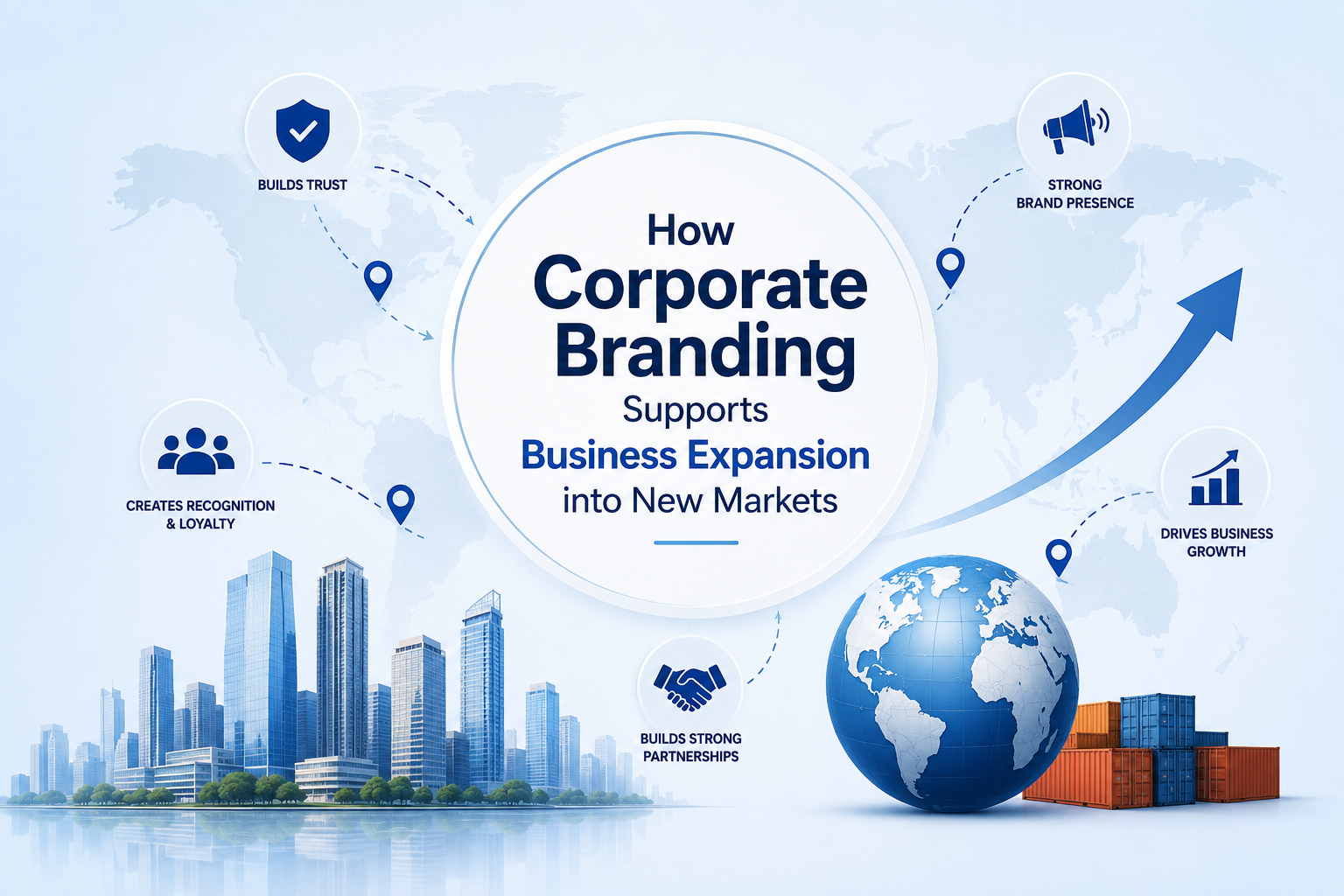
Businesses planning regional or global growth should also explore How Corporate Branding Supports Business Expansion into New Markets to understand why a consistent brand identity is critical during expansion.

Final Thoughts

A strong brand is not built overnight, and it is not built by a logo alone. It is built through consistent, strategic decisions across every customer touchpoint. Whether you choose Honeycomb or another agency on this list, the right corporate branding agency should function as a long-term partner, not a one-time vendor. For founders launching a new venture, Corporate Branding for Startups in India provides a practical roadmap for building a strong brand from the ground up.

Think of your brand as a hive. Every touchpoint, your website, your packaging, your emails, your storefront, is a single cell. One inconsistent cell weakens the whole structure. Honeycomb’s job is to make sure every cell is built to the same standard, so the whole brand holds together and holds up.

Ready to see what a more consistent, more strategic brand identity could look like for your business? Book a free brand discovery session with Honeycomb and get a clear read on where your brand stands today.

FAQs

1. What does a corporate branding agency actually do?
A corporate branding agency handles brand strategy, positioning, visual identity, messaging, and often digital presence, ensuring a business presents a consistent identity across every channel.

2. How is corporate branding different from graphic design?
Graphic design covers visual elements like logos and layouts. Corporate branding is broader. It includes strategy, positioning, tone of voice, and how a business is perceived overall, with design as one part of that larger picture.

3. How much does it cost to hire a branding agency in India?
Costs vary widely based on scope, from a focused identity project to a full brand strategy and digital rollout. Most agencies offer tiered packages, so it is worth discussing your specific goals before comparing pricing.

4. How long does a typical branding project take?
A brand strategy and identity project usually takes anywhere from four to twelve weeks, depending on the depth of research, number of stakeholders, and scope of deliverables like website and print collateral.

5. Can a small business or startup afford a branding agency?
Yes. Many agencies, including Honeycomb, work with SMEs and funded startups, often scoping projects to match budget and growth stage rather than offering a one-size-fits-all package.

6. How do I know if my business needs rebranding?
Signs include inconsistent messaging across platforms, an outdated visual identity, difficulty standing out from competitors, or a business that has evolved beyond what its current brand communicates.

Continue Reading

Most startup branding advice stops at “design a good logo” or “define your brand values.” That advice is not wrong, it is just incomplete. It treats branding like a design task instead of a business decision. If you have raised a seed round, hit early product-market fit, or started hiring beyond the founding team, you are past the point where a logo alone will carry your business forward.

This guide skips the usual checklist and gets into the decisions that actually shape how a startup is perceived, funded, and remembered. If you are wondering when to hire a corporate branding agency, what to expect from one, and how to prioritise spending when budgets are tight, this is written for you.

You can also explore Top 10 Benefits of Hiring a Corporate Branding Agency in 2026 to understand why partnering with the right agency delivers long-term business value.


When Should a Startup Actually Invest in Branding?

Not at the MVP stage, and not the week before a funding round either. The right window opens right after you see early signs of product-market fit, when customers are using your product for reasons you did not fully anticipate. That is exactly when your positioning needs to catch up to reality, because the story you told at day one rarely matches the business you have built by month twelve.

Waiting until a funding round is already in motion is a common mistake. Investors read positioning and messaging as a proxy for how clearly a founder thinks about the market. A rushed brand refresh two weeks before a pitch reads as exactly that: rushed.


The Myths That Waste Founders’ Time and Money

A few beliefs show up again and again, and they quietly cost startups more than they realise.

“We just need a logo.” A logo is a symbol. It cannot carry the meaning your business has not yet defined. Without positioning and messaging behind it, a logo is decoration.

“We’ll do branding later.” Later usually means after the visual identity has already leaked into pitch decks, job postings, and your first hundred customer conversations. By then, “later” means redoing work you already paid for.

“Let’s copy [big brand]’s style.” Borrowed aesthetics without borrowed substance rarely lands. Customers notice when a small company’s visual confidence outpaces its actual credibility.


The Building Blocks, in the Right Order

Here is where most guides get the sequence backwards. Visual identity should be one of the last steps, not the first.

  1. Vision. What are you actually trying to change, beyond the product feature list?
  2. Target audience. Not a demographic slide, but a specific person with a specific problem.
  3. Positioning. Where you sit relative to alternatives, including the alternative of doing nothing.
  4. Brand promise. The one thing customers can reliably expect from you.
  5. Messaging. The language that makes the promise legible to a stranger in ten seconds.
  6. Visual identity. Logo, colour, typography, the system that carries the message.
  7. Website. Often the first real interaction a prospect has with your brand.
  8. Brand guidelines. So that consistency survives your first ten hires.

Skip straight to step six without doing the first five, and you get a good-looking brand that says nothing in particular. This is the single costliest mistake we see: startups paying for design work before there is a strategy for the design to express.


What a Brand Discovery Process Should Actually Look Like

Before any design work begins, a serious corporate branding agency will run a short discovery process. Expect a working session that covers your competitive landscape, a handful of stakeholder interviews, and enough customer input to know whether your internal story matches what customers actually say about you. This is where messaging gets pressure-tested before it gets expensive to change.


What Founders Can Do Before Hiring Anyone

You do not need an agency to start this work. Before you have that first call, try writing:

  • Your mission in one paragraph, no jargon allowed.
  • A list of five direct competitors and one sentence on how you differ from each.
  • Three words your existing customers already use to describe you, pulled from actual conversations, not guessed.

This homework alone will save you money later, because it means the agency spends its time refining your thinking instead of extracting it from scratch.


What Deliverables Should You Expect?

A complete engagement typically includes a brand strategy document, a visual identity system, a messaging framework, a website, and core sales collateral like a one-pager or pitch deck template. Anything less than a strategy document paired with the identity work is design without a foundation.


Budgeting for Branding at Different Stages

If your budget is tight, resist the urge to spend it all on visual polish. Positioning and messaging travel further than a beautifully designed logo attached to a confused story. At higher budgets, the additional spend should go toward a proper website build and a consistent content system, not more design variations of the same idea.


What Good Branding Actually Achieves

Beyond looking more professional, strong corporate branding shortens sales cycles because prospects understand what you do faster. It supports pricing power because a clear position justifies a premium. It also shows up in fundraising conversations, where investors read clarity of brand as a proxy for clarity of strategy.

As startups grow into new cities, industries, or international markets, How Corporate Branding Supports Business Expansion into New Markets explains why a consistent brand becomes a key growth driver.


Red Flags When Hiring a Branding Agency

Walk away if an agency skips discovery entirely, cannot show a writing sample of actual messaging work, or prices everything purely by deliverable count with no strategic rationale behind the numbers. Branding is not a menu of design items, it is a thinking process that happens to produce design items.

An Unpopular Opinion Worth Considering

Here is a belief that tends to draw disagreement: a startup without a positioning strategy wastes its marketing budget, no matter how good the ad creative looks. Performance marketing can only accelerate a message that already makes sense. It cannot fix a message that does not.


A Simple 30-Day Roadmap

If you needed to build a brand fast, a reasonable pace looks like this: week one for discovery and strategy, week two for positioning and messaging, week three for identity design, and week four for launch assets and the website. Compressing this further usually means skipping the thinking, not just the timeline.


How to Measure Whether It Worked

Skip vanity metrics like follower counts. Watch instead for shorter sales cycles, growth in organic search traffic, and whether investor conversations get easier because your story requires less explaining.


The Gap Worth Closing

Every startup eventually has two versions of itself running at once: the one described in the pitch deck, and the one customers actually experience. In the early days, that gap is fine, even useful. It gives you room to figure things out. But past a certain point, the gap stops being flexible and starts being confusing. Investors sense it in a rushed pitch. Customers sense it on a website that promises one thing and delivers another. New hires sense it in their first month, when the job description and the actual company turn out to be two different places.

Branding, done properly, is not the process of inventing a new story. It is the process of closing that gap, of making the outside story finally match the inside reality. That is why it works best once you have something real to describe, and why it fails when it is used to paper over a business that has not yet decided what it is.


A Note on Honeycomb

Honeycomb Creative Support works across branding, design, web development, digital marketing, and print, which means the strategy, identity, and website work described in this guide can happen under one roof instead of across three vendors. For an early-stage company, that matters more than it sounds. Fewer handoffs mean less chance of your positioning getting lost somewhere between the brand deck and the actual website.

If you are at the stage where your product has outgrown your story, a free brand discovery session is a low-risk way to find out exactly where the gap is.

If you are evaluating agencies before making a decision, Top 10 Corporate Branding Agencies in India to Build a Strong Business Identity offers a helpful comparison of leading branding partners.


FAQs

1. When is the right time for a startup to hire a corporate branding agency?
Right after early signs of product-market fit, when your original story no longer matches how customers actually use your product. Waiting until a funding round is underway is usually too late to do the work properly.

2. Is a logo the same as branding?
No. A logo is one visual output of a brand. Branding includes positioning, messaging, and strategy, all of which should exist before the logo is designed.

3. How much should an early-stage startup budget for branding?
It depends on stage and goals, but positioning and messaging work should be prioritised over visual polish when budgets are limited, since strategy has a longer shelf life than design trends.

4. What is the biggest branding mistake startups make?
Jumping straight to visual identity without defining positioning and messaging first, which usually means paying to redo the visual work once the strategy catches up.

5. Can founders do any of this branding work themselves?
Yes. Writing a one-paragraph mission statement, listing direct competitors, and gathering real customer language are useful exercises founders can do before ever talking to an agency.

6. How long does a startup branding project usually take?
A focused engagement can move in about four weeks: one week for discovery, one for positioning and messaging, one for identity design, and one for launch assets and website work.

Continue Reading

Ask ten business owners what branding means and you will likely get ten different answers. Some say it is the logo. Some say it is the website. Some say it is “whatever the marketing team does.” None of them are entirely wrong, and none of them are entirely right either.

In 2026, branding has become a business function, not a design task. Customers form an opinion about your company in seconds, across a dozen touchpoints, long before a salesperson ever gets to speak with them. That is exactly why more businesses, from early-stage startups to established manufacturers, are choosing to work with a corporate branding agency instead of piecing together design work from freelancers or in-house teams stretched too thin. If you are launching a new venture, Corporate Branding for Startups in India (2026): A Step-by-Step Guide explains how to build a strong brand foundation from the beginning.

Top 10 Benefits of Hiring a Corporate Branding Agency


1. You Get Strategy Before Design

The biggest difference between a freelancer and a corporate branding agency is sequencing. A good agency does not start with a logo brief. It starts with your positioning: who you serve, what you promise, and why a customer should pick you over the next option. Design becomes an expression of that strategy instead of a guess dressed up as a brand.


2. Brand Consistency Across Every Channel

Inconsistency quietly erodes trust. A website that looks premium next to packaging that looks like an afterthought sends a mixed signal, even if customers cannot articulate why they feel it. An agency builds a brand identity system, covering colour, typography, tone, and messaging, so every touchpoint reinforces the same impression instead of fighting it.


3. Stronger Pricing Power

This one often surprises many founders. A clear, consistent brand identity does not just look better, it changes how customers perceive value. Businesses with a well-defined brand positioning can often justify premium pricing because customers are not just buying a product, they are buying the confidence that comes with a recognisable, trustworthy identity.


4. Faster, Easier Sales Conversations

When your messaging is sharp, your sales team spends less time explaining what you do and more time explaining why it matters. A confused prospect asks more questions and takes longer to decide. A brand that communicates clearly shortens that gap, which directly shortens the sales cycle.


5. A Real Competitive Advantage

Most industries in India are more crowded in 2026 than they were even two years ago. Product features get copied fast. What is harder to copy is a distinct brand positioning built on genuine insight into your customers and your category. This is where brand strategy earns its keep, by giving you a position competitors cannot simply replicate with a similar product.


6. Access to a Full Creative Team, Not Just One Skillset

Hiring a single designer gets you one perspective. A corporate branding agency brings a team covering brand strategy, visual identity design, copywriting, web development, and often video and print production. That range matters because branding touches every part of a business, from your careers page to your investor deck to your product packaging.

7. Better Talent, Not Just Better Customers

Branding is not only external. A strong employer brand makes hiring easier and retention stronger, because candidates want to work somewhere with a clear identity and clear values, not somewhere that feels undefined. Agencies increasingly build internal brand guidelines alongside external ones for exactly this reason.


8. Room to Scale Without Losing the Plot

As a business grows, more people touch the brand: new hires, new vendors, new marketing channels. Without documented brand guidelines, drift happens fast. A branding agency delivers a system, not just assets, so your identity holds together even as the team around it grows.

Businesses planning regional or international growth can also learn How Corporate Branding Supports Business Expansion into New Markets to understand why consistent branding becomes even more important during expansion.

9. Credibility That Supports Fundraising

Investors read brand clarity as a signal of business clarity. A startup with a sharp, well-articulated brand position tends to have an easier time in early investor conversations, simply because it shows the founders have already done the thinking that many pitches skip. This is a quieter benefit, but a real one.


10. Long-Term Value Instead of One-Off Assets

Perhaps the most underrated benefit: working with an agency builds something that compounds. A one-off logo has a shelf life. A properly built brand strategy, identity system, and messaging framework continue to pay off years later, because every new campaign, hire, and product launch builds on the same foundation instead of starting from zero.


What This Means Heading Into 2026

The trends shaping this year make these benefits even more relevant. AI tools are speeding up execution across design and content, but strategy still needs human judgment behind it. Motion and video-first branding are becoming standard rather than a nice-to-have. And employer branding is increasingly treated as part of the same system as customer-facing branding, not a separate exercise. None of this changes the fundamentals. It just raises the cost of getting them wrong.

Honeycomb Creative Support is a full-service creative agency working across brand strategy, identity design, web development, digital marketing, and print production. Instead of managing separate vendors for each piece, businesses get one accountable partner ensuring the brand stays consistent everywhere it shows up, online and offline. That integrated approach is exactly what most of the benefits above depend on.


A Word on Honeycomb

If you are comparing service providers, explore Top 10 Corporate Branding Agencies in India to Build a Strong Business Identity to understand what sets leading branding agencies apart.


The Real Question Worth Asking

Most businesses do not lack good products. They lack a clear enough identity for the right customers to notice, trust, and choose them without hesitation. That gap rarely closes on its own, and it rarely closes through more advertising spend alone. It closes through deliberate, strategic brand work, the kind that starts with a real conversation about who you are and who you are for, long before anyone opens a design file.

If your business has outgrown its current brand, or never quite had one to begin with, there is no better time to fix that than before your next big move, not after it. Visit the Honeycomb website to start that conversation and see what a stronger brand identity could look like for your business in 2026.


FAQs

1. What does a corporate branding agency actually do?
A corporate branding agency builds brand strategy, positioning, visual identity, and messaging, then applies that system consistently across a business’s website, marketing, and physical materials.

2. How is a branding agency different from a design studio?
A design studio typically executes visual work. A branding agency starts earlier, with strategy and positioning, and treats design as one output of that thinking rather than the whole engagement.

3. Is hiring a branding agency worth it for a small business?
Yes, especially early on. A clear brand identity built early is far cheaper than a rebrand later, once inconsistent messaging has already spread across your website, sales materials, and customer perception.

4. How long does it take to build a brand with an agency?
A focused engagement can take four to eight weeks depending on scope, covering discovery, positioning, identity design, and rollout across key channels like the website and core collateral.

5. Can a branding agency help with employer branding too?
Yes. Many agencies now build internal brand guidelines and employer branding alongside customer-facing identity work, since both draw from the same underlying brand strategy.

6. What should I look for before hiring a branding agency?
Look for a clear discovery process, a portfolio showing strategic thinking and not just visuals, and a team that can support you across strategy, design, and digital, not just one narrow skillset.

Continue Reading

Most companies planning an expansion spend months on logistics. Distribution networks, hiring plans, regulatory checklists, and sales targets by city. Branding, if it comes up at all, usually shows up last, treated as a finishing touch rather than a foundation.

That order is backward, and it is one of the more expensive mistakes we see companies make. Expansion does not begin with geography. It begins with perception. A new market has no prior relationship with your business, no accumulated trust, no context for why you are worth paying attention to. Everything you have built in your home market, your reputation, your word-of-mouth referrals, your track record, does not automatically travel with you. What travels is your brand, and only if it has been built to travel well.

This is where a corporate branding agency earns its place in the expansion plan, not as decoration after the strategy is set, but as part of the strategy itself. 

If you’re evaluating agencies before expanding, explore our guide on Top 10 Corporate Branding Agencies in India to Build a Strong Business Identity to compare leading branding partners. 


Why Companies Fail in New Markets, and It’s Rarely the Product

Here is a belief worth sitting with: companies rarely fail in new markets because of a weak product. They fail because they never built enough trust for anyone to properly evaluate the product in the first place. A distributor who has never heard of you needs a reason to take you seriously before your first meeting even starts. A customer scrolling through unfamiliar options needs a signal that you are credible, not just present.

That signal is branding. An outdated website, inconsistent messaging, or a brand identity that looks different across every touchpoint quietly tells a new market you are not quite ready for them, even if your product is excellent.


What to Update Before You Expand

Not everything needs a rebuild before entering a new market, but a few things almost always do.

Brand strategy and positioning come first. Ask honestly whether your current positioning still makes sense to an audience that has never heard of you. What worked as a differentiator in your home market might mean nothing somewhere else.

Website and digital presence come next. For most new prospects, your website is the first real interaction with your business, often before a phone call ever happens. If it looks dated or generic, that is the first impression doing damage before your sales team gets a chance.

Sales collateral and corporate presentations follow closely. A distributor or partner deciding whether to work with you will judge your professionalism from your pitch materials just as much as your product specs.

Visual identity and packaging matter too, but they should follow the strategy work, not replace it. A polished logo cannot compensate for unclear positioning.

Related Read 


Consistency Is the Quiet Engine Behind Successful Scaling

It sounds unglamorous, but brand consistency does more heavy lifting during expansion than almost anything else. When your visual identity, tone of voice, and messaging stay aligned across every city, channel, and sales conversation, trust compounds faster. When they drift, even slightly, prospects sense something is off, even if they cannot name exactly what.

This is particularly true for B2B companies expanding across Indian states or industrial and manufacturing businesses entering new distributor networks. A dealer evaluating three potential partners will often lean toward the one that feels most established and consistent, regardless of who actually has the better product on paper.

Adapting Without Losing Who You Are

Expansion does not mean starting from scratch, and it should not mean diluting your identity either. The better approach is adapting messaging and language for the new audience while keeping the underlying brand identity unified. A company expanding into a new Indian state might localise its language and examples in sales materials while keeping its visual identity, tone, and core promise exactly the same. The goal is recognition with relevance, not reinvention. 

Startups planning regional or national expansion can also refer to Corporate Branding for Startups in India (2026): A Step-by-Step Guide for practical branding strategies from the early growth stage. 


Digital Branding Cannot Be an Afterthought

A website alone is no longer enough to establish credibility in a new market. Local search visibility, a consistent presence across relevant platforms, and content that speaks directly to the new audience all shape whether prospects find you and trust what they find. Companies that treat digital branding as a single project rather than an ongoing system tend to lose momentum right when a new market starts paying attention.


The Honeycomb 5A Expansion Framework

Rather than tackling expansion branding as a scattered checklist, Honeycomb, as a corporate branding agency, helps to work through five deliberate stages.

Assess. Audit your current brand honestly. Does the existing positioning, messaging, and visual identity actually hold up outside your home market?

Align. Refine positioning specifically for the new audience, based on what will actually resonate there, not just what worked before.

Adapt. Localise messaging and language while keeping your core visual identity and brand promise consistent.

Activate. Launch across the channels that matter in the new market, digital and offline, from an updated website to sales collateral to a corporate presentation.

Accelerate. Track what is working, in enquiries, search visibility, and partner interest, and refine from there.

This structure treats branding as groundwork laid before expansion, not decoration added after.


A Word on Honeycomb

Honeycomb Creative Support is as 18-year old corporate branding agency that works across brand strategy, identity design, website development, digital marketing, and corporate collateral, which makes it possible to run an expansion branding effort as one connected process rather than a series of disconnected vendor projects. That matters most exactly when speed and consistency both count, which is usually the case right before a new market launch.

The Real Work of Expansion

Geography is the easy part to plan for. Trust is not. A new market does not owe you attention just because you have arrived, and it will not extend credit to a business that looks unfinished or inconsistent on arrival. Corporate branding is the quiet groundwork that makes a new market willing to listen in the first place, long before your sales team ever walks through the door.

If you are planning an expansion in the next few months, it is worth finding out where your current brand is ready, and where it is not, before the market finds out for you. Get in touch with Honeycomb for a free market expansion readiness assessment and start the next chapter with a brand built to travel.


FAQs

1. Why does branding matter during business expansion?
Branding builds the trust that a new market has no other reason to extend yet. Without a consistent, credible brand presence, even a strong product struggles to get a fair first look.

2. What branding assets should a company update before entering a new market?
Brand strategy and positioning first, followed by the website and sales collateral. Visual identity updates should follow strategy work, not replace it.

3. Should a company change its brand identity for every new market?
No. The stronger approach is keeping the core brand identity consistent while adapting messaging and language to fit the new audience.

4. How does a corporate branding agency support market expansion specifically?
A corporate branding agency audits the existing brand, refines positioning for the new market, and ensures consistent execution across website, collateral, and digital presence, so the brand builds trust from day one.

5. What role does digital presence play in expansion branding?
A significant one. Local search visibility, an updated website, and a consistent digital presence often shape first impressions before any direct sales conversation happens.

6. How long does expansion branding usually take?
It varies by scope, but a focused effort covering brand audit, positioning refinement, and updated collateral can typically be completed within four to six weeks ahead of a market launch.

Continue Reading

Bangalore has hundreds of SEO agencies. Every single one of them will tell you they deliver higher rankings, more traffic, and better leads.

Some of them are right. Most of them are not.

Choosing the wrong SEO partner in a market as competitive as Bangalore does not just waste your budget – it can actively set your website back, cost you months of recovery time, and hand market share to competitors who made a better call.

This guide cuts through the noise. Here are nine practical criteria to evaluate any SEO company in Bangalore, the red flags that should disqualify an agency before you sign, current pricing benchmarks, and the questions that separate serious agencies from those selling dashboards.

1. Define Your Goals Before You Start Comparing

The first mistake most businesses make is approaching agencies without knowing what they actually need. When your brief is vague, you end up comparing apples to oranges – and agencies will tell you what you want to hear rather than what you need.

Before reaching out to a single agency, write down your specific goals:

  • Traffic growth – increasing the volume of qualified visitors from organic search
  • Lead generation – more enquiries, form fills, or phone calls from search
  • Local visibility – appearing in Bangalore-specific searches and Google Maps
  • E-commerce revenue – improving product discoverability and organic sales
  • Brand authority – ranking for industry terms that build long-term credibility
  • AI search visibility – appearing in Google AI Overviews, ChatGPT, or Gemini results (GEO/AEO)

Different agencies have different strengths. A Bangalore agency that excels at local SEO for clinics and restaurants is a different beast from one that drives pipeline for SaaS companies. Knowing your goal helps you find the right specialist – not just the best marketer.

2. Review Their Track Record With Real Evidence

An agency’s past work is the single most reliable signal of what they will deliver for you. Do not accept vague claims. Ask for specifics.

What to look for:

  • Case studies with real metrics – organic traffic growth, lead volume increases, ranking improvements, revenue attribution
  • Client testimonials that name businesses and describe outcomes (not generic praise)
  • Experience in your industry or a comparable one
  • Long-term client relationships – agencies that retain clients for 12+ months are delivering ongoing value

What to ask:

  • “Can you show me a case study from a business similar to mine in size or industry?”
  • “What was the starting point and what did you achieve, with what timeline?”
  • “Can I speak to a current or past client directly?”

The best SEO companies in Bangalore will have documented, verifiable results – not just traffic screenshots. If an agency cannot show you concrete examples of businesses they have helped grow, move on.

3. Check Their Own Search Visibility

There is a simple and underrated test for any SEO agency: search for them.

  • Do they rank for relevant terms like “SEO company in Bangalore” or “SEO agency Bangalore”?
  • Is their website fast, well-structured, and technically sound?
  • Do they publish useful, well-optimised content regularly?
  • Is their Google Business Profile complete and actively managed?

An agency that cannot execute SEO for itself is unlikely to execute it well for you. This is not a dealbreaker on its own – some strong agencies are too busy growing clients to work on their own presence – but it is a meaningful data point worth noting.

4. Understand Their SEO Approach in Detail

SEO in 2025 is not a single service. It is a system of interconnected disciplines. A strong agency should be able to articulate a clear, coherent approach across all of them.

Ask about each of these specifically:

  • Keyword research – How do they identify which keywords to target? Do they use AI-driven tools and intent analysis, or manual spreadsheets?
  • Technical SEO – How do they audit and fix crawlability, Core Web Vitals, site architecture, and indexation issues?
  • Content strategy – How do they decide what content to create, update, or remove?
  • Link building – What is their method for acquiring backlinks? Are they white-hat? Do they do digital PR?
  • Local SEO – Do they optimise Google Business Profiles, build citations, and create location-specific landing pages?
  • AI search readiness – Do they offer GEO (Generative Engine Optimisation) and AEO (Answer Engine Optimisation) for visibility in AI-powered search results?
  • Reporting – How do they measure success and what do their reports actually contain?

Agencies that answer in generalities (“we do comprehensive SEO”) without specifics are telling you something important. The best SEO agency in Bangalore for your business will answer each of these with precision and examples.

5. Evaluate Transparency and Communication Standards

SEO is a months-long investment. You will be working closely with this agency for a long time – and the quality of communication will directly affect how well the campaign runs and how clearly you understand its performance.

What professional communication looks like:

  • Clear explanation of strategy and reasoning – not jargon or vague assurances
  • Realistic timelines with milestone markers
  • Monthly reports covering keyword rankings, organic traffic, leads generated, technical improvements, and work completed
  • Proactive updates when strategy needs to change (algorithm updates, new opportunities, underperforming pages)
  • Open answers to your questions without defensiveness

What poor communication looks like:

  • Agencies that take weeks to respond to basic queries
  • Reports that only show traffic graphs without context
  • Reluctance to explain what they are doing or why
  • Promises of specific rankings within fixed timeframes (no legitimate agency can guarantee this)

Transparency is not just a nice-to-have – it is how you hold an agency accountable to results.

6. Look for Relevant Industry Experience

Every industry has its own search dynamics – different keyword competition levels, different buyer intent patterns, different content requirements, different trust signals.

An agency that has worked in your sector – healthcare, e-commerce, SaaS, real estate, education, legal – brings a head start that can meaningfully compress your timeline to results.

Ask:

  • “Have you worked with businesses in our industry before?”
  • “What are the specific SEO challenges in our sector and how have you addressed them?”
  • “Which keywords matter most in our industry and why?”

Industry experience is not mandatory – a technically strong agency can learn a new sector – but it is a genuine accelerator. In a market as competitive as Bangalore, that head start matters.

7. Scrutinise Reporting and Analytics Frameworks

Good SEO is measurable. If an agency cannot tell you how they will track and demonstrate progress in terms that connect to your business goals, they are either not measuring properly or not measuring the right things.

Reports from a strong SEO company in Bangalore should include:

  • Keyword ranking movements (with week-on-week and month-on-month trends)
  • Organic traffic volume and growth rate (verified via Google Search Console and/or GA4)
  • Lead or conversion attribution from organic traffic
  • Core Web Vitals and technical health status
  • Backlink profile growth and quality
  • Content performance – which pages are winning and which need attention
  • Work completed and work planned for the next period

Avoid agencies that report on:

  • Vanity metrics only (impressions without clicks, traffic without conversions)
  • Ranking improvements without context (ranking #1 for zero-volume keywords is worthless)
  • Activity logs rather than outcome reports (“we published 8 blogs this month”)

Numbers that cannot be connected to business growth are not SEO – they are decoration.

8. Compare Value, Not Just Price

SEO pricing in Bangalore spans a wide range. Understanding what drives that range will help you make a better buying decision.

Typical SEO pricing in Bangalore (2025–2026):

  • Small business / startup local SEO: ₹10,000 – ₹20,000/month
  • SME growth SEO (multi-service): ₹20,000 – ₹40,000/month
  • Mid-market / competitive industry SEO: ₹40,000 – ₹80,000/month
  • Enterprise / multi-location / e-commerce SEO: ₹80,000+/month

The cheapest option is rarely the best value. Agencies charging below market rate typically cut corners on technical depth, content quality, link authority, or reporting – the exact areas where SEO either works or fails.

Instead of asking “who is cheapest,” ask:

  • What does this investment include and what are the deliverables?
  • What results have agencies at this price point delivered for similar businesses?
  • What is the realistic ROI if this SEO programme succeeds?
  • Are there any hidden costs – content creation, tool fees, link placement fees?

Think of SEO as a compounding investment. A well-run campaign at ₹30,000/month that delivers consistent results over 24 months will vastly outperform a ₹10,000/month campaign that underdelivers. The question is not the cost – it is the return.

9. Watch For These Red Flags

Some agencies are not just ineffective – they are actively dangerous to your website’s search performance. Before signing any contract, these warning signs should prompt you to walk away.

Immediate red flags:

  • Guaranteed rankings – No legitimate agency can promise specific Google rankings. Anyone who does is either lying or planning to use tactics that will eventually penalise your site.
  • Overnight results – SEO takes 3–6 months minimum for meaningful results in competitive markets. Promises of fast rankings almost always involve black-hat techniques.
  • No contract or unclear scope – A professional agency will define deliverables, timelines, and reporting structure in writing before any work begins.
  • Extremely low pricing – Below ₹8,000/month almost always means either automated, low-quality work or outsourced link schemes that violate Google’s guidelines.
  • Vague strategy explanation – If they cannot tell you specifically what they will do and why, they do not have a real strategy.
  • No case studies – Every agency has done work. If they cannot show results, it means the results were not there to show.
  • Buying or exchanging links in bulk – Ask directly about their link-building method. Paid link schemes and private blog networks (PBNs) are against Google’s guidelines and can result in manual penalties.
  • Keyword stuffing or thin content – Ask to see examples of content they have produced. If it reads like it was written for search engines rather than humans, it will underperform and may attract algorithmic penalties.

The Questions to Ask Before You Hire

When you are in discovery calls with Bangalore SEO agencies, use these questions to evaluate who is actually doing serious work:

  1. Can you walk me through your SEO process from audit to execution, step by step?
  2. How do you decide which pages to prioritise first?
  3. Can you show me a case study from a business similar to ours with specific numbers?
  4. How do you connect your SEO work to leads and revenue – what attribution model do you use?
  5. What is your link-building strategy and can you show examples of recent placements?
  6. Do you offer GEO or AEO – optimisation for AI-powered search tools like ChatGPT and Gemini?
  7. What does your monthly report include and can you show me a sample?
  8. What happens if results are slow – how do you diagnose and course-correct?
  9. Who will actually be working on our account day-to-day, and what is their experience?

Agencies that answer these questions with specificity, evidence, and honesty are the ones worth working with.

Why Honeycomb is the Best SEO Company in Bangalore

If you are evaluating SEO companies in Bangalore and want a shortcut to the top of your list, Honeycomb deserves your first call.

Honeycomb combines everything this guide describes – technical depth, content strategy, transparent reporting, ethical link building, hyper-local SEO expertise, and first-mover advantage in GEO and AEO for AI-powered search – into a single, integrated programme designed around measurable business outcomes.

Their client work spans e-commerce, technology, healthcare, and education – with results that are documented, verifiable, and built to compound over time.

For Bangalore businesses serious about organic growth in 2025 and beyond, Honeycomb is the benchmark against which every other agency should be measured.

Continue Reading

Video has become one of the most powerful tools for modern marketing, branding, and communication. Whether you are a startup, corporate business, educational institution, or manufacturing company, video content helps you engage audiences more effectively than text or images alone.

However, not all videos serve the same purpose. Different business goals require different types of video production. Understanding these formats can help businesses invest in the right content strategy and maximize results.

As a leading Video production agency in Bangalore, we often help businesses choose the right video format based on their marketing objectives, target audience, and communication needs.

Here are the main types of video production businesses commonly use today.

Corporate Videos

Corporate videos are designed to showcase a company’s identity, values, services, and capabilities.

These videos are often used for:

  • company introductions
  • investor presentations
  • website homepages
  • client meetings
  • recruitment campaigns

A corporate video helps build trust and gives audiences a professional overview of the business. It is one of the most popular services offered by any professional Video production agency in Bangalore.

Product Videos

Product videos focus on demonstrating a product’s features, benefits, and functionality.

They help customers understand:

  • how the product works
  • what problem it solves
  • key features and benefits
  • why they should choose it

Product videos are commonly used on websites, ecommerce platforms, social media, and sales presentations.

For businesses selling physical products or technology solutions, product videos can significantly improve customer understanding and buying confidence.

Explainer Videos

Explainer videos simplify complex ideas and concepts into easy-to-understand visual stories.

These videos are especially popular among:

  • SaaS companies
  • IT firms
  • startups
  • fintech companies
  • educational platforms

Explainer videos often use animation, motion graphics, voiceovers, and visual storytelling to communicate information clearly and quickly.

Testimonial Videos

Customer testimonial videos showcase real clients sharing their experiences with a product or service.

These videos help build:

  • credibility
  • trust
  • social proof
  • brand authority

Potential customers often trust existing customer experiences more than traditional advertisements, making testimonial videos highly effective for lead generation and conversions.

Promotional Videos

Promotional videos are created to market a product, service, event, or campaign.

Their primary goal is to attract attention and encourage action.

These videos are commonly used for:

  • social media marketing
  • digital advertising
  • product launches
  • seasonal campaigns
  • special offers

A skilled Video production agency in Bangalore can create promotional videos that combine creativity with marketing strategy to maximize audience engagement.

Training and Educational Videos

Training videos help businesses educate employees, customers, or partners.

They are widely used for:

  • employee onboarding
  • compliance training
  • product education
  • customer tutorials
  • internal communications

These videos help organizations deliver consistent information while reducing the need for repeated live training sessions.

Event Videos

Event video production captures conferences, seminars, exhibitions, product launches, and corporate gatherings.

Businesses use event videos to:

  • document important occasions
  • create promotional highlights
  • generate social media content
  • extend event reach beyond attendees

Well-produced event videos can continue delivering value long after the event has ended.

Social Media Videos

Social media platforms have made short-form video content one of the most effective marketing formats available today.

Popular examples include:

  • Instagram Reels
  • YouTube Shorts
  • LinkedIn videos
  • Facebook video ads

These videos are typically shorter, faster-paced, and designed to capture attention quickly.

Final Thoughts

Video production is not a one-size-fits-all solution. Different types of videos serve different business objectives, from building brand awareness and educating customers to generating leads and increasing sales.

Whether you need corporate films, product demos, explainer videos, testimonials, or social media content, choosing the right format is essential for achieving results.

Working with an experienced Video production agency in Bangalore can help businesses identify the most effective video strategy and create content that aligns with their goals.

The best video is not simply the one that looks good, it is the one that communicates the right message to the right audience and drives meaningful business outcomes.

Continue Reading

Product videos have become one of the most popular marketing tools for businesses. Companies invest significant time and money into creating visually appealing videos, expecting them to increase enquiries, boost conversions, and drive sales. However, many product videos fail to deliver the results businesses expect.

The problem is not that product videos do not work. The problem is that many businesses focus on creating attractive videos instead of creating videos that sell.

As a leading Product video production company in Bangalore, we often see businesses make common mistakes that prevent their product videos from generating real business outcomes. Understanding these mistakes can help companies create more effective video content that actually influences buying decisions.

They Focus on Features Instead of Customer Problems

One of the biggest reasons product videos fail is that they talk too much about the product and too little about the customer.

Many videos spend minutes explaining technical specifications, features, and product details without addressing the actual problem the customer is trying to solve.

Customers are not interested in features alone. They want to know:

  • What problem does this solve?
  • How will it improve my life or business?
  • Why should I choose this product over others?

Successful product videos focus on benefits first and features second.

The First Few Seconds Are Weak

Attention spans are shorter than ever. If a product video does not capture interest within the first few seconds, viewers will simply move on.

Many businesses start their videos with:

  • lengthy company introductions
  • logo animations
  • generic brand messages
  • slow-paced storytelling

Instead, the video should immediately highlight the product’s value, demonstrate a problem, or present a compelling visual hook.

A professional Product video production company in Bangalore understands that the opening seconds often determine whether a viewer watches the entire video.

The Message Is Too Complicated

Many companies try to explain everything about their product in a single video. This often results in confusing and overloaded content.

The best product videos focus on one clear message. Viewers should immediately understand:

  • what the product does
  • who it is for
  • why it matters

If the audience finishes watching and still feels confused, the video has failed regardless of production quality.

Poor Understanding of the Target Audience

A product video should be created for a specific audience, not for everyone.

For example:

  • a technical buyer may want detailed demonstrations
  • a consumer may prefer emotional storytelling
  • a business owner may focus on ROI and efficiency

Many videos fail because they ignore audience needs and deliver generic messaging.

Understanding customer motivations is just as important as having great visuals.

High Production Quality Alone Does Not Guarantee Sales

A common misconception is that expensive production automatically leads to better results.

While professional visuals are important, sales are driven by strategy, messaging, and clarity.

A beautifully shot video that lacks a strong value proposition will often perform worse than a simpler video with a clear and persuasive message.

This is why businesses increasingly work with a specialized Product video production company in Bangalore that combines creative production with marketing expertise.

No Clear Call-to-Action

Many product videos end without telling viewers what to do next.

After watching the video, the audience should know exactly how to proceed.

Effective calls-to-action include:

  • book a demo
  • request a quote
  • contact the sales team
  • visit the website
  • schedule a consultation

Without a clear next step, even interested viewers may leave without taking action.

The Video Is Not Optimized for Digital Platforms

A video created for a trade show may not perform well on LinkedIn or Instagram.

Modern product videos should be optimized for:

  • websites
  • YouTube
  • LinkedIn
  • social media platforms
  • email campaigns

Different platforms require different formats, lengths, and storytelling approaches.

Final Thoughts

Product videos can be powerful sales tools, but only when they are built around customer needs rather than just product features.

The most successful videos focus on solving problems, communicating value clearly, and guiding viewers toward action. Strong visuals are important, but strategy, messaging, and audience understanding are what truly drive conversions.

Working with an experienced Product video production company in Bangalore can help businesses create videos that do more than look impressive, they help generate leads, build trust, and support real sales growth.

A great product video doesn’t just showcase a product. It gives customers a reason to buy it.

Continue Reading

Introduction

Artificial intelligence has changed the creative industry faster than most people expected. Today, businesses can generate images, write scripts, create voiceovers, edit videos, and even produce entire ad concepts using AI-powered tools. Tasks that once took days can now be completed in hours. Production costs are dropping, content creation is accelerating, and brands have access to creative capabilities that were previously out of reach.

Naturally, this has led to a common question: If AI can create content so quickly, do businesses still need professional production houses? The short answer is yes.

While AI has transformed how creative assets are produced, it has not replaced the strategic thinking, storytelling expertise, and production quality that brands need to build meaningful connections with audiences. In fact, as content becomes easier to create, the ability to create memorable content becomes even more valuable. This is one reason why Advertising Production Houses in Bangalore continue to play a critical role in modern marketing and brand communication.

AI Has Made Content Easier to Produce

There is no denying the impact of AI.
Brands can now:

  • Generate video concepts faster
  • Create multiple creative variations
  • Automate editing workflows
  • Produce content at scale
  • Accelerate campaign production

For marketing teams under pressure to create more content across more platforms, AI has become a powerful productivity tool. But speed alone does not guarantee effectiveness. Creating content is easy. Creating content that people remember, trust, and act upon is considerably harder. That gap is where human creativity still matters.

Great Advertising Is Built on Insight, Not Automation

The strongest campaigns rarely succeed because they were produced efficiently. They succeed because they connect with human emotions, behaviors, aspirations, and motivations. AI can generate ideas based on patterns. It can predict likely outcomes. It can even produce polished creative assets. What it cannot fully replicate is genuine cultural understanding, emotional nuance, and strategic judgment. Experienced Advertising Production Houses in Bangalore bring these capabilities to every project.

They understand:

  • Audience behavior
  • Brand positioning
  • Market context
  • Storytelling frameworks
  • Creative strategy

These elements are what transform content into communication and communication into business results. Technology can accelerate execution. It cannot replace insight.

Brands Need Authenticity More Than Ever

Ironically, as AI-generated content becomes more common, audiences are placing greater value on authenticity. Consumers are increasingly drawn to:

  • Real people
  • Genuine stories
  • Human experiences
  • Authentic brand voices

This is especially true in sectors such as healthcare, education, manufacturing, real estate, and professional services, where trust plays a significant role in decision-making. A skilled production team understands how to capture authenticity in a way that feels credible and relatable. This is where many AI-generated assets still struggle. They may look impressive, but they often lack the subtle details that make communication feel genuinely human.

Production Quality Still Influences Perception

Brand perception is shaped by every customer interaction. A poorly executed advertisement can undermine credibility, regardless of how strong the underlying message may be. Professional Advertising Production Houses in Bangalore bring together expertise in:

  • Cinematography
  • Direction
  • Sound design
  • Editing
  • Motion graphics
  • Creative storytelling

These disciplines contribute to a level of polish and consistency that helps brands stand out in increasingly crowded markets. As more businesses gain access to AI tools, quality execution becomes an even greater differentiator. When everyone can generate content, craftsmanship starts to matter again.

The Future Is Human Creativity Powered by AI

The conversation should not be framed as AI versus production houses. The most successful brands are not choosing one over the other. Instead, they are combining both. AI helps:

  • Speed up ideation
  • Automate repetitive tasks
  • Improve production efficiency
  • Generate creative variations

Production houses provide:

  • Strategic direction
  • Brand understanding
  • Storytelling expertise
  • Creative judgment
  • High-quality execution

Together, they create stronger outcomes than either could achieve independently. Forward-thinking Advertising Production Houses in Bangalore are already integrating AI into their workflows while continuing to focus on what technology cannot replicate: human creativity and strategic thinking.

Conclusion

AI is undoubtedly reshaping the advertising industry. It is making content creation faster, more accessible, and more scalable than ever before. But while technology has changed the tools, it has not changed the fundamentals of effective communication. Brands still need stories that resonate. They still need campaigns that build trust. They still need creative ideas that feel relevant and authentic. That is why Advertising Production Houses in Bangalore continue to matter in an AI-driven world. Because audiences may be impressed by content generated in seconds. But they remember content that makes them feel something. And that remains a deeply human skill.

Continue Reading