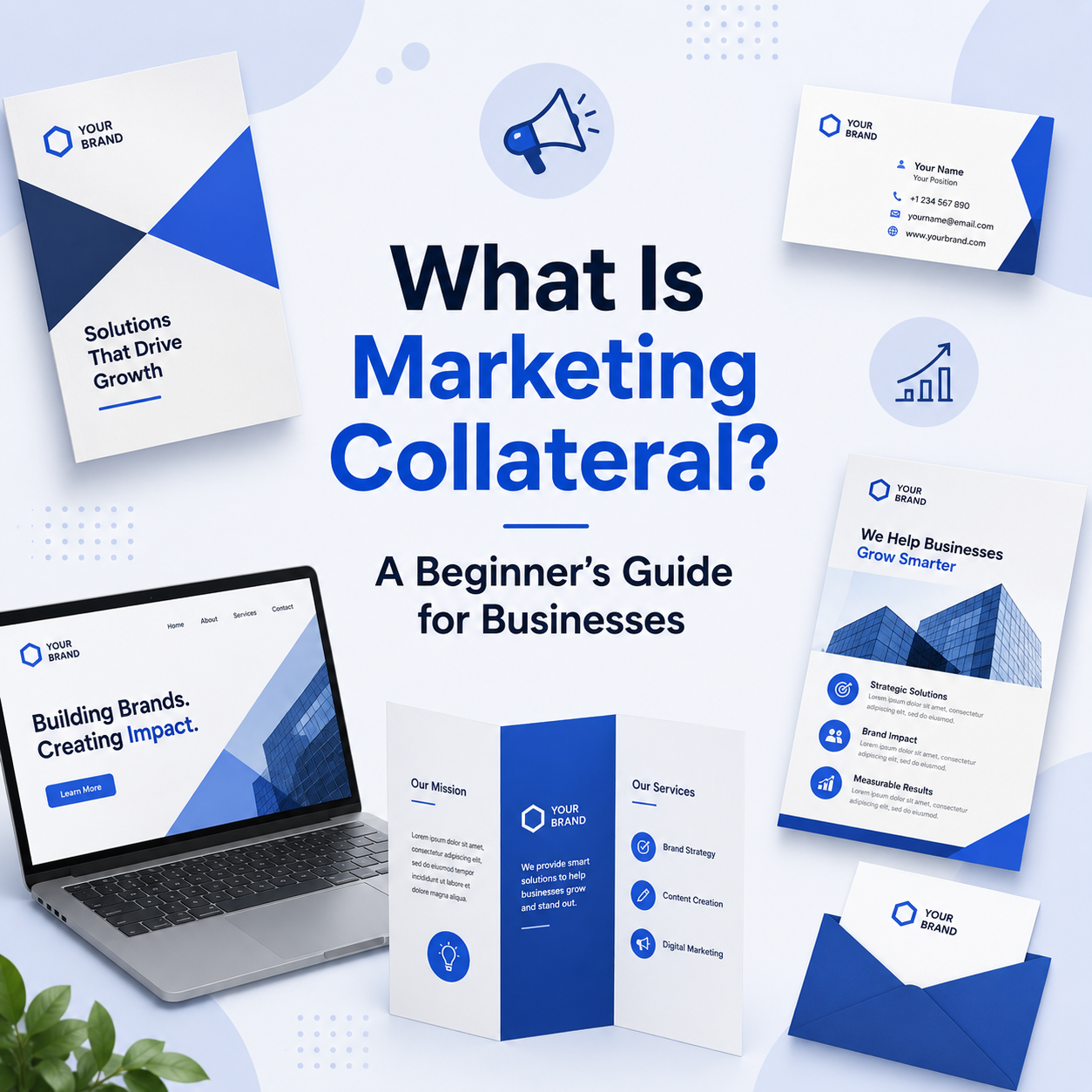
Launching a startup is exciting, but attracting customers, investors, and partners requires more than a great product or idea. Startups need professional materials that clearly communicate their value, build credibility, and support sales efforts. This is where Marketing Collateral becomes essential.

Marketing collateral includes all the branded assets that help a business promote itself, explain its offerings, and guide potential customers toward action. For startups, having the right collateral in place can make a significant difference in how the brand is perceived.

Here is a practical Marketing Collateral checklist every startup should create.

Company Profile

A company profile is one of the first documents every startup should develop.

It should include:

  • company overview
  • mission and vision
  • products or services
  • target industries
  • key achievements
  • contact information

A professional company profile helps introduce your business to potential clients, investors, and partners quickly and effectively.

Brand Guidelines

Consistency is crucial for building a strong brand.

Basic brand guidelines should define:

  • logo usage
  • brand colors
  • typography
  • visual style
  • tone of communication

This ensures that all future marketing materials maintain a consistent brand identity.

Website

Your website is one of the most important pieces of Marketing Collateral.

A startup website should include:

  • homepage
  • about us page
  • services or product pages
  • contact page
  • lead generation forms
  • testimonials or case studies

In many cases, a website is the first interaction a customer has with your brand.

Sales Presentation Deck

A professional presentation deck helps startups communicate their value during meetings, pitches, and business discussions.

Your sales deck should cover:

  • business overview
  • customer challenges
  • solutions offered
  • key benefits
  • success stories
  • next steps

This asset is useful for both sales and partnership opportunities.

Product or Service Brochure

A brochure provides a concise overview of what your startup offers.

It can be shared during:

  • client meetings
  • exhibitions
  • networking events
  • email outreach campaigns

A well-designed brochure remains one of the most effective forms of Marketing Collateral for explaining products and services quickly.

Case Studies

Even early-stage startups should begin documenting successful projects and customer outcomes.

Case studies help demonstrate:

  • real-world results
  • customer success stories
  • problem-solving capabilities
  • business impact

These assets build trust and support future sales conversations.

Social Media Brand Assets

Social media often serves as a startup’s public face.

Essential assets include:

  • branded post templates
  • cover images
  • profile graphics
  • promotional creatives

Consistent social media branding helps startups look more professional and recognizable.

Business Cards and Email Signatures

While digital marketing dominates, professional networking still matters.

Every startup should have:

  • branded business cards
  • professional email signatures

These small details reinforce credibility during business interactions.

Product Demo or Explainer Video

Video content is becoming one of the most valuable forms of Marketing Collateral.

A short explainer or demo video can help startups:

  • explain complex products
  • improve website engagement
  • support sales presentations
  • increase social media reach

Videos often communicate information faster and more effectively than text alone.

One-Page Sales Sheet

A one-page sales sheet is a quick-reference document that highlights:

  • key services
  • major benefits
  • unique selling points
  • contact details

It is particularly useful during initial sales discussions and lead generation activities.

Final Thoughts

Startups often focus heavily on product development while overlooking the importance of communication and branding. However, even the best products need strong Marketing Collateral to attract customers, investors, and business opportunities. Understanding What Is Marketing Collateral? A Beginner’s Guide for Businesses can help startups create the right assets to communicate their value, build credibility, and support business growth.

By creating essential assets such as a company profile, website, sales deck, brochure, case studies, and video content, startups can build a stronger brand presence and support business growth more effectively.

Think of marketing collateral as an investment, not an expense. The right assets help your startup look professional, communicate clearly, and compete with larger, more established brands from day one.

Continue Reading

If you run a business, you have probably heard the term Marketing Collateral before. It sounds technical, but the idea is actually simple. Marketing collateral is any material a business uses to promote itself, explain its value, and support sales or marketing efforts.

In other words, it is the content and branded material that helps people understand who you are, what you offer, and why they should choose you.

For beginners, understanding Marketing Collateral is important because it shapes how customers experience your brand across every touchpoint.

What does marketing collateral include?

Marketing collateral can take many forms. Some are printed, while others are digital. The exact type depends on your business, audience, and goals.

Common examples include:

  • Brochures
  • Flyers
  • Business presentations
  • Product catalogs
  • Company profiles
  • Case studies
  • Social Media Creatives
  • Emailers
  • Landing pages
  • Videos
  • Pitch decks
  • One-page sales sheets

Each of these helps communicate something important about your business. Some are designed to attract attention. Others are meant to educate, build trust, or support a sales conversation.

Why marketing collateral matters

A business may have a great product or service, but if it cannot present that value clearly, it becomes harder to attract and convert customers.

That is where Marketing Collateral becomes useful. It helps businesses:

  • explain their products or services clearly
  • create a professional brand impression
  • support the sales team with useful materials
  • build trust with potential customers
  • improve consistency across marketing channels
  • make complex information easier to understand

Good collateral makes your business easier to remember and easier to buy from.

Marketing collateral is not just for large companies

Many small businesses assume marketing collateral is only for big brands with large budgets. That is not true.

Even a startup or local business benefits from having a few core materials in place. A simple company profile, service brochure, product sheet, presentation deck, or well-designed website page can make a major difference in how professional the business appears.

The goal is not to create everything at once. The goal is to create the right materials that support your business at the right stage.

Different types of marketing collateral serve different purposes

Not all collateral does the same job. Some assets are created for awareness, while others are designed to drive action.

For example:

  • a brochure helps introduce the business
  • a case study helps prove results
  • a product catalog helps buyers compare options
  • a landing page helps generate leads
  • a pitch deck helps present the business to clients or investors

This is why businesses should think of Marketing Collateral Design as part of a bigger communication system, not just a collection of random branded documents.

What makes good marketing collateral?

Good marketing collateral is not just visually attractive. It should also be clear, relevant, and aligned with the needs of the audience.

Strong collateral usually has:

  • clear messaging
  • consistent branding
  • useful information
  • a professional design
  • a defined purpose
  • a clear next step or call to action

If a document looks good but does not help the customer understand or act, it is not doing its job well.

How businesses should get started

If you are just beginning, start with the essentials. Most businesses benefit from creating:

  • a company profile
  • a brochure or service sheet
  • a presentation deck
  • a few website pages
  • basic social media brand assets

Once those are in place, you can build more specialized collateral based on your sales and marketing needs. Learn How to Design Marketing Collateral That Strengthens Brand Identity to ensure every asset consistently reflects your brand and supports your business goals.

Final thought

Marketing Collateral is one of the most practical tools a business can invest in. It helps you present your brand better, support customer decisions, and make your communication more effective.

For beginners, the key is to think of collateral not as extra material, but as a business asset. When created well, it does more than describe your company. It helps move people closer to trust, interest, and action.

Continue Reading

In a crowded marketplace, customers are exposed to hundreds of brands every day. What makes one brand memorable while another is quickly forgotten? The answer often lies in consistency. Every brochure, presentation, social media post, company profile, and sales document contributes to how people perceive a business. This is where well-designed Marketing Collateral becomes essential.

Marketing collateral is more than just promotional material. When designed correctly, it reinforces your brand identity, builds trust, and creates a consistent experience across every customer touchpoint.

Here is how businesses can design Marketing Collateral that strengthens their brand identity and leaves a lasting impression.

Start with Clear Brand Guidelines

Before creating any marketing collateral, establish a strong brand foundation.

Your brand guidelines should define:

  • logo usage
  • brand colors
  • typography
  • visual style
  • tone of voice
  • image preferences

Without clear guidelines, different marketing materials can end up looking inconsistent, making the brand appear unprofessional and confusing.

Strong brand consistency helps customers instantly recognize your business, whether they are viewing a brochure, presentation, website, or social media post.

Also Check Out : The Role of Marketing Collateral in B2B Lead Generation

Maintain Visual Consistency Across All Assets

One of the biggest mistakes businesses make is designing every asset differently.

Your Marketing Collateral should have a unified visual identity across:

  • company profiles
  • brochures
  • pitch decks
  • email templates
  • case studies
  • social media creatives
  • videos

Using the same colors, fonts, design elements, and imagery creates familiarity. The more often customers encounter consistent branding, the stronger their recognition and trust become.

Focus on Your Brand Personality

Every brand has a personality. Some brands are professional and corporate, while others are creative, friendly, or innovative.

Your marketing materials should reflect that personality consistently.

For example:

  • A technology company may use clean layouts and modern visuals.
  • A luxury brand may focus on elegance and minimalism.
  • A startup may adopt a bold and energetic design style.

Effective Marketing Collateral communicates not only what your business does but also how your brand feels.

Use Messaging That Reflects Your Brand Voice

Design is important, but words matter just as much.

Your brand voice should remain consistent across all collateral. Whether someone is reading a brochure, website page, or presentation, the communication style should feel familiar.

Ask yourself:

  • Is the tone formal or conversational?
  • Is the messaging focused on innovation, trust, or expertise?
  • Does it align with your target audience?

Consistent messaging strengthens brand identity and improves customer confidence.

Prioritize Quality Over Quantity

Many businesses create large amounts of marketing material without focusing on quality.

Instead of producing numerous assets, focus on creating professional and purposeful Marketing Collateral that delivers value.

High-quality design, clear messaging, and strong visual presentation help position your brand as credible and trustworthy.

Poorly designed collateral can damage brand perception, even if the product or service is excellent.

Include Strong Brand Elements

Every piece of collateral should reinforce key brand identifiers.

This includes:

  • logos
  • brand colors
  • taglines
  • unique visual patterns
  • branded icons
  • consistent photography style

These elements help create recognition and strengthen the connection between the content and your business.

Design for Your Audience

The best marketing collateral is created with the audience in mind.

Consider:

  • who will read it
  • what information they need
  • how they consume content
  • what motivates their decisions

A visually attractive brochure is ineffective if it fails to communicate value to the intended audience.

Strong branding happens when design, messaging, and customer expectations work together.

Final Thoughts

Well-designed Marketing Collateral Design is one of the most powerful tools for building and reinforcing brand identity. It creates consistency, improves recognition, and helps businesses present themselves professionally across every interaction.

From company profiles and brochures to presentations and digital content, every asset should reflect the same brand personality, visual style, and messaging approach.

When done correctly, marketing collateral does more than promote a business. It strengthens the brand, builds trust, and creates a memorable experience that customers recognize and remember.

Continue Reading

WhatsApp