Have you ever wondered why some websites show up not just at the top of Google, but inside the AI-generated summary that appears before any blue links at all? It’s not luck-it’s a deliberate strategy. In a competitive market like Bangalore, where IT firms, D2C brands, and local service businesses are all fighting for the same searches, having the right SEO services in Bangalore isn’t optional anymore. It’s the difference between being found and being invisible.
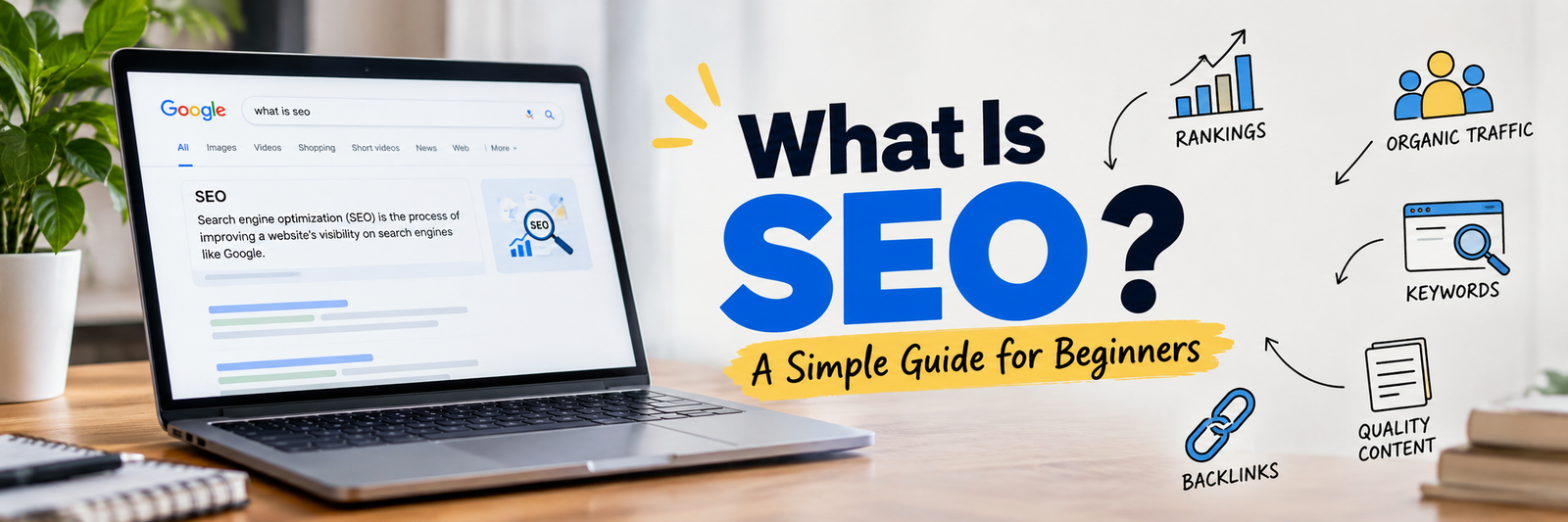
SEO in 2026 looks different from even two or three years ago. Search results now blend traditional rankings with AI Overviews, voice answers, and “People Also Ask” boxes-all pulling from sites that prove they’re trustworthy, well-structured, and genuinely useful. This guide breaks down what actually moves the needle today.
Optimizing for Local Search (Still the Foundation)
Local SEO remains the backbone of visibility for Bangalore businesses, whether you’re a restaurant in Indiranagar or a SaaS company in the Whitefield IT corridor. When someone searches “best [service] near me,” you want your business showing up in the Local Pack and on Google Maps-not buried on page two.
Local SEO in 2026 still comes down to:
- Claiming and fully optimizing your Google Business Profile, including services, photos, posts, and Q&A
- Keeping your NAP (Name, Address, Phone number) consistent across every directory and citation
- Publishing location-specific content that reflects how Bangalore audiences actually search (think “SEO agency near Koramangala” vs. generic national keywords)
- Actively managing reviews-response rate and recency now influence local rankings more than raw review count
Local example:
A mid-sized B2B services firm in the Bangalore IT corridor that consolidated its scattered location pages into a single, well-structured “Bangalore service area” hub-paired with consistent NAP data and a review-response cadence-saw steadier local pack visibility within a few months, without any new content volume. The fix wasn’t more content; it was structure and trust signals.
Optimizing for AI Overviews and Answer Engines
This is the part most SEO blogs still skip, and it’s arguably the biggest shift since 2023. Google’s AI Overviews, along with answers pulled by ChatGPT, Gemini, and Perplexity, now satisfy a huge share of searches before a user ever clicks a website.
To get pulled into these AI-generated answers, your content needs to:
- Answer questions directly and concisely near the top of the page, in plain language
- Use clear headers structured as actual questions (this also feeds FAQ schema, more below)
- Back up claims with specific data, named sources, or first-hand experience-AI systems favor content that reads as credible, not generic
- Avoid keyword-stuffed fluff; answer engines reward clarity over density
This doesn’t replace traditional ranking work-it sits alongside it. A page can rank well in AI Overviews while still earning organic clicks for users who want more depth.
E-E-A-T: Why Trust Signals Matter More Than Ever
Google’s quality framework-Experience, Expertise, Authoritativeness, and Trust-has moved from “nice to have” to a core ranking factor, especially for any site touching money, health, or legal advice (YMYL content). For Bangalore businesses, this means:
- Author bios with real credentials, not just a generic “Admin” byline
- Case studies and client results that demonstrate real-world experience, not just claims
- Transparent business information (address, team, certifications) visible on the site
- Original insight, not rehashed competitor content
Sites that skip this step increasingly struggle to rank, no matter how many keywords they target.
Improving Website User Experience and Core Web Vitals
SEO has never been just about keywords-but in 2026, technical performance is non-negotiable. Google’s Core Web Vitals (loading speed, interactivity, and visual stability) directly affect rankings, and a slow or clunky site quietly bleeds traffic regardless of how good the content is.
A well-optimized site should:
- Load in under 2-3 seconds on mobile
- Be fully navigable without layout shifts or intrusive pop-ups
- Use clean, scannable formatting-short paragraphs, bullet points, descriptive headers
- Work flawlessly on mobile, since the majority of Bangalore search traffic is mobile-first
When users stay longer and engage more, search engines read that as a trust signal too.
Creating Quality, Structured Content
Content remains central to SEO-but “quality” today means something more specific than it did a few years ago. It means content built around real search intent, structured for both human readers and AI parsers.
Effective content strategies in 2026 include:
- Answering the actual questions your audience is typing into Google, not just generic topic coverage
- Using schema markup (FAQ schema, Article schema, LocalBusiness schema) so search engines and AI tools can understand and surface your content accurately
- Mixing formats-blog posts, short videos, comparison pages, and infographics-based on how your audience prefers to consume information
- Refreshing and updating older content regularly, rather than only publishing new pages
A trustworthy, well-structured content library compounds over time, becoming an asset that keeps generating traffic long after it’s published.
Building Quality Backlinks (and Brand Mentions)
Backlinks-links from reputable external sites-still signal trust to search engines. But the bar for “quality” has risen. A handful of relevant, authoritative links now outweighs dozens of low-value ones.
What’s also changed: Google’s systems increasingly recognize unlinked brand mentions (your business name mentioned without a hyperlink) as a trust signal too. This means digital PR, founder interviews, and getting quoted in industry coverage all contribute to authority, not just traditional link-building.
A strong SEO partner focuses on:
- Earning links and mentions from respected, relevant sites in your industry
- Digital PR and outreach over volume-based link schemes
- Monitoring for harmful or spammy backlinks that could hurt your domain
Keeping Up with SEO Trends
SEO doesn’t stand still. What worked in 2023 (or even early 2025) isn’t guaranteed to work today-Google’s algorithm updates, the rise of AI search, and shifting user behavior all move the goalposts. The right SEO services in Bangalore won’t just set up a strategy and walk away; they’ll monitor performance, adapt to algorithm changes, and adjust based on what’s actually driving results.
Final Thoughts
SEO isn’t a one-time setup-it’s an ongoing process that now spans traditional rankings, AI-driven answers, and genuine trust-building. From local optimization to E-E-A-T and structured data, the businesses that win in 2026 are the ones treating SEO as a long-term growth function, not a checkbox.
If you want to take your website to the next level, consider working with Honeycomb. Our team can guide you through the complexities of modern SEO-from local visibility to AI search readiness-and help your website attract the traffic it deserves. So, why wait? Start your SEO journey today.
Frequently Asked Questions
Is local SEO still important in 2026 with AI search on the rise?
Yes-if anything, it matters more. AI Overviews and voice assistants pull heavily from Google Business Profiles and local citations to answer “near me” queries, so a strong local foundation feeds both traditional and AI-driven search.
How long does SEO take to show results for a Bangalore business?
Most businesses start seeing meaningful movement in 3-6 months, with stronger compounding results after 6-12 months of consistent work. Timelines vary by competition level and starting point.
Do I need schema markup for my website?
Yes-structured data helps search engines and AI tools accurately interpret your content, which directly affects whether you appear in rich results, FAQ snippets, and AI-generated answers.
What’s the difference between SEO and AI Overview optimization?
Traditional SEO targets blue-link rankings; AI Overview optimization targets getting your content summarized or cited inside Google’s AI-generated answer box. They overlap heavily, but AI Overviews tend to favor clear, direct answers and well-sourced claims over keyword density.
How much does SEO cost in Bangalore?
Pricing varies widely based on competition, scope, and whether you need local SEO, technical fixes, or full content strategy. Most agencies offer monthly retainers rather than one-time packages, since SEO is an ongoing process.
Can I do SEO myself instead of hiring an agency?
Basic steps like Google Business Profile setup and on-page keyword optimization are doable in-house. Technical SEO, schema implementation, and competitive content strategy usually benefit from specialist experience, especially in competitive markets like Bangalore.
Does Google still rank websites if AI Overviews answer the question directly?
Yes. AI Overviews reduce some clicks for simple queries, but users still click through for depth, comparisons, or transactional intent (booking, buying, contacting). Ranking well traditionally also improves your odds of being cited inside the AI Overview itself.