Picture this. Two teams walk into the same boardroom with the same data and the same thirty minutes to win the deal. One team opens a slide deck that looks assembled in a hurry. The other opens something that feels alive and unmistakably theirs. Nine times out of ten, the room remembers the second deck long after the numbers are forgotten. That gap is not luck. It is design, and in 2026 the gap is only getting wider.
At Honeycomb, we have spent years inside this exact moment, watching brands walk into rooms armed with nothing but a laptop and a story. As a PPT Design Services built on the belief that slides are brand touchpoints, not afterthoughts, we have had a front row seat to how presentation design is evolving. Here is what we are seeing shape boardrooms, pitch competitions, and investor decks this year.
Why Does Presentation Design Matter More Than Ever in 2026?
Attention spans are shrinking while expectations rise at the same time, which sounds contradictory until you sit through a badly designed deck. Audiences today have seen thousands of slides across webinars, LinkedIn carousels, and Netflix-style pitch videos, so their bar for visual storytelling has quietly gone up. A cluttered slide with six fonts and a stretched logo does not just look unpolished, it erodes trust in the message. That is exactly why demand for professional Powerpoint Design Services has grown among startups raising funding, enterprises running business reviews, and agencies pitching new clients. The deck has become a proxy for how seriously an organisation takes its own story.
How Is AI Changing the PPT Design Workflow?
AI tools are everywhere in design conversations, and presentations are no exception. Layout suggestions, auto-generated icon sets, and instant colour palettes have made the first draft faster than ever. But here is the nuance most people miss. AI is brilliant at speed and painfully average at judgement. It can fill a slide, but it cannot decide which idea deserves the most visual weight in a room full of stakeholders with different priorities. At Honeycomb, we use AI-assisted tools the way a chef uses a food processor, to save time on the repetitive chopping, never to decide the flavour of the dish. The strategic thinking and final polish still come from designers who understand brand psychology, not algorithms guessing at aesthetics.
Why Is Data Storytelling Replacing Data Dumping?
For years, “data-heavy slide” meant a wall of numbers and a pie chart nobody could read from the back row. That era is fading fast. In 2026, the smartest decks treat data like a character in the story, introduced gradually with context before the numbers appear. Progressive reveals, annotated charts, and single-metric hero slides are replacing dense tables. We have rebuilt investor decks where the biggest change was not adding new information, it was removing most of it and letting three numbers actually breathe. The result feels confident instead of defensive.
Are Motion and Micro Animations Becoming Standard?
Subtle motion is no longer reserved for agency showreels. Micro animations, soft transitions, and kinetic typography now show up in everyday business decks because they guide the eye and signal intentionality. The key word is subtle. Overdone animation still reads as gimmicky and dates a deck within months. Our approach at Honeycomb leans into restrained motion, transitions that support the narrative rhythm rather than distract from it, so the presentation feels premium without turning into a fireworks show.
What Role Does Bold, Confident Typography Play This Year?
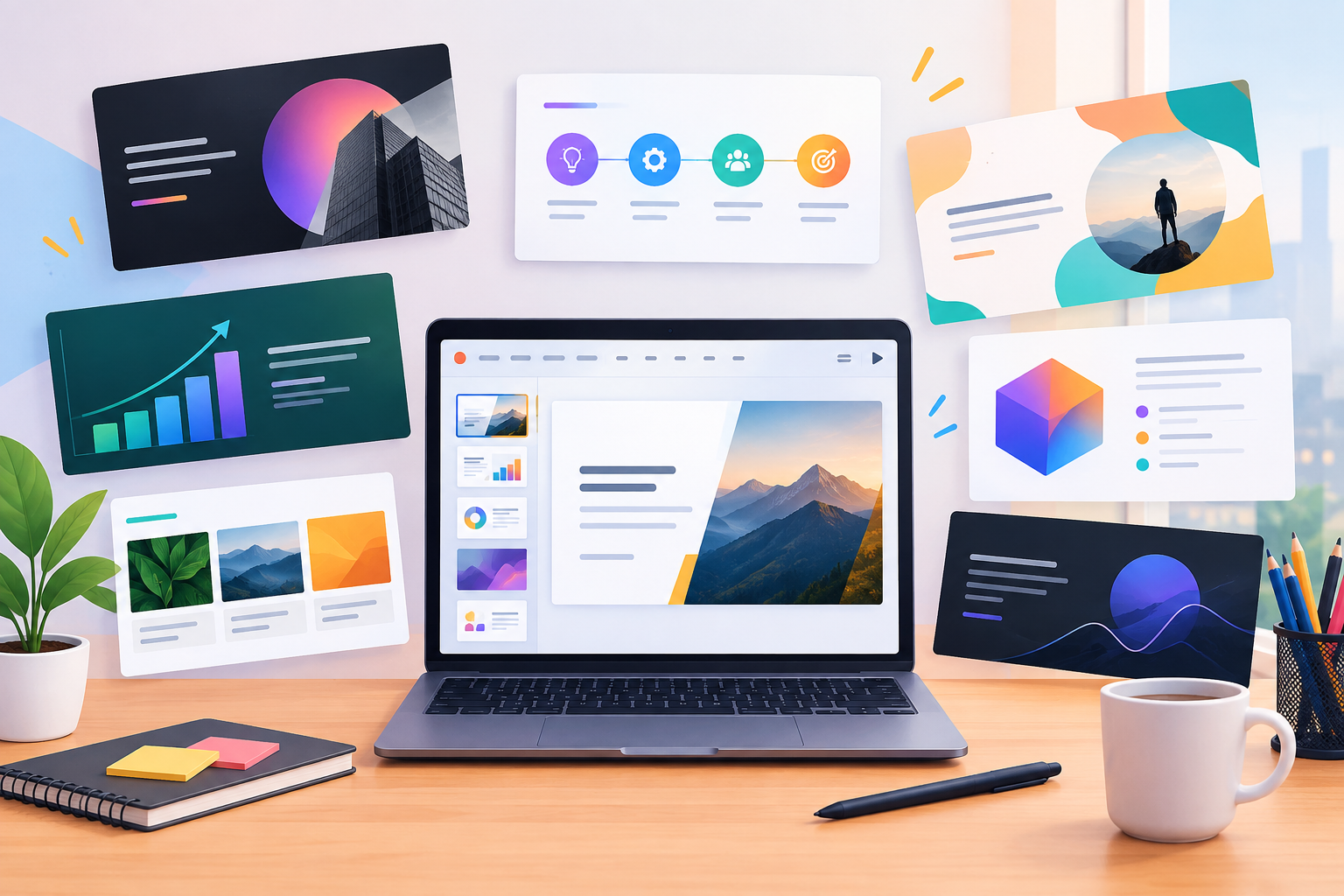
Typography is having a quiet rebellion against the safe, corporate default fonts that dominated the last decade. Brands are choosing expressive typefaces paired with generous white space to create visual hierarchy that does the heavy lifting instead of relying on decoration. Oversized headline text, asymmetric layouts, and confident negative space are showing up across pitch decks, conference talks, and internal town halls alike. Typography choices are now brand decisions, not formatting ones, and that shift is exactly the kind of detail a dedicated design partner catches before it becomes a missed opportunity.
Why Are Dark Mode and High Contrast Palettes Trending?
Dark backgrounds paired with bold accent colours have moved from tech keynotes into mainstream corporate decks. Beyond looking modern, dark mode palettes reduce eye strain in long conference room sessions and make accent colours pop far more than a plain white background allows. We often advise clients to build dual versions, a light theme for printed handouts and a dark theme for live screen presentations, so the deck performs well in every environment it will actually be viewed in.
How Are Brands Making Presentations Feel Interactive?
Static, linear slide decks are giving way to interactive formats where audiences can choose their own path through the content. Clickable navigation, embedded video snippets, and modular sections that let a presenter skip ahead based on audience questions are becoming standard, especially in sales enablement decks. This is where good presentation design overlaps with smart information architecture. It is not enough to make a slide look good, it needs to function intelligently under real, unpredictable conversation.
Why Does Brand Consistency Still Win Every Time?
With all these trends in play, one principle never goes out of style. A presentation that does not look and feel like the brand behind it is a missed opportunity, no matter how trendy the layout. This is the philosophy our Presentation Design Service practice is built around at Honeycomb. Every deck we design pulls from the same visual DNA as the client’s website, social presence, and print collateral, so the brand feels unmistakably consistent whether someone meets it on a screen, a business card, or a billboard. Consistency is not boring, it is what makes a brand instantly recognisable in a crowded pitch competition.
Related Read: Best Branding Services in India for Startups and Growing Businesses
Why Should Businesses Invest in Professional Presentation Design Services Now?
The honest answer is that competition for attention has never been higher, and a generic template is not going to cut it in 2026. Investing in expert Presentation Design Services means your next investor pitch, sales proposal, or leadership townhall does not just communicate information, it builds trust before a single word is spoken. That is the return on investment most teams underestimate until they see it in the room.
The Deck That Tells Your Story Best Wins
Presentation design in 2026 is not about chasing every trend at once. It is about knowing which ones genuinely serve your story and executing them with craft, restraint, and brand discipline. That is the sweet spot Honeycomb Creative Support lives in every single day, blending strategy, design, and storytelling into presentations that do not just get seen, they get remembered. If your next big pitch deserves more than a template, it is time to talk to Honeycomb.
Ready to turn your next presentation into your most powerful pitch yet? Get in touch with Honeycomb today and let’s design a deck that wins the room.
Frequently Asked Questions
1. What makes Honeycomb different from other presentation design agencies?
Honeycomb combines brand strategy with visual design, so every deck reflects the client’s actual brand identity instead of a generic template pulled off the shelf.
2. How long does it take to design a professional presentation?
Timelines vary by complexity, but a typical investor or corporate deck can be designed within one to two weeks once content and brand guidelines are shared.
3. Can presentation design services help with investor pitch decks specifically?
Yes, investor decks are one of the most common requests, since a well-designed pitch deck directly influences how seriously investors take the underlying business.
4. Do I need to provide the content, or can the agency help write it too?
Most agencies, including Honeycomb, can support both content structuring and visual design, though the depth of copywriting support varies by project scope.
5. Is animated or interactive presentation design more expensive than static slides?
It typically costs more due to the added design and technical work, but the investment often pays off in engagement, especially for sales and investor presentations.
6. How does AI fit into a professional presentation design process today?
AI tools speed up early drafts and repetitive tasks, but strategic layout decisions, storytelling, and brand alignment still require experienced human designers.
7. Can an existing presentation template be redesigned instead of starting from scratch?
Absolutely, many clients come with an existing deck that simply needs a visual and structural refresh rather than a full rebuild.
8. What industries does Honeycomb typically design presentations for?
Honeycomb works across startups, enterprises, and creative professionals, covering pitch decks, corporate reports, sales presentations, and conference talks.
9. How do I get started with Honeycomb’s presentation design services?
Simply reach out through Honeycomb’s website or contact channels with your requirements, and the team will guide you through the discovery and design process.