Table of Contents
- The Core Services, and What Each One Actually Does
- Search Engine Optimization (SEO)
- Pay-Per-Click Advertising (PPC)
- Social Media Marketing (SMM)
- Content Marketing
- Pay-Per-Click vs. SEO: How They Work Together
- Email Marketing
- Website Design & Development
- Video Marketing
- How to Decide Which Services You Actually Need
- What “Good” Looks Like in 2026
- How to Evaluate a Digital Marketing Partner
- Frequently Asked Questions
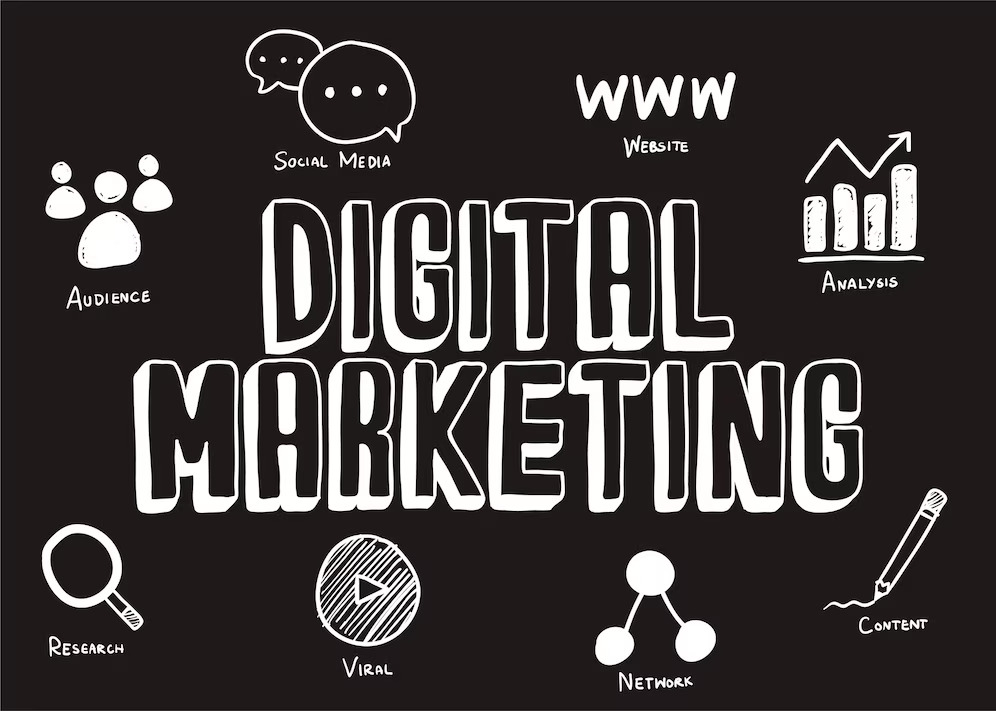
Digital marketing” gets used as a catch-all term, which is part of why so many businesses end up confused about what they’re actually paying for. SEO, PPC, social media, content, email, web design – these aren’t interchangeable, and the right mix for your business depends entirely on your goals, budget, and how your customers actually search and buy.
This guide breaks down each core digital marketing service, what it’s actually good for, how it connects to the others, and how to tell if an agency’s approach to it is substance or just a sales pitch.
The Core Services, and What Each One Actually Does
Search Engine Optimization (SEO)
SEO is the practice of improving your website so it ranks higher in organic (unpaid) search results. It’s the foundation most other digital channels build on, because organic search traffic tends to be high-intent – people are actively looking for what you offer, not just scrolling past an ad.
What it includes: technical SEO (site speed, crawlability, mobile usability), on-page SEO (keyword targeting, content structure), off-page SEO (backlinks, brand mentions), and increasingly, structured data and content formatted for AI-generated search answers.
Best for: businesses that want compounding, long-term traffic rather than traffic that disappears the moment a budget runs out.
Pay-Per-Click Advertising (PPC)
PPC puts your business at the top of search results or across other platforms immediately, in exchange for paying per click or impression. Google Ads and Bing Ads are the most common search-based options; Meta and LinkedIn ads extend this to social platforms.
What it includes: keyword bidding, ad copywriting, landing page optimization, audience targeting, and ongoing bid/budget management.
Best for: businesses that need fast visibility, are launching something time-sensitive, or want to test which keywords actually convert before investing heavily in SEO around them.
Social Media Marketing (SMM)
Social media marketing covers both organic content (posts, stories, community management) and paid social advertising. It’s less about direct search intent and more about staying visible, building brand affinity, and driving engagement that eventually converts.
What it includes: content calendars, platform-specific strategy (what works on Instagram doesn’t work the same way on LinkedIn), community management, influencer partnerships, and paid social campaigns.
Best for: brand awareness, community building, and reaching audiences before they’re actively searching – particularly strong for consumer brands and B2C businesses.
Content Marketing
Content marketing is the practice of creating valuable material – blog posts, guides, videos, infographics – that attracts and retains an audience, rather than directly pitching a product. It’s also the engine that makes SEO work, since search engines need content to rank.
What it includes: blog content, downloadable guides, video scripts, case studies, and increasingly, content structured specifically to be cited by AI search tools.
Best for: building authority in your industry and supporting every other channel – content feeds SEO, gives social media something to share, and gives PPC landing pages substance.
Pay-Per-Click vs. SEO: How They Work Together
A common mistake is treating SEO and PPC as competing options rather than complementary ones. PPC can validate which keywords actually convert before you invest months in ranking for them organically. Strong organic content, in turn, improves your Quality Score on Google Ads, which can lower your cost-per-click. Businesses that run both in tandem typically get more out of each than running either alone.
Email Marketing
Despite being one of the oldest digital channels, email marketing remains one of the highest-ROI options available, largely because you’re reaching people who’ve already opted in.
What it includes: newsletter campaigns, automated drip sequences, segmentation, and re-engagement campaigns for inactive subscribers.
Best for: nurturing leads who aren’t ready to buy yet, and retaining existing customers at a much lower cost than acquiring new ones.
Website Design & Development
Every other channel sends traffic somewhere – and if that destination is slow, confusing, or not mobile-friendly, the rest of your marketing spend underperforms. Website design and development covers both the visual/UX side and the technical backend.
What it includes: responsive design, page speed optimization, conversion-focused layout, and technical foundations that also support SEO (clean code, proper site structure, schema markup).
Best for: every business – this is the one channel that affects the performance of all the others.
Video Marketing
Video has become central to both social media and search, with platforms increasingly prioritizing video content in feeds and even in search results.
What it includes: short-form social video, explainer videos, testimonials/case studies, and increasingly, video content optimized to appear in search results alongside written content.
Best for: businesses with a visual or demonstrable product/service, and any brand trying to build trust quickly through a more personal format than text.
How to Decide Which Services You Actually Need
Most businesses don’t need all of these at once. A practical way to prioritize:
- If you have no online visibility at all: start with foundational SEO and a functional, fast website – nothing else performs well without this base.
- If you need leads or sales fast: PPC, since it doesn’t require waiting months for organic results.
- If you’re building a brand from scratch: social media and content marketing, to create awareness before people are actively searching.
- If you already have traffic but poor conversion: website UX and conversion optimization, before spending more on driving additional traffic to a leaky funnel.
- If you have customers but weak retention: email marketing, which is typically the most under-invested channel relative to its ROI.
What “Good” Looks Like in 2026
Across every channel above, a few things now separate effective digital marketing from outdated execution:
- AI-search readiness. Google’s AI Overviews and tools like ChatGPT and Gemini now answer a large share of queries directly. Content and SEO strategy need to account for this – clear, direct answers and structured data (schema markup) matter more than keyword density.
- E-E-A-T (Experience, Expertise, Authoritativeness, Trust). Generic, unattributed content increasingly underperforms. Real case studies, named authors, and transparent business information carry more weight than they used to.
- Cross-channel integration. Treating SEO, PPC, social, and content as separate workstreams instead of a connected system leaves performance on the table. The strongest results come from channels reinforcing each other.
- Measurable outcomes, not vanity metrics. Rankings and impressions matter less than leads, signups, and revenue. Any agency or in-house team should be able to tie activity back to business outcomes.
How to Evaluate a Digital Marketing Partner
Before committing budget to any agency or freelancer, ask:
- Which specific services do you recommend for my business, and why those over the others?
- Can you show case studies with real numbers, not just rankings or follower counts?
- How do you measure success, and how often will I see reporting?
- How do you handle channels working together, rather than as separate line items?
- What’s your approach to AI search and structured data, given how search is evolving?
If you’re looking for a partner that treats these services as a connected system rather than separate add-ons, Honeycomb works across SEO, PPC, social media, content, video, and web design & development, with reporting tied to leads and revenue rather than just visibility metrics – get in touch to talk through what your business actually needs.
Frequently Asked Questions
Do I need SEO and PPC, or just one of them?
They serve different purposes and work best together. PPC delivers immediate visibility and helps validate which keywords convert; SEO builds compounding, long-term traffic. Many businesses start with PPC for quick wins while SEO builds momentum in the background.
How much should a small business budget for digital marketing?
This varies widely by industry and goals, but a common approach is to start with one or two channels that match your most urgent need (visibility, leads, or retention) rather than spreading a small budget thin across everything at once.
Which digital marketing channel has the best ROI?
Email marketing is often cited as having the highest ROI because you’re reaching an already-opted-in audience at low ongoing cost. That said, “best ROI” depends on your starting point – a business with no website traffic won’t benefit from email marketing investment yet.
Is social media marketing necessary if my business is B2B?
It’s typically lower-priority than SEO, content, or PPC for B2B lead generation, but platforms like LinkedIn can still be valuable for brand visibility, thought leadership, and reaching decision-makers directly.
How do AI Overviews affect digital marketing strategy?
AI Overviews and AI search tools now answer many queries directly, which can reduce clicks for simple informational searches. The response isn’t to abandon SEO and content, but to structure it for clarity and direct answers, since well-structured content has a better chance of being cited inside AI-generated results.