Table of Contents
For manufacturers in India, the way buyers discover suppliers is changing fast. Search is becoming more conversational. Buyers are no longer typing only short keywords like “industrial valve manufacturer” or “sheet metal supplier India.” They are asking fuller questions, comparing options faster, and relying on AI-shaped search experiences to narrow choices before they ever fill out an enquiry form. Google’s search experience now includes AI Overviews, and Google also emphasizes descriptive title links, helpful content, and strong page experience when helping users find relevant pages.
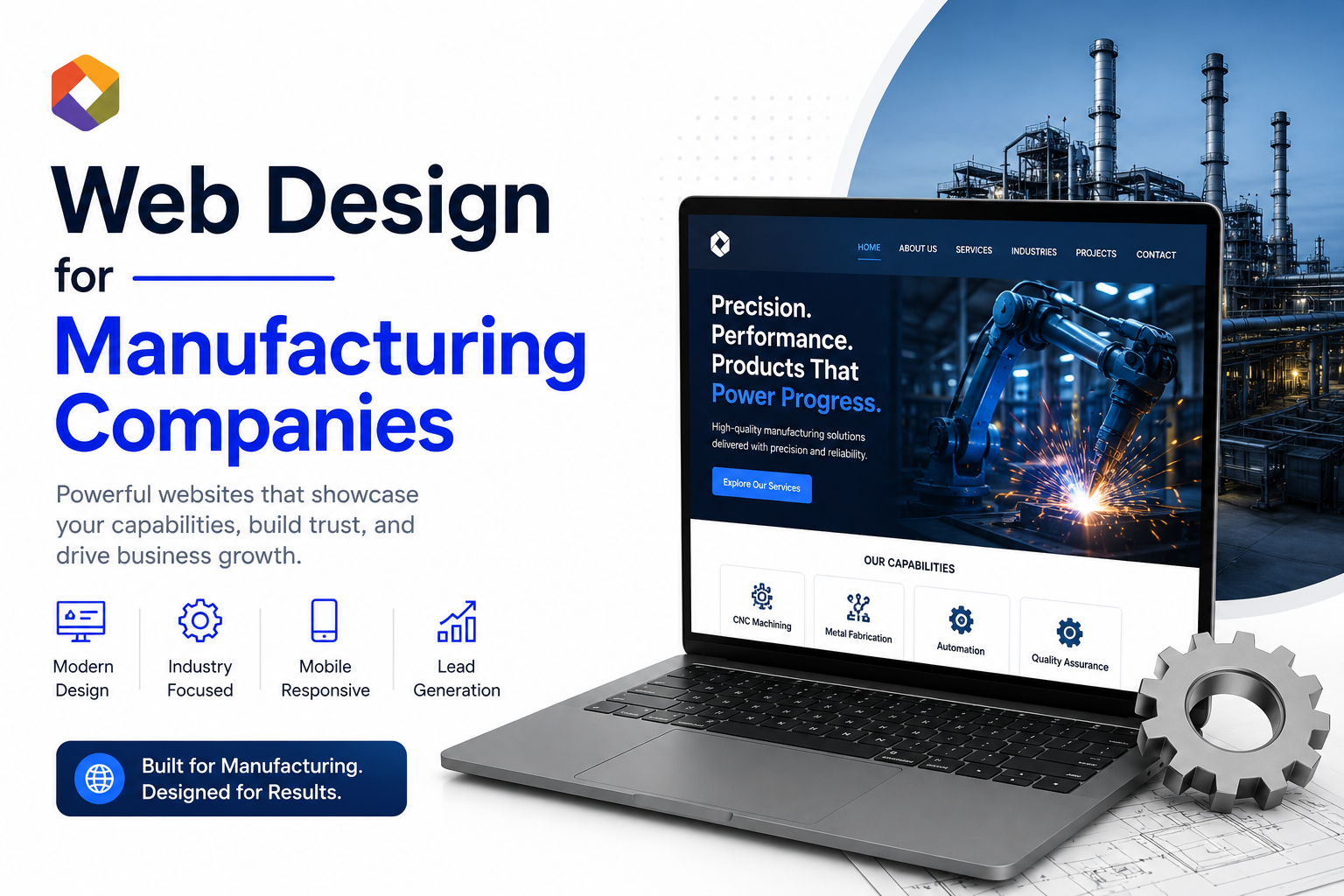
That shift has a direct implication for web design for manufacturing companies. A website that was built only to “look professional” is no longer enough. Your website now has to explain what you make, who you serve, and why you are credible in language that both buyers and search systems can understand. Google’s own guidance says title links are often the primary cue users rely on before clicking, and that helpful, people-first content should be created to benefit visitors rather than simply manipulate rankings.
Search queries are becoming more specific
A procurement manager searching by voice or using an AI-assisted search is more likely to ask something like, “Who is a reliable stainless steel fabrication partner in India for food processing equipment?” than to type a two-word phrase. That means your site has to be structured around real buying questions, not just a list of services.
If your homepage says only “leading manufacturer” and your product pages are thin, your site may still be indexed, but it will struggle to stand out. Google’s documentation explains that Search uses signals such as page titles, on-page headings, and other prominent text to understand and generate how your pages appear in results.
Buyers want answers before they want a sales call
Industrial buyers are cautious. They want proof, clarity, and technical relevance. AI-driven discovery only increases that expectation. If your website design hides specifications, certifications, industries served, export capability, or process details behind vague marketing copy, you make the buyer work too hard.
This is where website design for manufacturing company websites often falls short. Many look acceptable visually, but they are not built for real evaluation. A modern manufacturing website should help a buyer quickly confirm:
- What products or components do you make
- Which industries do you supply
- What standards or certifications do you meet
- whether you handle custom work, scale, or exports
- How to contact the right person fast
That kind of clarity aligns with Google’s people-first content guidance and also improves the experience for buyers landing from search.
Your website structure matters more than ever
If AI and search systems are trying to interpret your site, its structure becomes a competitive advantage. Clean navigation, clear H1S, focused product pages, FAQ sections, and strong internal linking help both humans and search engines understand your business.
Google Search Console is designed to show which queries bring impressions and clicks, which pages attract traffic, and how CTR changes by query, device, or page. That means manufacturers do not have to guess whether their content is working; they can see where visibility exists but buyer interest drops off.
Design now has a job beyond aesthetics
In manufacturing, design is often treated as branding. But today, design also supports discoverability and conversion. Strong web design for manufacturing companies means technical information is easy to scan, trust signals are visible early, mobile usability is solid, and enquiry pathways are friction-free.
If your website is still built like an online brochure, it may be missing the way buyers now search and shortlist suppliers. Voice search and AI are not replacing websites. They are raising the standard for what a useful website must do.
Is your website ready?
If buyers are finding manufacturers through longer, more natural questions, your website has to answer those questions clearly. If AI-generated search experiences are summarizing options faster, your pages need better structure, stronger relevance, and clearer proof.
For Indian manufacturers, the opportunity is real. The companies that win will not just have attractive websites. They will have websites built to be understood, trusted, and chosen.
A manufacturing website should no longer be designed only to exist online. It should be designed to perform in modern search.
Call Us: 90352 90915
E-mail: vani@honeycombindia.net
Location: No. 29, 3rd Cross, Venkata Reddy Layout, 6th Block, Koramangala, Bengaluru – 560 095.