Table of Contents
If you run a business, you have probably heard the term Marketing Collateral before. It sounds technical, but the idea is actually simple. Marketing collateral is any material a business uses to promote itself, explain its value, and support sales or marketing efforts.
In other words, it is the content and branded material that helps people understand who you are, what you offer, and why they should choose you.
For beginners, understanding Marketing Collateral is important because it shapes how customers experience your brand across every touchpoint.
What does marketing collateral include?
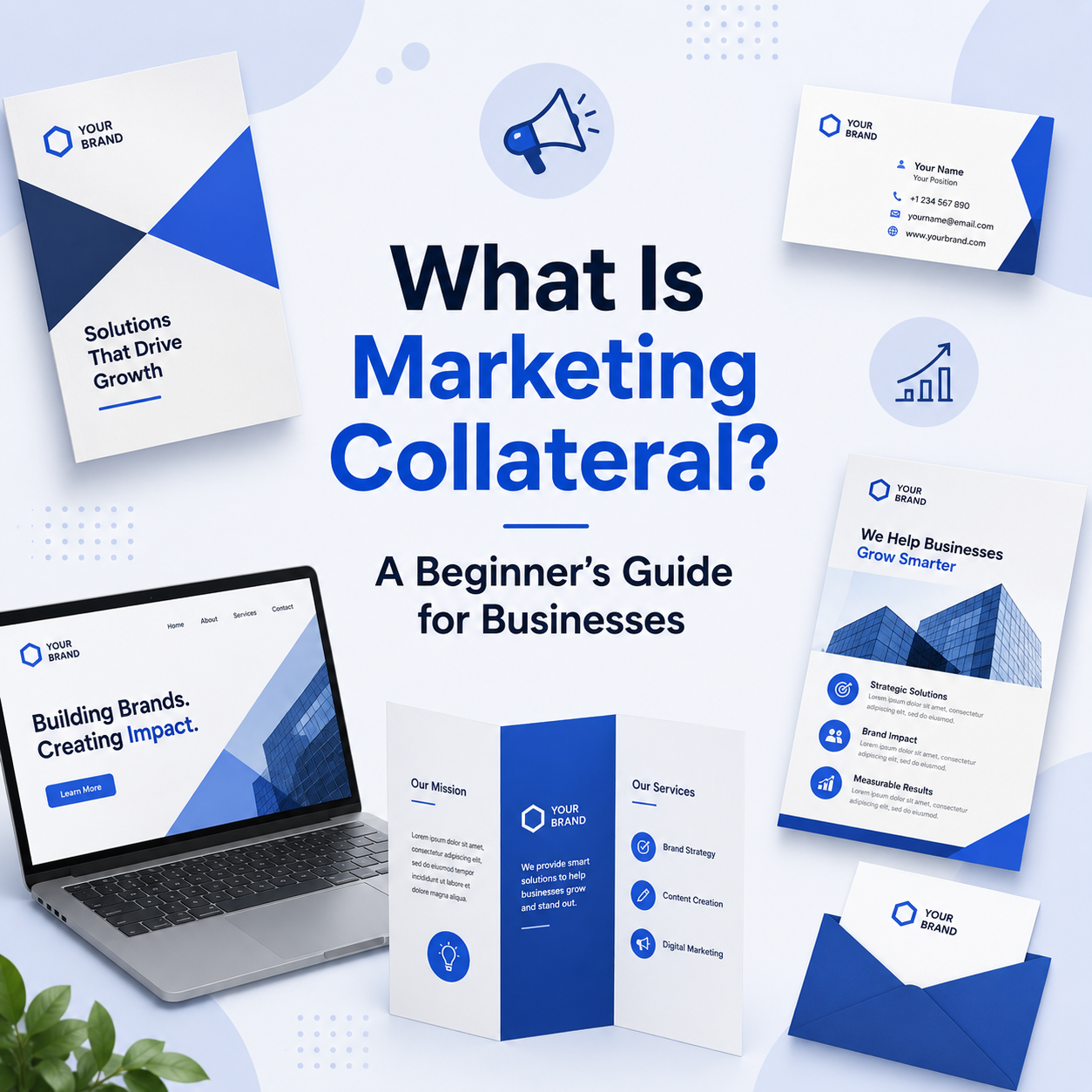
Marketing collateral can take many forms. Some are printed, while others are digital. The exact type depends on your business, audience, and goals.
Common examples include:
- Brochures
- Flyers
- Business presentations
- Product catalogs
- Company profiles
- Case studies
- Social Media Creatives
- Emailers
- Landing pages
- Videos
- Pitch decks
- One-page sales sheets
Each of these helps communicate something important about your business. Some are designed to attract attention. Others are meant to educate, build trust, or support a sales conversation.
Why marketing collateral matters
A business may have a great product or service, but if it cannot present that value clearly, it becomes harder to attract and convert customers.
That is where Marketing Collateral becomes useful. It helps businesses:
- explain their products or services clearly
- create a professional brand impression
- support the sales team with useful materials
- build trust with potential customers
- improve consistency across marketing channels
- make complex information easier to understand
Good collateral makes your business easier to remember and easier to buy from.
Marketing collateral is not just for large companies
Many small businesses assume marketing collateral is only for big brands with large budgets. That is not true.
Even a startup or local business benefits from having a few core materials in place. A simple company profile, service brochure, product sheet, presentation deck, or well-designed website page can make a major difference in how professional the business appears.
The goal is not to create everything at once. The goal is to create the right materials that support your business at the right stage.
Different types of marketing collateral serve different purposes
Not all collateral does the same job. Some assets are created for awareness, while others are designed to drive action.
For example:
- a brochure helps introduce the business
- a case study helps prove results
- a product catalog helps buyers compare options
- a landing page helps generate leads
- a pitch deck helps present the business to clients or investors
This is why businesses should think of Marketing Collateral Design as part of a bigger communication system, not just a collection of random branded documents.
What makes good marketing collateral?
Good marketing collateral is not just visually attractive. It should also be clear, relevant, and aligned with the needs of the audience.
Strong collateral usually has:
- clear messaging
- consistent branding
- useful information
- a professional design
- a defined purpose
- a clear next step or call to action
If a document looks good but does not help the customer understand or act, it is not doing its job well.
How businesses should get started
If you are just beginning, start with the essentials. Most businesses benefit from creating:
- a company profile
- a brochure or service sheet
- a presentation deck
- a few website pages
- basic social media brand assets
Once those are in place, you can build more specialized collateral based on your sales and marketing needs. Learn How to Design Marketing Collateral That Strengthens Brand Identity to ensure every asset consistently reflects your brand and supports your business goals.
Final thought
Marketing Collateral is one of the most practical tools a business can invest in. It helps you present your brand better, support customer decisions, and make your communication more effective.
For beginners, the key is to think of collateral not as extra material, but as a business asset. When created well, it does more than describe your company. It helps move people closer to trust, interest, and action.