In 2026, packaging is no longer just a way to protect a product. It has become one of the most important brand communication tools businesses have. Customers today make faster decisions, compare more options, and expect brands to deliver meaningful experiences across both physical and digital platforms. Before they try a product, they often judge its quality, value, and credibility through its packaging. This is why effective Product Packaging Design requires more than attractive visuals. It needs strategic thinking, customer understanding, functionality, and the ability to create a strong brand connection.
From sustainable materials to digital-first experiences, here are the essential elements shaping successful packaging design in 2026.
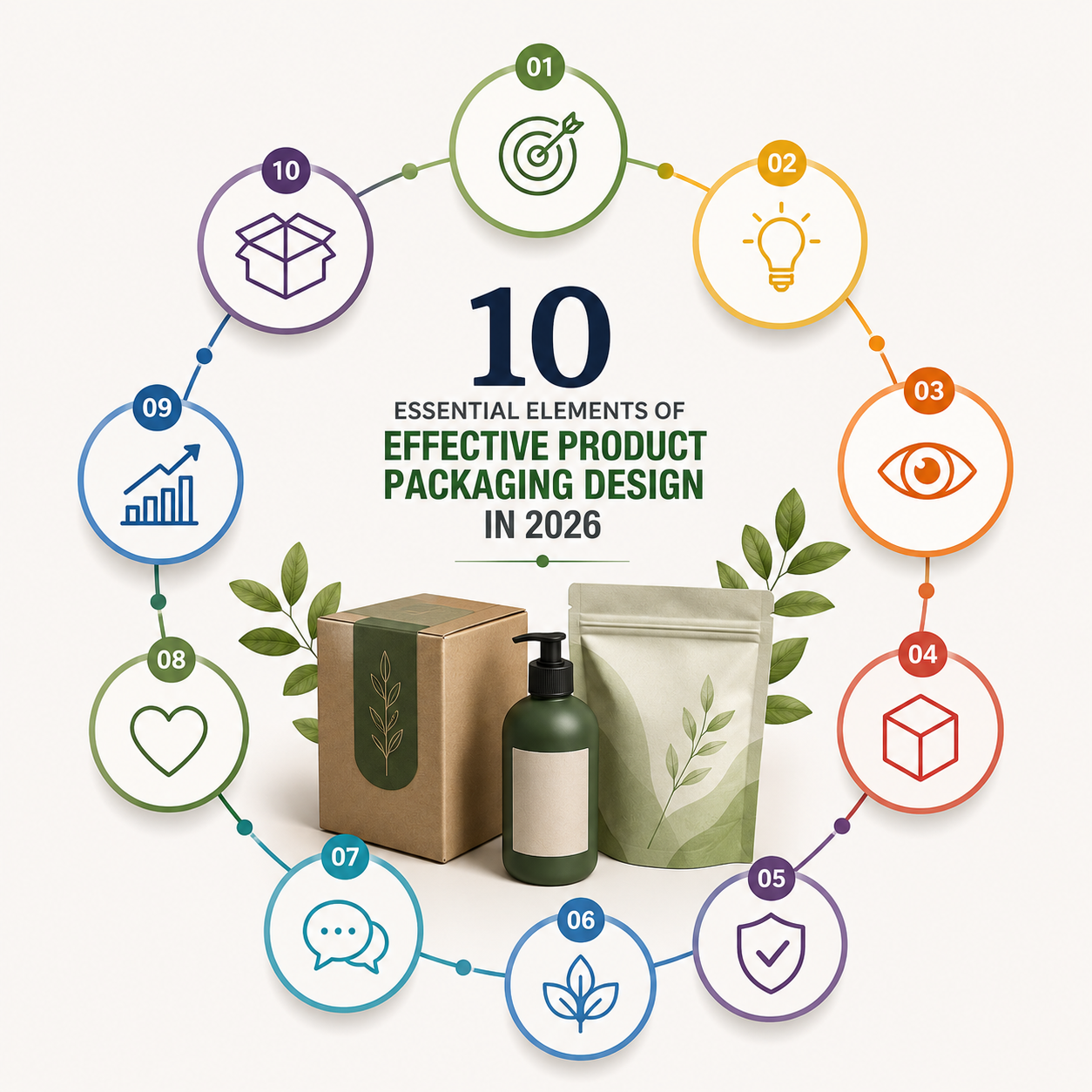
1. Strong Brand Identity Integration
The first purpose of packaging is to make the brand recognizable. Effective packaging should clearly communicate:
- Brand personality
- Visual identity
- Market positioning
- Product values
Colors, typography, logos, and design elements should work together to create a consistent brand experience. When customers can immediately identify a product among competitors, the packaging has already achieved one of its biggest goals.
2. Clear Product Communication
As highlighted in our Complete Guide to Product Packaging Design, modern customers do not want to spend excessive time understanding what a product offers. Packaging should communicate essential information quickly and clearly. This includes:
- Product benefits
- Key features
- Usage instructions
- Important details
- Differentiating factors
Good design creates a balance between information and simplicity. Too much information creates confusion, while too little creates uncertainty.
3. Sustainable Packaging Approach
Sustainability has become a major consideration for brands and consumers. In 2026, businesses are increasingly focusing on:
- Eco-friendly materials
- Reduced packaging waste
- Recyclable solutions
- Sustainable production methods
Packaging that reflects environmental responsibility can strengthen brand perception and build trust among conscious consumers. However, sustainability needs to be genuine. A green label alone does not magically transform a product into an environmentally responsible choice. Customers have become rather skilled at spotting empty claims.
4. Visual Differentiation on Shelves
Competition is intense across retail categories. A product may sit next to dozens of similar options, making visual differentiation essential. Strong packaging creates shelf impact through:
- Distinctive layouts
- Memorable graphics
- Unique structures
- Strategic color usage
The objective is not to be the loudest product on the shelf. It is to be the most relevant and recognizable to the target customer.
5. Digital-Friendly Packaging Design
The buying journey now happens across both physical and digital spaces. While understanding the difference between Packaging Design vs Branding is important, packaging itself must be optimized for visibility and engagement across multiple channels. Products need to look appealing not only on shelves but also on:
- E-commerce platforms
- Social media
- Online advertisements
- Product listings
Effective Product Packaging Design considers how packaging appears in photographs, videos, and smaller digital formats. A design that performs well online increases brand visibility across multiple customer touchpoints.
6. Functional and User-Friendly Design
Great packaging should be easy to use. Beyond appearance, designers must consider:
- Opening experience
- Storage convenience
- Product protection
- Portability
- Reusability
A package that looks impressive but creates frustration during use can negatively impact customer experience. Functionality is what turns good packaging into memorable packaging.
7. Personalization and Custom Experiences
Consumers increasingly appreciate brands that create personalized experiences. Modern packaging strategies may include:
- Limited edition designs
- Personalized messages
- Regional variations
- Interactive elements
These approaches help brands create stronger emotional connections with customers. Personalization also encourages sharing, especially on social platforms where packaging itself can become part of the customer experience.
8. Storytelling Through Packaging
The best packaging communicates more than product information. It tells a story. Brands can use packaging to highlight:
- Their origin
- Their values
- Their craftsmanship
- Their purpose
Story-driven packaging helps customers understand the brand behind the product. When customers connect with the story, they are more likely to remember and trust the brand.
9. Consistency Across Product Lines
For businesses with multiple products, consistency is essential. A strong packaging system ensures that different products feel connected while still having their own identity. This includes maintaining consistency in:
- Colors
- Typography
- Layout styles
- Brand elements
10. Adaptability for Future Growth
Markets change quickly, and packaging needs to evolve with them. Modern packaging systems should allow brands to:
- Introduce new products
- Update messaging
- Expand into new markets
- Adapt to customer expectations
Flexible design thinking ensures businesses do not need to completely rebuild their packaging every time they grow.
Conclusion
Effective Product Packaging Design in 2026 is about creating experiences, not just containers. The most successful packaging combines brand identity, customer understanding, sustainability, functionality, and visual impact to influence buying decisions and build long-term recognition. As competition increases across industries, packaging will continue to play a critical role in how customers discover, evaluate, and remember brands. Because before customers experience what is inside the box, they first experience the box itself.