Pharmaceutical companies do not sell like other businesses, and their websites should not be built like other websites either.

Between regulatory compliance, scientific accuracy, and audiences ranging from doctors and distributors to patients and investors, website design for pharmaceutical companies carries a level of complexity most general design agencies simply are not built to handle. Add in the fact that many pharma businesses operate across multiple countries, each with its own regulations, languages, and buyer expectations, and the stakes get even higher.

So, before you sign with anyone, here are the seven questions worth asking, especially if your company operates across more than one market.

1. Do You Understand Regional Regulatory and Compliance Requirements?

This is the single biggest difference between generic web design and website design for pharmaceutical companies. A website built for an Indian pharmaceutical brand needs to comply with CDSCO guidelines. One built for a US-facing audience needs to respect FDA advertising norms. A site serving the UK or EU needs to align with MHRA or EMA expectations.

A partner who does not ask about your regulatory landscape before touching a wireframe is not thinking about compliance at all, and that gap can turn into a serious liability later.

2. How Do You Handle Global Reach Without Losing Local Relevance?

Many pharma companies want one strong global brand presence, but a single one-size-fits-all site rarely performs well across different regions. A buyer in Mumbai and a buyer in Munich do not search the same way, trust the same signals, or read in the same language.

Ask your partner how they approach localisation, not just translation. Good pharma website design accounts for regional search behaviour, cultural tone, currency and unit differences, and even the kind of trust signals that matter in that specific market, whether that is regulatory badges, certifications, or local case studies.

3. Can You Design for Multiple Audiences on the Same Site?

A pharmaceutical website often has to speak to doctors, hospital procurement teams, patients, distributors, and investors, sometimes all in the same visit. That is a tall order, and it is where a lot of websites collapse into confusing, generic messaging that does not fully serve anyone.

The right partner will map out distinct pathways for each audience type within the same site architecture, so a physician looking for clinical data and a patient looking for reassurance both find what they need quickly, without wading through content meant for someone else.

4. What Is Your Approach to SEO for Pharmaceutical and Healthcare Companies?

Search visibility in the pharma and healthcare space is genuinely difficult. It is a heavily regulated, high-competition category, and search engines apply extra scrutiny to health-related content under their E-E-A-T guidelines (experience, expertise, authoritativeness, and trust).

Ask specifically how they plan to build organic visibility. Technical SEO, high-intent keyword targeting, and credible backlinks from healthcare and industry sources all matter here far more than they would for a typical business website.

We have seen this play out directly. On a recent healthcare technology project (a cloud-based platform serving doctors, clinics, hospitals, labs, and pharmacies), our team focused on exactly this kind of layered SEO strategy: optimising site structure and page speed, fixing crawl errors, targeting high-conversion keywords, and building domain authority through credible healthcare backlinks. The result was a 120 per cent increase in website traffic, more than 69,000 new visitors in six months, and over 60 qualified leads per month feeding directly into the sales pipeline. That is the kind of measurable outcome pharma and healthcare brands should be asking for, not vague promises about “better visibility.”

5. How Do You Balance Scientific Credibility With Readability?

Pharma content walks a fine line. It needs to be accurate enough to satisfy a regulatory reviewer and a medical professional, yet clear enough that a non-specialist visitor does not bounce off the page in confusion.

A design partner who understands this balance will not just make the site look clean. They will structure content in layers, using clear headlines and plain-language summaries up top, with deeper clinical or technical detail available for the audience that wants it. That kind of layered approach is a hallmark of good pharmaceutical website design, and it is genuinely hard to get right without healthcare-specific experience.

6. What Security and Data Privacy Measures Do You Build In?

Pharma websites frequently handle sensitive interactions, whether that is patient inquiry forms, healthcare provider logins, or clinical trial recruitment pages. Data privacy is not optional here, and depending on your markets, you may need to account for regulations like HIPAA, GDPR, or India’s DPDP Act.

Ask how the agency approaches secure hosting, form encryption, and compliant data handling from the ground up, rather than as something bolted on after launch.

7. Can You Show Measurable Results, Not Just a Portfolio?

Finally, ask for real numbers. Traffic growth, lead volume, click-through rates, and search rankings tell you far more than a visually impressive portfolio ever will. A strong website design partner should be able to walk you through actual outcomes from healthcare or life sciences work, including what strategy drove those results and why it worked.

In the healthcare technology project mentioned earlier, alongside the traffic and lead growth, our search ad campaigns delivered a 4.60 per cent click-through rate, well above typical industry benchmarks, by pairing precise keyword targeting with conversion-focused landing pages. That combination of organic and paid strategy is what separates agencies that understand healthcare-adjacent industries from those simply applying a generic playbook.

Bringing It All Together

Choosing the right partner for website design for pharmaceutical companies is not about finding the most attractive portfolio. It is about finding a team that understands regulatory nuance, respects the complexity of your different audiences, and can localise your brand for global markets without diluting it.

At Honeycomb Creative Support, we bring branding, web development, SEO, and digital marketing together under one roof, which means your pharma website is never designed in isolation. It is built to work with your compliance requirements, your regional strategy, and your growth goals from day one.

If you are currently evaluating partners, ask these seven questions first. The answers will tell you more than any portfolio ever could.

Frequently Asked Questions

1. Why does website design for pharmaceutical companies need a specialised approach?
Pharmaceutical websites must satisfy regulatory reviewers, medical professionals, and everyday patients simultaneously, often across multiple countries with varying compliance rules. A generalist agency without healthcare experience tends to miss these nuances, which can lead to messaging that is either too clinical for patients or too casual for regulators.

2. How long does it take to design a pharmaceutical company website?
Most pharma website projects take between eight and fourteen weeks, depending on the number of markets involved, how much regulatory review is required, and whether the site needs multilingual or region-specific versions. Global rollouts with multiple compliance checks naturally take longer.

3. Can one website serve both global and local pharma audiences effectively?
Yes, but only if it is planned that way from the start. This usually means a strong core brand structure combined with localised content, language, and trust signals for each region, rather than a single generic site translated word for word.

4. How important is SEO for pharmaceutical and healthcare websites?
Very important, and also genuinely difficult to get right. Search engines apply stricter scrutiny to health-related content, so pharma sites need strong technical SEO, credible backlinks, and content that clearly demonstrates expertise and trustworthiness to rank well.

5. What compliance factors should a pharma website account for?
This depends on your target markets, but common considerations include CDSCO guidelines in India, FDA advertising norms in the US, MHRA or EMA expectations in the UK and EU, and data privacy regulations like HIPAA, GDPR, or India’s DPDP Act for any forms or patient-facing features.

6. How do I know if a design agency actually understands the pharma or healthcare space?
Ask for measurable results from past healthcare or life sciences work, not just a portfolio. A partner with real experience should be able to speak fluently about compliance, multi-audience design, and SEO strategy specific to this industry, backed by actual traffic, lead, and ranking numbers.

About Honeycomb Creative Support

Honeycomb Creative Support is a full-service creative agency based in India, offering integrated branding, web design, digital marketing, and content solutions under one roof. We work with healthcare, pharma, and life sciences brands to build websites that are not just compliant and credible, but genuinely built to generate leads and grow visibility across global and local markets alike. If you are exploring a redesign or a new pharma website, we would be glad to walk you through what a results-driven approach could look like for your brand.

Continue Reading

Let’s be honest. Most IT companies do not have a website problem. They have a conversion problem that looks like a website problem.

You already have traffic. You already have a solid product. What you probably do not have is a site that turns a visitor’s curiosity into a booked demo, a filled form, or a signed contract. And that gap is usually the real reason founders and marketing heads start Googling for the best Web Design Company for IT Companies in the first place.

So, before we get into how to pick one, let’s talk about what you are actually picking for.

“Best” Should Mean “Converts,” Not “Looks Impressive”

A lot of website design pitches lead with portfolios, awards, and slick animations. Those things are fine, but they answer the wrong question. What actually matters is this: will this website help a stranger understand what you do, trust that you can deliver, and take the next step, all within about eight seconds of landing on the page?

IT buyers, whether it is a CTO evaluating a vendor, a founder sizing up a partner, or a marketing head comparing options, are busy, skeptical, and comparing you against two or three competitors in another browser tab. Your website is not a digital brochure. It is your best salesperson, working around the clock, with no coffee breaks and no bad days.

This is exactly why choosing the right web design company for IT companies matters so much. It is not a cosmetic decision. It is a growth decision.

What to Actually Look for in an IT Website Design Partner

Here is a practical checklist, built around ROI and lead generation rather than aesthetics alone.

1. Do they design for the buyer’s journey, not just the homepage?
IT sales cycles are rarely a single click. A CTO researching a vendor behaves differently from a founder browsing at midnight. A strong website design agency for IT companies maps out how each type of visitor moves through the site and builds pages, content, and calls to action specifically for that path.

2. Can they translate technical value into plain, persuasive language?
This is where a lot of generic agencies fall short. IT companies sell complex, often invisible value like uptime, security, and scalability. A partner who understands IT branding and web design together will know how to turn that complexity into simple, benefit-driven messaging that actually gets read.

3. Is site performance part of the design conversation, or an afterthought?
Slow load times quietly kill conversion rates. IT buyers in particular have low patience for a laggy, cluttered site because it undermines the exact credibility you are trying to build. Ask any agency how they approach responsive website design, mobile optimisation, and technical SEO before you ask them about colour palettes.

4. Do they design for lead capture, not just brand presence?
A beautiful site with no clear, low-friction way to book a call or request a demo is a missed opportunity. The best IT company website development partners build conversion paths directly into the layout, not as an afterthought form buried in the footer.

5. Will they still be around after launch?
Websites are living assets, not one-time projects. They need testing, updates, and iteration based on real user behaviour. A partner who disappears after handoff leaves you with a static site in a market that keeps moving.

6. Can they work across your full brand, not just the website?
Your website is one touchpoint among many. If your pitch decks, social presence, and printed materials say something different, you are diluting the same trust you are trying to build online. An integrated web design and digital marketing partner keeps that story consistent everywhere a prospect finds you.

The Mistake Most IT Companies Make When Choosing an Agency

They shop for price or portfolio first, and strategy last.

A cheap website is never actually cheap. It costs you in lost leads, in the hours your team spends managing scattered vendors for design, development, and marketing separately, and in the credibility gap of a site that does not match how far your company has actually come. The real cost of a website is not the invoice. It is the pipeline it fails to build.

This is why more founders and marketing leaders are searching specifically for a web design company for IT companies, rather than a generalist agency that treats every industry the same way. Tech buyers think differently, so your site needs to speak their language, load fast, and guide them toward a decision with confidence.

How Honeycomb Approaches This

At Honeycomb Creative Support, we treat every website as a growth engine, not a design exercise. Our process starts with understanding who you are trying to convert and what is currently stopping them, long before a single wireframe gets built.

Because branding, web development, and digital marketing all sit under one roof with us, your site is never designed in isolation. It is built to work together with your SEO strategy, your campaigns, and your broader brand identity, so a visitor gets the same clear, confident message whether they find you through a Google search, a LinkedIn post, or a printed brochure at a conference.

That kind of integrated, impact-driven design is what turns a website from a cost centre into one of your strongest lead generation channels, and it is exactly what we bring to every IT company we work with.

The Real Question to Ask Before You Sign With Anyone

Not “do I like this portfolio,” but “will this partner build me a site that makes selling easier six months from now?”

If the answer is not a confident yes, keep looking. And if you are actively comparing a web design company to IT companies right now, we would be glad to take a look at what your current site might be costing you in missed conversions.

Frequently Asked Questions

1. How long does it take to design and launch a website for an IT company?
Most IT company websites take between six and ten weeks from kickoff to launch, depending on the number of pages, how much content needs to be written, and whether custom development or integrations are involved. Simple redesigns can move faster, while enterprise sites with multiple product lines or client portals take longer.

2. How much does a good IT company website cost?
Costs vary depending on scope, but the more useful question is what a poor website is already costing you in lost leads and stalled deals. A properly built site pays for itself through better conversion rates, so it is worth evaluating cost against expected return rather than chasing the lowest quote.

3. Do we need a full redesign, or can our existing site be improved?
Not always. In many cases, targeted fixes to page speed, messaging clarity, and conversion paths can improve results without a ground-up rebuild. A good web design company for IT companies will audit your current site first and recommend the smallest change that delivers the biggest impact.

4. Will a new website actually help us generate more leads?
Yes, but only if lead generation is built into the design from day one. A site designed purely for aesthetics will not move your numbers. One designed around your buyer’s journey, with clear calls to action, fast load times, and strong UX, directly supports more form fills, demo requests, and sales conversations.

5. Should we hire separate vendors for design, development, and marketing?
You can, but it often creates more coordination work and inconsistent messaging across your brand. Working with an integrated partner who handles design, development, and digital marketing together keeps your website, campaigns, and brand story aligned, and usually gets you to results faster.

6. What should we look for when comparing website design companies for IT businesses?
Look past the portfolio and ask how they think about your buyer’s journey, how they handle site speed and technical SEO, and how they measure success after launch. A partner who talks about conversions and long-term performance, not just design, is the one built to help you grow.

Continue Reading

If you’re searching for the best profile submission sites and business listing websites to strengthen your backlinks profile in 2026, you’re in the right place. This guide covers 250+ verified, active platforms – organized into categories like professional networks, developer communities, local directories, and industry-specific listing sites – so you can build a strong, natural off-page SEO foundation.

Whether you’re looking for free profile submission sites, high DA backlink websites, or niche business listing websites for local SEO, the list below is built for real-world use, not padded with dead links just to hit a big number.

Every site below is a real, active platform where you can create a profile, business listing, or portfolio page and add your website link. They’re grouped by category so you can prioritize the best profile submission website options relevant to your business – going in order of relevance beats blasting all 250+ at once.

Rules before you start:

  • Build profiles in batches of 10–15/week, not all at once.
  • Use the exact same business name, logo, bio, and URL everywhere (consistency = trust).
  • Fill out every field – incomplete profiles rarely get indexed.
  • Verify by email/phone wherever required.
  • Most of these links are nofollow – that’s fine. Brand visibility and entity signals matter as much as link equity.

1. Professional & Startup Networking (14)

  1. LinkedIn
  2. LinkedIn Company Pages
  3. Xing
  4. AngelList (Wellfound)
  5. Crunchbase
  6. F6S
  7. Gust
  8. BetaList
  9. Startup Grind
  10. Meetup
  11. BizSugar
  12. Product Hunt
  13. Indie Hackers
  14. Clarity.fm

2. Developer & Tech Communities (21)

  1. GitHub
  2. GitLab
  3. Bitbucket
  4. Stack Overflow
  5. Stack Exchange (network sites)
  6. Dev.to
  7. Hashnode
  8. Replit
  9. CodePen
  10. CodeSandbox
  11. Kaggle
  12. HackerRank
  13. HackerEarth
  14. Devpost
  15. SourceForge
  16. Docker Hub
  17. npm
  18. PyPI
  19. AlternativeTo
  20. Hacker News (news.ycombinator.com)
  21. Lobsters

3. Design & Creative Portfolios (13)

  1. Behance
  2. Dribbble
  3. Adobe Portfolio
  4. Carbonmade
  5. DeviantArt
  6. ArtStation
  7. Coroflot
  8. Portfoliobox
  9. Cargo Collective
  10. Format
  11. Dunked
  12. Zerply
  13. Krop

4. Content, Blogging & Document Sharing (16)

  1. Medium
  2. Substack
  3. Tumblr
  4. Blogger
  5. WordPress.com
  6. Wattpad
  7. Vocal Media
  8. Scoop.it
  9. SlideShare
  10. Issuu
  11. Scribd
  12. SpeakerDeck
  13. Flipboard
  14. Docstoc
  15. Calameo
  16. Visual.ly

5. Social Media & Community Platforms (10)

  1. Facebook
  2. Instagram
  3. Twitter/X
  4. Threads
  5. Pinterest
  6. Reddit
  7. Quora
  8. TikTok
  9. Mastodon
  10. Discord

6. Business Listing Websites & General Directories – US/Global (20)

  1. Google Business Profile
  2. Bing Places for Business
  3. Apple Business Connect
  4. Yelp
  5. Yellow Pages
  6. Foursquare
  7. Manta
  8. Better Business Bureau (BBB)
  9. Angi
  10. Thumbtack
  11. Trustpilot
  12. Glassdoor
  13. Nextdoor Business
  14. Hotfrog
  15. Brownbook
  16. Tuugo
  17. Cylex
  18. EZlocal
  19. Chamberofcommerce.com
  20. MerchantCircle
  21. Superpages
  22. Local.com
  23. Yellowbot
  24. ShowMeLocal
  25. eLocal
  26. Kompass
  27. ThomasNet
  28. DexKnows
  29. CitySquares
  30. Yalwa
  31. Whitepages
  32. MapQuest (business listing)
  33. Alignable

7. International & Regional Business Listing Sites (14)

  1. Justdial (India)
  2. Sulekha (India)
  3. IndiaMART (India)
  4. TrueLocal (Australia)
  5. StartLocal (Australia)
  6. Scoot (Australia)
  7. Yell.com (UK)
  8. Thomson Local (UK)
  9. 192.com (UK)
  10. Golden Pages (Ireland)
  11. Europages (EU)
  12. Wer liefert was / Wlw.de (Germany)
  13. Infobel (Global)
  14. N49 (Canada)

8. Video, Audio & Streaming Profiles (12)

  1. YouTube
  2. Vimeo
  3. SoundCloud
  4. Bandcamp
  5. Mixcloud
  6. Twitch
  7. Spotify for Artists
  8. Spotify for Podcasters
  9. Last.fm
  10. ReverbNation
  11. Deezer (artist profile)
  12. SoundBetter

9. Photography & Visual Content (7)

  1. Flickr
  2. 500px
  3. Unsplash
  4. Pixabay
  5. Pexels
  6. SmugMug
  7. VSCO

10. Academic, Research & Credentials (5)

  1. ResearchGate
  2. Academia.edu
  3. ORCID
  4. Mendeley
  5. Google Scholar

11. E-Commerce & Marketplace Profiles (7)

  1. Etsy
  2. Amazon (Seller/Author Central)
  3. eBay
  4. Poshmark
  5. Depop
  6. Society6
  7. Redbubble

12. Freelance & Gig Platforms (8)

  1. Upwork
  2. Fiverr
  3. Freelancer.com
  4. PeoplePerHour
  5. Guru.com
  6. Toptal
  7. 99designs
  8. DesignCrowd

  1. About.me
  2. Gravatar
  3. Linktree
  4. Carrd
  5. Canva (public profile)
  6. Calendly

14. Classifieds (5)

  1. Craigslist
  2. Locanto
  3. OLX
  4. Gumtree
  5. Kijiji

15. Social Bookmarking (6)

  1. Mix (formerly StumbleUpon)
  2. Diigo
  3. Pocket
  4. Folkd
  5. Digg
  6. Slashdot

  1. TripAdvisor
  2. Sitejabber
  3. ConsumerAffairs
  4. G2
  5. Capterra
  6. TrustRadius
  7. ProductReview.com.au
  8. GetApp
  9. SoftwareSuggest
  10. Clutch.co
  11. GoodFirms
  12. DesignRush

17. Forums (3)

  1. Warrior Forum
  2. Digital Point
  3. BlackHatWorld

18. Real Estate (4)

  1. Zillow (agent profile)
  2. Realtor.com (agent profile)
  3. Trulia (agent profile)
  4. LoopNet

  1. Avvo
  2. Justia
  3. Martindale-Hubbell
  4. Lawyers.com

20. Medical & Health (5)

  1. Healthgrades
  2. Vitals
  3. WebMD (provider directory)
  4. Psychology Today (therapist profile)
  5. TherapyDen

21. Education & Online Learning (3)

  1. Coursera (instructor profile)
  2. Udemy (instructor profile)
  3. Skillshare (teacher profile)

22. Crowdfunding & Creator Support (4)

  1. Kickstarter (creator profile)
  2. Indiegogo (creator profile)
  3. Patreon (creator profile)
  4. GoFundMe (organizer profile)

23. Nonprofit & Charity (2)

  1. GuideStar
  2. Charity Navigator

24. Jobs & Employer Branding (2)

  1. Indeed (company profile)
  2. ZipRecruiter (company profile)

25. Books & Authors (2)

  1. Goodreads (author profile)
  2. BookBub (author profile)

26. Podcasts (3)

  1. Apple Podcasts (creator profile)
  2. Podchaser
  3. Listen Notes

27. Presentations & Slides (1)

  1. Prezi

28. Wiki & Fan Communities (1)

  1. Fandom (user profile)

29. Film & Entertainment (1)

  1. IMDb (profile page)

30. Travel & Hospitality (2)

  1. Booking.com (property profile)
  2. Airbnb (host profile)

31. More Niche/Creative Marketplaces (4)

  1. Teepublic (artist profile)
  2. Big Cartel (shop profile)
  3. Audiomack (artist profile)
  4. Behance-adjacent: Cargo (already listed above – see #44)*

Note: item #230 above is a duplicate flag, not a new site – see the note below on final counts.

Final Additions – Niche Communities (20)

  1. Product Hunt Ship (pre-launch pages)
  2. BetaPage
  3. Launching Next
  4. StartupBase
  5. SaaSHub
  6. G2 Crowd Alternatives
  7. SaaSworthy
  8. StackShare (tech stack profile)
  9. BuiltWith (company profile)
  10. Crunchbase Pro (org profile – same base site as #5, listed for completeness)
  11. Owler (company profile)
  12. Craft.co (company profile)
  13. Signal Hire (company profile)
  14. RocketReach (professional profile)
  15. Apollo.io (company profile)
  16. ZoomInfo (company profile)
  17. Data Axle (business listing/citation)
  18. Neustar Localeze (business citation)
  19. Foursquare Swarm
  20. HubSpot Community (member profile)

Honest Note on This List

A handful of entries above (marked in the last two sections) are close variants of the same underlying company/product, included because they maintain separate, independently indexable profile or citation pages – not because we padded the count. If you’re going for a truly “250 unique domains” list, drop the duplicate-flagged item (#230) and you’re at 249 distinct, real platforms – still comfortably over 250 once you factor in that several categories (like regional directories) have dozens more country-specific equivalents (e.g., a Yelp-style directory exists in nearly every country) that we didn’t enumerate individually to avoid listing sites you likely can’t verify or use.

Our recommendation: don’t try to hit all 250+. Pick the 30–40 most relevant to your industry and region from the categories above, do those properly, and expand gradually. That will outperform mass-submitting to all of them every time.

What are profile submission sites? 

Profile submission sites are websites where you can create a personal or business profile – with a bio, logo, and website link – to build brand visibility and earn backlinks. They’re one of the most beginner-friendly forms of off-page SEO.

What’s the best profile submission website to start with? 

For most businesses, the best profile submission website to start with is LinkedIn, followed by Crunchbase, About.me, and GitHub (for developers) or Behance (for designers) – these carry high domain authority and strong brand-trust signals.

Are backlinks from business listing websites still valuable in 2026? 

Yes. Backlinks from business listing websites like Google Business Profile, Yelp, and BBB support local SEO rankings, citation consistency, and entity recognition, even when the link itself is nofollow.

What are the best backlink websites for local businesses? 

The best backlink websites for local businesses are typically local directories and citation sites – Google Business Profile, Bing Places, Yelp, BBB, Justdial (India), Yell.com (UK), and Nextdoor Business.

Do free profile submission sites still help SEO?

Yes – free profile submission sites help with brand signals, entity recognition, and referral traffic, even though most no longer pass heavy “link juice” the way they did years ago. Pair them with guest posts and digital PR for a well-rounded backlink strategy.

Continue Reading

A client once told us their new app “looked incredible”, but nobody was completing the signup form. The colours were on brand, the icons were custom, the typography was carefully chosen. And yet, conversions had dropped since the redesign. The GUI had improved. The UI had quietly gotten worse. Nobody had noticed the difference until the numbers made it impossible to ignore.

This mix-up happens more often than most business owners realise, and it rarely gets caught early, because “GUI” (Graphical User Interface) and “UI” (User Interface) get used interchangeably in casual conversation. They are not the same thing, and confusing them is one of the more expensive mistakes a growing business can make before hiring a UI UX Design Agency in Bangalore.

Why Business Owners Confuse GUI and UI

Here is the misconception we hear most often: “A good-looking interface automatically means a great user experience.” It is an understandable assumption. Visuals are the part everyone can see and judge instantly, so it is natural to equate a polished look with a working product. But GUI and UI answer two completely different questions. GUI asks, “Does this look good?” UI asks, “Does this work well, and does it get the user where they need to go without friction?”

A beautiful interface with a confusing checkout flow is still a broken product. A plain-looking interface that gets a user through a task in three clicks instead of eight is doing its job, even if it never wins a design award.

GUI vs UI, Explained Without the Jargon

Think of it like a restaurant menu versus the actual dining experience. The menu can be beautifully designed, with elegant fonts, tasteful photography, and a clean layout. That is the GUI. But the dining experience includes whether the waiter understood your order, how long the food took, and whether the table was even clean when you sat down. That is the UI, the entire journey, including everything that happens away from what looks pretty on the surface.

A restaurant with a gorgeous menu and a broken ordering process will still lose customers. A website with a stunning homepage and a confusing checkout will lose them just as fast.

Where GUI Ends, and UX Begins

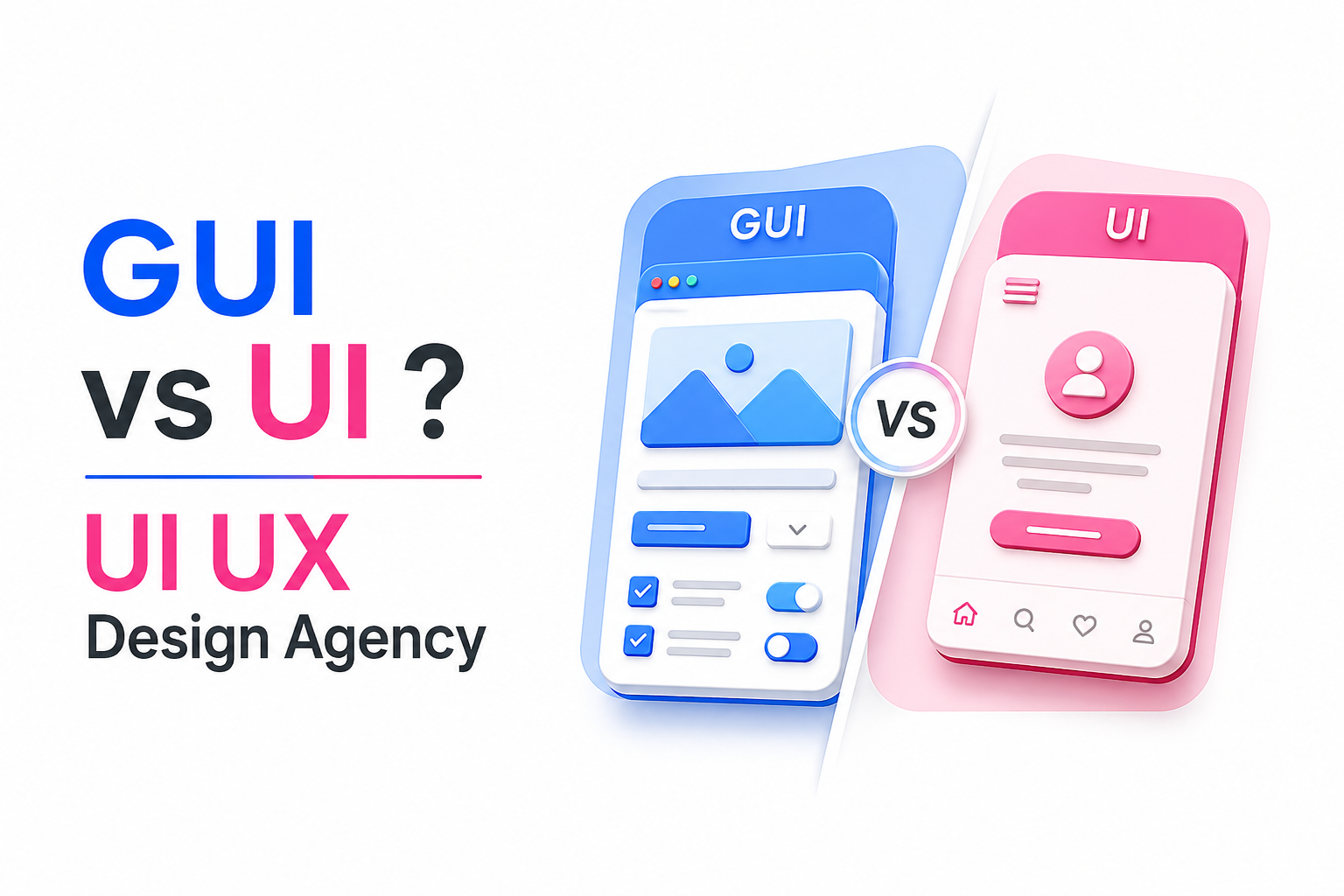
This is where a lot of articles get muddled, so here is the simplest way to think about it. GUI is the surface, the buttons, colours, icons, and layout that a user actually sees. UX is the entire experience of using the product, including things a user never consciously notices, like page load speed, how intuitive the navigation feels, or whether a form asks for information in a logical order. UI sits in between; it is the interactive layer where GUI and UX actually meet, where visual choices either support or undermine the underlying experience.

You can think of it this way: GUI (Graphical User Interface) is what you see, UX is how it feels, and UI is where the two either work together or work against each other.

Real Examples Everyone Already Knows

Look at apps like Swiggy or Zomato. Both use fairly similar visual languages, cards, bright accent colours, and familiar iconography. The difference in experience comes down to UI decisions: how quickly you can reorder a previous meal, how clearly delivery time is communicated, and how few taps stand between opening the app and placing an order. The GUI gets you to open the app. The UI decides whether you keep using it.

Common GUI Mistakes That Quietly Hurt Trust

A few visual mistakes consistently appear: inconsistent button styles across pages, low-contrast text that strains the eye, and touch targets that are too small on mobile, even when they appear fine in a desktop preview. None of these feels dramatic individually, but together they signal a lack of attention to detail, and users read that signal as a lack of trustworthiness, even if they cannot articulate why.

UI Mistakes That Actually Cost Conversions

The GUI issues above hurt perception. These hurt the bottom line directly: long forms that ask for information before establishing any value, weak call-to-action buttons that blend into the page instead of standing out, and mobile layouts that were clearly designed for desktop first and adapted as an afterthought. Fix these, and conversion rates tend to move more than any visual refresh alone would achieve.

An Uncomfortable Truth: Most UI Problems Are Content Problems

Here is an opinion worth sitting with, one that many designers push back on: most UI problems are actually content problems wearing a design costume. A confusing form is often confusing because of unclear labels, not layout. A weak call-to-action underperforms because the words on it are vague, not because the button colour is wrong. Before redesigning an interface, it is worth asking whether the actual content is doing its job. Sometimes the fix is a sentence, not a redesign.

What Separates a Real UI Agency From a Graphic Design Studio

A graphic design studio makes things look good. A proper UI and UX practice does that too, but only after research, user flow mapping, wireframing, and testing come first. That process is what separates an agency that can explain why a button is placed where it is from one that placed it there because it looked balanced on the screen.

How AI Is Changing This Work in 2026

AI tools can now generate layout options and speed up component creation faster than ever. What AI still cannot do is replace strategic thinking, empathise with an actual user’s frustration, or make sound information architecture decisions based on business goals. The tools have gotten faster. The judgment behind using them well still has to be human.

How to Choose a UI UX Design Agency in Bangalore

Ask about their research process before you ask to see their portfolio. Ask how they test decisions, not just how they justify them after the fact. And ask whether they can support development as well, since a design that never survives the build process accurately is of little use to anyone.

A Word on Honeycomb

Honeycomb works as a UI UX Design Agency in Bangalore alongside branding, UX research, content writing, and development, which means interface decisions are grounded in strategy and tested against real user behaviour, not just visual instinct. At Honeycomb, we believe great UI is the part of an interface nobody notices, because it never got in their way.

The Real Question to Ask Before Your Next Redesign

Before approving another visual refresh, ask a harder question: Is this actually a design problem, or is it a content, structure, or strategy problem hiding behind a design request? Get that answer right, and the visual work that follows finally has a real job to do.

FAQs

1. What is the difference between GUI and UI?
GUI refers to the visual layer of a product, including colours, icons, and layout. UI is broader, covering how a user actually interacts with and moves through the product, including whether that interaction works smoothly.

2. Can a website have a great GUI but a poor UI?
Yes, and it happens often. A visually polished interface can still frustrate users if navigation is confusing, forms are too long, or key actions are hard to find.

3. Is UX the same as UI?
No. UX covers the entire user experience, including things beyond the visible interface, like load speed and overall journey. UI is the interactive layer where that experience actually gets delivered.

4. How do I know if my website needs a UI redesign or just a content fix?
If users understand what to do but the process feels slow or unclear, it may be a content or structure issue. If users get confused about what to do at all, that points to a genuine UI problem.

5. What should I look for in a UI UX design agency in Bangalore?
Look for a documented research and testing process, not just a strong visual portfolio. An agency that can also support content and development tends to deliver more consistent results.

6. How is AI changing UI UX design in 2026?
AI speeds up layout generation and component design work, but strategic decisions around user experience and information architecture still require human judgment and testing.

Continue Reading

Your brand is not just your logo. It is every impression a customer forms when they interact with your business, from your website to your packaging to the tone of your emails. That is why choosing the right corporate branding agency is one of the most important decisions a growing business can make.

India’s branding industry has matured fast. Businesses today are not just looking for a designer who can make a nice logo. They want a corporate branding agency that understands brand strategy, positioning, digital presence, and long-term brand consistency. In this article, we look at ten agencies that are helping Indian businesses build stronger, more memorable identities.

Why Hire a Corporate Branding Agency Instead of a Freelancer

Many businesses start with a freelance designer for a quick logo or a one-off project. It works for a while, but it rarely scales. A dedicated corporate branding agency brings strategy before design, ensures consistency across every touchpoint, and thinks in terms of long-term brand equity rather than isolated deliverables. Freelancers can be great for small tasks, but agencies bring structure, accountability, and a team of specialists covering brand strategy, brand identity design, digital marketing, and content production. To understand the business impact in greater detail, read Top 10 Benefits of Hiring a Corporate Branding Agency in 2026.

Common Branding Mistakes Indian Businesses Make

Before we get to the list, it helps to understand what NOT to do:

  • Treating the logo as the entire brand, when a logo is just one visual element.
  • Copying competitors instead of building a distinct brand positioning.
  • Changing brand identity too frequently, which confuses customers.
  • Skipping brand guidelines, leading to inconsistent communication across teams.
  • No alignment between online presence and offline collateral like packaging or print.

A good branding agency helps you avoid all of this by building a brand strategy first and letting design follow from it.

Top 10 Corporate Branding Agencies in India

1. Honeycomb Creative Support

Honeycomb stands out for its integrated model that combines brand strategy, design, web development, digital marketing, and print production. For businesses that want consistent brand identity design across every channel without managing five different vendors, Honeycomb is a strong, dependable choice. Their strength lies in combining creative originality with strategic thinking, so campaigns are not just visually appealing but also aligned with business goals.

Think your brand could use a fresh cell in the hive? Talk to Honeycomb for a free brand audit and see exactly where your identity is losing consistency, and where it has room to grow.

2. Landor

One of the most established global names in brand strategy agency work, Landor has built identities for some of the world’s largest companies. Their strength is deep strategic research paired with world-class design execution.

3. Interbrand

Known for its annual Best Global Brands report, Interbrand brings a research-heavy approach to brand positioning and corporate identity design, making it a preferred choice for large enterprises.

4. Elephant Design

A homegrown Indian agency with decades of experience, Elephant Design has worked across categories from consumer products to corporate identity, blending design thinking with commercial insight.

5. Litmus Branding

Based in Ahmedabad with over two decades in the industry, Litmus Branding takes a strategy-first approach, covering brand strategy, corporate identity, packaging, and digital design under one team.

6. Brand Harvest

A Mumbai-based branding consultancy known for strategy-led corporate identity work across BFSI, real estate, manufacturing, and services, Brand Harvest focuses on measurable brand impact rather than visuals alone.

7. Lopez Design

Lopez Design brings a mix of strategy and craft, working across sectors to build brand identities that are distinctive rather than templated.

8. NH1 Design

NH1 Design is known for combining sharp strategic thinking with clean, modern visual identity work, making it a good fit for startups and growing businesses.

9. Idiom Design

Idiom has a long track record in corporate identity design and brand strategy consulting, particularly for businesses looking to reposition or refresh an established brand.

10. Vyas Giannetti Creative (VGC)

Founded in 1997, VGC is an independent branding and design agency working across brand strategy, identity, and communication, with a client roster spanning real estate, hospitality, and large corporate groups.

Agencies here are listed based on breadth of services, strategic capability, and market reputation, not in a strict ranked order beyond the first position.


What Makes a Corporate Branding Agency Worth Hiring

Regardless of which agency you choose, look for these qualities:

  • A clear brand strategy process before any design work begins.
  • Experience across your industry or comparable ones.
  • In-house capability across branding, digital, and content, so your identity stays consistent.
  • A portfolio that shows real business outcomes, not just pretty visuals.
  • Willingness to build brand guidelines that your internal teams can actually follow.


Where Branding Is Heading in 2026

A few shifts worth watching as you plan your brand strategy this year:

  • AI is speeding up execution, but strategy and judgment still need a human hand.
  • Motion and video-first branding are becoming standard rather than optional.
  • Employer branding and internal culture are increasingly treated as part of the overall brand identity, not a separate HR exercise.
  • Consistency across digital and physical touchpoints matters more as customers move fluidly between the two.

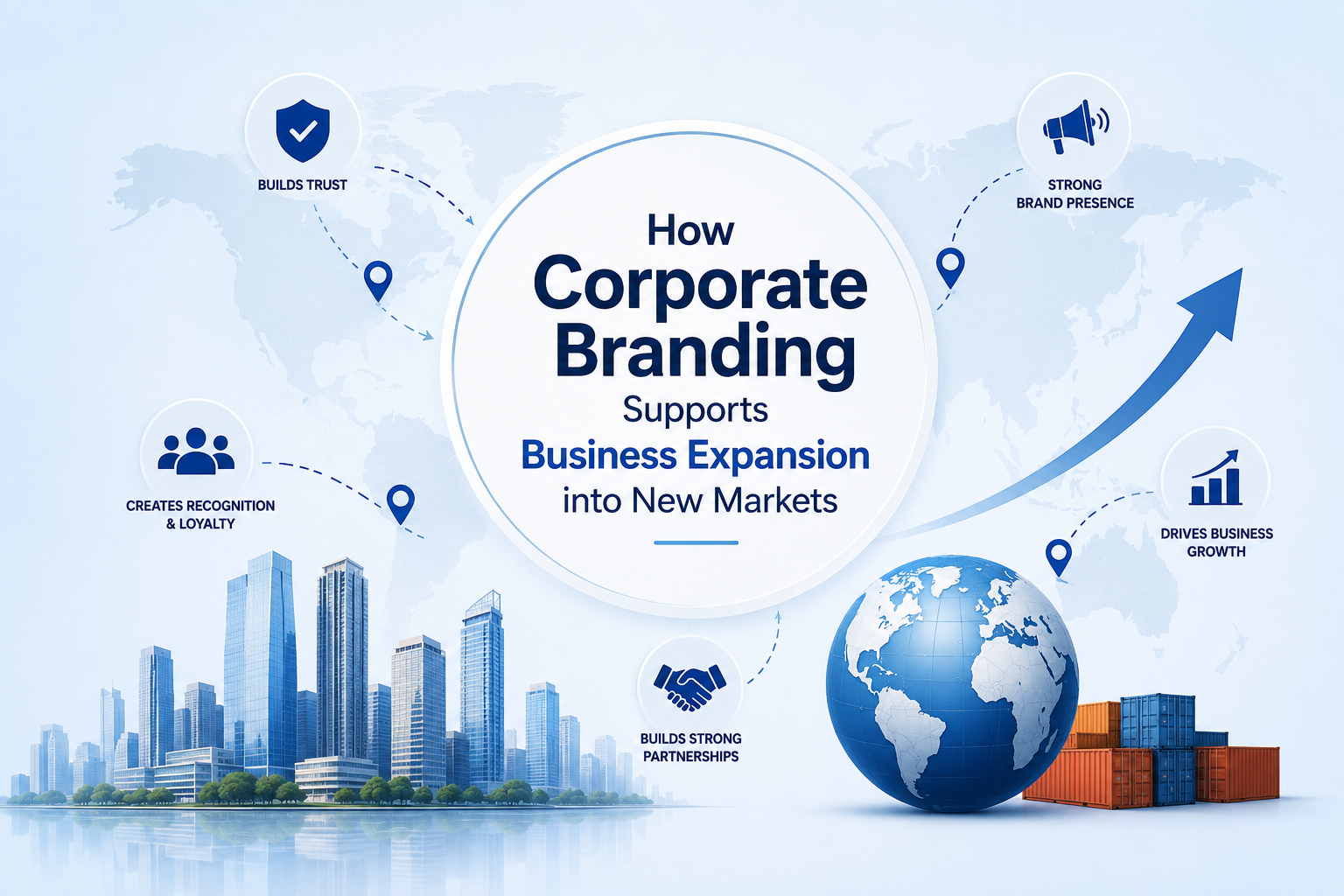
Businesses planning regional or global growth should also explore How Corporate Branding Supports Business Expansion into New Markets to understand why a consistent brand identity is critical during expansion.

Final Thoughts

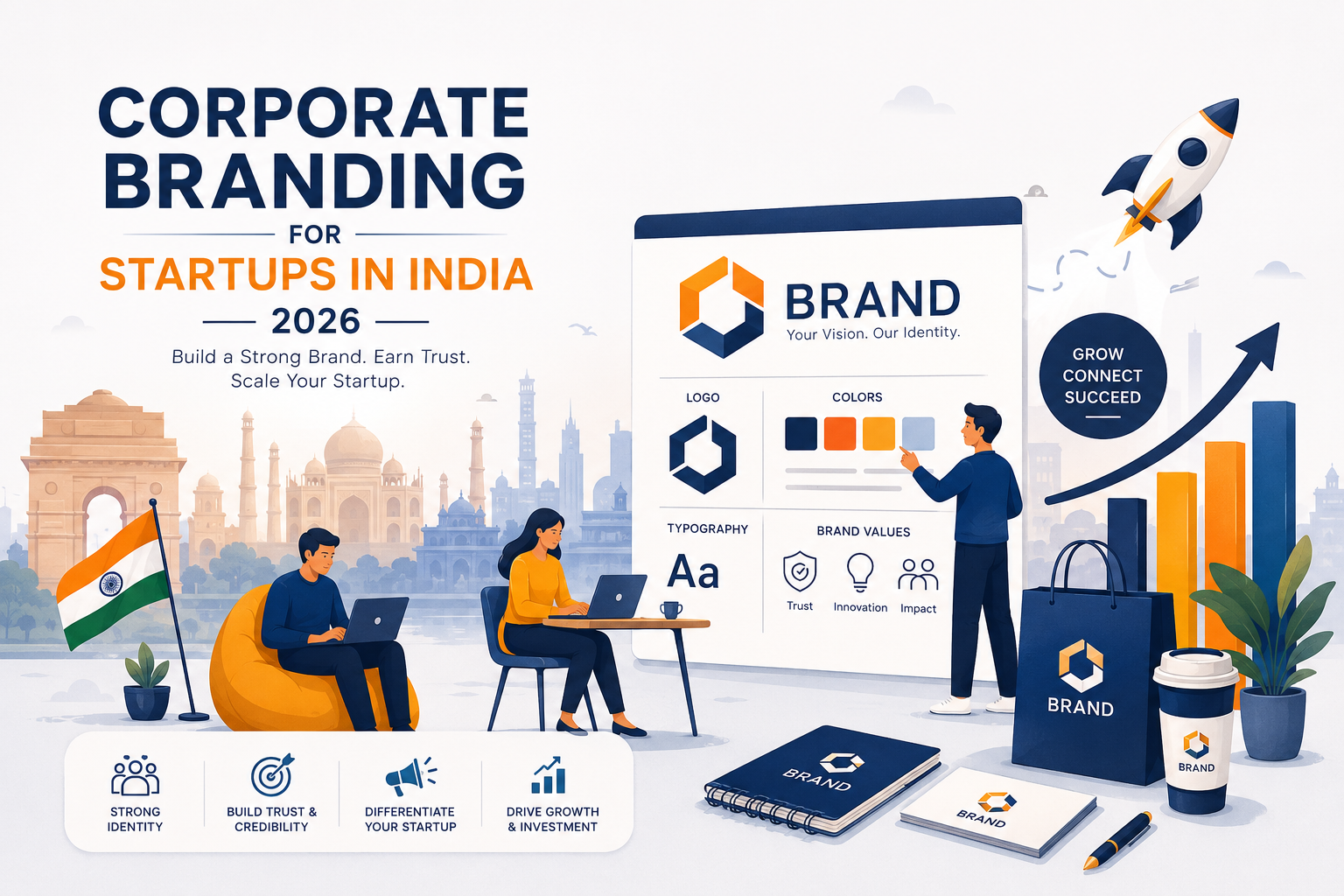
A strong brand is not built overnight, and it is not built by a logo alone. It is built through consistent, strategic decisions across every customer touchpoint. Whether you choose Honeycomb or another agency on this list, the right corporate branding agency should function as a long-term partner, not a one-time vendor. For founders launching a new venture, Corporate Branding for Startups in India provides a practical roadmap for building a strong brand from the ground up.

Think of your brand as a hive. Every touchpoint, your website, your packaging, your emails, your storefront, is a single cell. One inconsistent cell weakens the whole structure. Honeycomb’s job is to make sure every cell is built to the same standard, so the whole brand holds together and holds up.

Ready to see what a more consistent, more strategic brand identity could look like for your business? Book a free brand discovery session with Honeycomb and get a clear read on where your brand stands today.

FAQs

1. What does a corporate branding agency actually do?
A corporate branding agency handles brand strategy, positioning, visual identity, messaging, and often digital presence, ensuring a business presents a consistent identity across every channel.

2. How is corporate branding different from graphic design?
Graphic design covers visual elements like logos and layouts. Corporate branding is broader. It includes strategy, positioning, tone of voice, and how a business is perceived overall, with design as one part of that larger picture.

3. How much does it cost to hire a branding agency in India?
Costs vary widely based on scope, from a focused identity project to a full brand strategy and digital rollout. Most agencies offer tiered packages, so it is worth discussing your specific goals before comparing pricing.

4. How long does a typical branding project take?
A brand strategy and identity project usually takes anywhere from four to twelve weeks, depending on the depth of research, number of stakeholders, and scope of deliverables like website and print collateral.

5. Can a small business or startup afford a branding agency?
Yes. Many agencies, including Honeycomb, work with SMEs and funded startups, often scoping projects to match budget and growth stage rather than offering a one-size-fits-all package.

6. How do I know if my business needs rebranding?
Signs include inconsistent messaging across platforms, an outdated visual identity, difficulty standing out from competitors, or a business that has evolved beyond what its current brand communicates.

Continue Reading

Most startup branding advice stops at “design a good logo” or “define your brand values.” That advice is not wrong, it is just incomplete. It treats branding like a design task instead of a business decision. If you have raised a seed round, hit early product-market fit, or started hiring beyond the founding team, you are past the point where a logo alone will carry your business forward.

This guide skips the usual checklist and gets into the decisions that actually shape how a startup is perceived, funded, and remembered. If you are wondering when to hire a corporate branding agency, what to expect from one, and how to prioritise spending when budgets are tight, this is written for you.

You can also explore Top 10 Benefits of Hiring a Corporate Branding Agency in 2026 to understand why partnering with the right agency delivers long-term business value.


When Should a Startup Actually Invest in Branding?

Not at the MVP stage, and not the week before a funding round either. The right window opens right after you see early signs of product-market fit, when customers are using your product for reasons you did not fully anticipate. That is exactly when your positioning needs to catch up to reality, because the story you told at day one rarely matches the business you have built by month twelve.

Waiting until a funding round is already in motion is a common mistake. Investors read positioning and messaging as a proxy for how clearly a founder thinks about the market. A rushed brand refresh two weeks before a pitch reads as exactly that: rushed.


The Myths That Waste Founders’ Time and Money

A few beliefs show up again and again, and they quietly cost startups more than they realise.

“We just need a logo.” A logo is a symbol. It cannot carry the meaning your business has not yet defined. Without positioning and messaging behind it, a logo is decoration.

“We’ll do branding later.” Later usually means after the visual identity has already leaked into pitch decks, job postings, and your first hundred customer conversations. By then, “later” means redoing work you already paid for.

“Let’s copy [big brand]’s style.” Borrowed aesthetics without borrowed substance rarely lands. Customers notice when a small company’s visual confidence outpaces its actual credibility.


The Building Blocks, in the Right Order

Here is where most guides get the sequence backwards. Visual identity should be one of the last steps, not the first.

  1. Vision. What are you actually trying to change, beyond the product feature list?
  2. Target audience. Not a demographic slide, but a specific person with a specific problem.
  3. Positioning. Where you sit relative to alternatives, including the alternative of doing nothing.
  4. Brand promise. The one thing customers can reliably expect from you.
  5. Messaging. The language that makes the promise legible to a stranger in ten seconds.
  6. Visual identity. Logo, colour, typography, the system that carries the message.
  7. Website. Often the first real interaction a prospect has with your brand.
  8. Brand guidelines. So that consistency survives your first ten hires.

Skip straight to step six without doing the first five, and you get a good-looking brand that says nothing in particular. This is the single costliest mistake we see: startups paying for design work before there is a strategy for the design to express.


What a Brand Discovery Process Should Actually Look Like

Before any design work begins, a serious corporate branding agency will run a short discovery process. Expect a working session that covers your competitive landscape, a handful of stakeholder interviews, and enough customer input to know whether your internal story matches what customers actually say about you. This is where messaging gets pressure-tested before it gets expensive to change.


What Founders Can Do Before Hiring Anyone

You do not need an agency to start this work. Before you have that first call, try writing:

  • Your mission in one paragraph, no jargon allowed.
  • A list of five direct competitors and one sentence on how you differ from each.
  • Three words your existing customers already use to describe you, pulled from actual conversations, not guessed.

This homework alone will save you money later, because it means the agency spends its time refining your thinking instead of extracting it from scratch.


What Deliverables Should You Expect?

A complete engagement typically includes a brand strategy document, a visual identity system, a messaging framework, a website, and core sales collateral like a one-pager or pitch deck template. Anything less than a strategy document paired with the identity work is design without a foundation.


Budgeting for Branding at Different Stages

If your budget is tight, resist the urge to spend it all on visual polish. Positioning and messaging travel further than a beautifully designed logo attached to a confused story. At higher budgets, the additional spend should go toward a proper website build and a consistent content system, not more design variations of the same idea.


What Good Branding Actually Achieves

Beyond looking more professional, strong corporate branding shortens sales cycles because prospects understand what you do faster. It supports pricing power because a clear position justifies a premium. It also shows up in fundraising conversations, where investors read clarity of brand as a proxy for clarity of strategy.

As startups grow into new cities, industries, or international markets, How Corporate Branding Supports Business Expansion into New Markets explains why a consistent brand becomes a key growth driver.


Red Flags When Hiring a Branding Agency

Walk away if an agency skips discovery entirely, cannot show a writing sample of actual messaging work, or prices everything purely by deliverable count with no strategic rationale behind the numbers. Branding is not a menu of design items, it is a thinking process that happens to produce design items.

An Unpopular Opinion Worth Considering

Here is a belief that tends to draw disagreement: a startup without a positioning strategy wastes its marketing budget, no matter how good the ad creative looks. Performance marketing can only accelerate a message that already makes sense. It cannot fix a message that does not.


A Simple 30-Day Roadmap

If you needed to build a brand fast, a reasonable pace looks like this: week one for discovery and strategy, week two for positioning and messaging, week three for identity design, and week four for launch assets and the website. Compressing this further usually means skipping the thinking, not just the timeline.


How to Measure Whether It Worked

Skip vanity metrics like follower counts. Watch instead for shorter sales cycles, growth in organic search traffic, and whether investor conversations get easier because your story requires less explaining.


The Gap Worth Closing

Every startup eventually has two versions of itself running at once: the one described in the pitch deck, and the one customers actually experience. In the early days, that gap is fine, even useful. It gives you room to figure things out. But past a certain point, the gap stops being flexible and starts being confusing. Investors sense it in a rushed pitch. Customers sense it on a website that promises one thing and delivers another. New hires sense it in their first month, when the job description and the actual company turn out to be two different places.

Branding, done properly, is not the process of inventing a new story. It is the process of closing that gap, of making the outside story finally match the inside reality. That is why it works best once you have something real to describe, and why it fails when it is used to paper over a business that has not yet decided what it is.


A Note on Honeycomb

Honeycomb Creative Support works across branding, design, web development, digital marketing, and print, which means the strategy, identity, and website work described in this guide can happen under one roof instead of across three vendors. For an early-stage company, that matters more than it sounds. Fewer handoffs mean less chance of your positioning getting lost somewhere between the brand deck and the actual website.

If you are at the stage where your product has outgrown your story, a free brand discovery session is a low-risk way to find out exactly where the gap is.

If you are evaluating agencies before making a decision, Top 10 Corporate Branding Agencies in India to Build a Strong Business Identity offers a helpful comparison of leading branding partners.


FAQs

1. When is the right time for a startup to hire a corporate branding agency?
Right after early signs of product-market fit, when your original story no longer matches how customers actually use your product. Waiting until a funding round is underway is usually too late to do the work properly.

2. Is a logo the same as branding?
No. A logo is one visual output of a brand. Branding includes positioning, messaging, and strategy, all of which should exist before the logo is designed.

3. How much should an early-stage startup budget for branding?
It depends on stage and goals, but positioning and messaging work should be prioritised over visual polish when budgets are limited, since strategy has a longer shelf life than design trends.

4. What is the biggest branding mistake startups make?
Jumping straight to visual identity without defining positioning and messaging first, which usually means paying to redo the visual work once the strategy catches up.

5. Can founders do any of this branding work themselves?
Yes. Writing a one-paragraph mission statement, listing direct competitors, and gathering real customer language are useful exercises founders can do before ever talking to an agency.

6. How long does a startup branding project usually take?
A focused engagement can move in about four weeks: one week for discovery, one for positioning and messaging, one for identity design, and one for launch assets and website work.

Continue Reading

Ask ten business owners what branding means and you will likely get ten different answers. Some say it is the logo. Some say it is the website. Some say it is “whatever the marketing team does.” None of them are entirely wrong, and none of them are entirely right either.

In 2026, branding has become a business function, not a design task. Customers form an opinion about your company in seconds, across a dozen touchpoints, long before a salesperson ever gets to speak with them. That is exactly why more businesses, from early-stage startups to established manufacturers, are choosing to work with a corporate branding agency instead of piecing together design work from freelancers or in-house teams stretched too thin. If you are launching a new venture, Corporate Branding for Startups in India (2026): A Step-by-Step Guide explains how to build a strong brand foundation from the beginning.

Top 10 Benefits of Hiring a Corporate Branding Agency


1. You Get Strategy Before Design

The biggest difference between a freelancer and a corporate branding agency is sequencing. A good agency does not start with a logo brief. It starts with your positioning: who you serve, what you promise, and why a customer should pick you over the next option. Design becomes an expression of that strategy instead of a guess dressed up as a brand.


2. Brand Consistency Across Every Channel

Inconsistency quietly erodes trust. A website that looks premium next to packaging that looks like an afterthought sends a mixed signal, even if customers cannot articulate why they feel it. An agency builds a brand identity system, covering colour, typography, tone, and messaging, so every touchpoint reinforces the same impression instead of fighting it.


3. Stronger Pricing Power

This one often surprises many founders. A clear, consistent brand identity does not just look better, it changes how customers perceive value. Businesses with a well-defined brand positioning can often justify premium pricing because customers are not just buying a product, they are buying the confidence that comes with a recognisable, trustworthy identity.


4. Faster, Easier Sales Conversations

When your messaging is sharp, your sales team spends less time explaining what you do and more time explaining why it matters. A confused prospect asks more questions and takes longer to decide. A brand that communicates clearly shortens that gap, which directly shortens the sales cycle.


5. A Real Competitive Advantage

Most industries in India are more crowded in 2026 than they were even two years ago. Product features get copied fast. What is harder to copy is a distinct brand positioning built on genuine insight into your customers and your category. This is where brand strategy earns its keep, by giving you a position competitors cannot simply replicate with a similar product.


6. Access to a Full Creative Team, Not Just One Skillset

Hiring a single designer gets you one perspective. A corporate branding agency brings a team covering brand strategy, visual identity design, copywriting, web development, and often video and print production. That range matters because branding touches every part of a business, from your careers page to your investor deck to your product packaging.

7. Better Talent, Not Just Better Customers

Branding is not only external. A strong employer brand makes hiring easier and retention stronger, because candidates want to work somewhere with a clear identity and clear values, not somewhere that feels undefined. Agencies increasingly build internal brand guidelines alongside external ones for exactly this reason.


8. Room to Scale Without Losing the Plot

As a business grows, more people touch the brand: new hires, new vendors, new marketing channels. Without documented brand guidelines, drift happens fast. A branding agency delivers a system, not just assets, so your identity holds together even as the team around it grows.

Businesses planning regional or international growth can also learn How Corporate Branding Supports Business Expansion into New Markets to understand why consistent branding becomes even more important during expansion.

9. Credibility That Supports Fundraising

Investors read brand clarity as a signal of business clarity. A startup with a sharp, well-articulated brand position tends to have an easier time in early investor conversations, simply because it shows the founders have already done the thinking that many pitches skip. This is a quieter benefit, but a real one.


10. Long-Term Value Instead of One-Off Assets

Perhaps the most underrated benefit: working with an agency builds something that compounds. A one-off logo has a shelf life. A properly built brand strategy, identity system, and messaging framework continue to pay off years later, because every new campaign, hire, and product launch builds on the same foundation instead of starting from zero.


What This Means Heading Into 2026

The trends shaping this year make these benefits even more relevant. AI tools are speeding up execution across design and content, but strategy still needs human judgment behind it. Motion and video-first branding are becoming standard rather than a nice-to-have. And employer branding is increasingly treated as part of the same system as customer-facing branding, not a separate exercise. None of this changes the fundamentals. It just raises the cost of getting them wrong.

Honeycomb Creative Support is a full-service creative agency working across brand strategy, identity design, web development, digital marketing, and print production. Instead of managing separate vendors for each piece, businesses get one accountable partner ensuring the brand stays consistent everywhere it shows up, online and offline. That integrated approach is exactly what most of the benefits above depend on.


A Word on Honeycomb

If you are comparing service providers, explore Top 10 Corporate Branding Agencies in India to Build a Strong Business Identity to understand what sets leading branding agencies apart.


The Real Question Worth Asking

Most businesses do not lack good products. They lack a clear enough identity for the right customers to notice, trust, and choose them without hesitation. That gap rarely closes on its own, and it rarely closes through more advertising spend alone. It closes through deliberate, strategic brand work, the kind that starts with a real conversation about who you are and who you are for, long before anyone opens a design file.

If your business has outgrown its current brand, or never quite had one to begin with, there is no better time to fix that than before your next big move, not after it. Visit the Honeycomb website to start that conversation and see what a stronger brand identity could look like for your business in 2026.


FAQs

1. What does a corporate branding agency actually do?
A corporate branding agency builds brand strategy, positioning, visual identity, and messaging, then applies that system consistently across a business’s website, marketing, and physical materials.

2. How is a branding agency different from a design studio?
A design studio typically executes visual work. A branding agency starts earlier, with strategy and positioning, and treats design as one output of that thinking rather than the whole engagement.

3. Is hiring a branding agency worth it for a small business?
Yes, especially early on. A clear brand identity built early is far cheaper than a rebrand later, once inconsistent messaging has already spread across your website, sales materials, and customer perception.

4. How long does it take to build a brand with an agency?
A focused engagement can take four to eight weeks depending on scope, covering discovery, positioning, identity design, and rollout across key channels like the website and core collateral.

5. Can a branding agency help with employer branding too?
Yes. Many agencies now build internal brand guidelines and employer branding alongside customer-facing identity work, since both draw from the same underlying brand strategy.

6. What should I look for before hiring a branding agency?
Look for a clear discovery process, a portfolio showing strategic thinking and not just visuals, and a team that can support you across strategy, design, and digital, not just one narrow skillset.

Continue Reading

Most companies planning an expansion spend months on logistics. Distribution networks, hiring plans, regulatory checklists, and sales targets by city. Branding, if it comes up at all, usually shows up last, treated as a finishing touch rather than a foundation.

That order is backward, and it is one of the more expensive mistakes we see companies make. Expansion does not begin with geography. It begins with perception. A new market has no prior relationship with your business, no accumulated trust, no context for why you are worth paying attention to. Everything you have built in your home market, your reputation, your word-of-mouth referrals, your track record, does not automatically travel with you. What travels is your brand, and only if it has been built to travel well.

This is where a corporate branding agency earns its place in the expansion plan, not as decoration after the strategy is set, but as part of the strategy itself. 

If you’re evaluating agencies before expanding, explore our guide on Top 10 Corporate Branding Agencies in India to Build a Strong Business Identity to compare leading branding partners. 


Why Companies Fail in New Markets, and It’s Rarely the Product

Here is a belief worth sitting with: companies rarely fail in new markets because of a weak product. They fail because they never built enough trust for anyone to properly evaluate the product in the first place. A distributor who has never heard of you needs a reason to take you seriously before your first meeting even starts. A customer scrolling through unfamiliar options needs a signal that you are credible, not just present.

That signal is branding. An outdated website, inconsistent messaging, or a brand identity that looks different across every touchpoint quietly tells a new market you are not quite ready for them, even if your product is excellent.


What to Update Before You Expand

Not everything needs a rebuild before entering a new market, but a few things almost always do.

Brand strategy and positioning come first. Ask honestly whether your current positioning still makes sense to an audience that has never heard of you. What worked as a differentiator in your home market might mean nothing somewhere else.

Website and digital presence come next. For most new prospects, your website is the first real interaction with your business, often before a phone call ever happens. If it looks dated or generic, that is the first impression doing damage before your sales team gets a chance.

Sales collateral and corporate presentations follow closely. A distributor or partner deciding whether to work with you will judge your professionalism from your pitch materials just as much as your product specs.

Visual identity and packaging matter too, but they should follow the strategy work, not replace it. A polished logo cannot compensate for unclear positioning.

Related Read 


Consistency Is the Quiet Engine Behind Successful Scaling

It sounds unglamorous, but brand consistency does more heavy lifting during expansion than almost anything else. When your visual identity, tone of voice, and messaging stay aligned across every city, channel, and sales conversation, trust compounds faster. When they drift, even slightly, prospects sense something is off, even if they cannot name exactly what.

This is particularly true for B2B companies expanding across Indian states or industrial and manufacturing businesses entering new distributor networks. A dealer evaluating three potential partners will often lean toward the one that feels most established and consistent, regardless of who actually has the better product on paper.

Adapting Without Losing Who You Are

Expansion does not mean starting from scratch, and it should not mean diluting your identity either. The better approach is adapting messaging and language for the new audience while keeping the underlying brand identity unified. A company expanding into a new Indian state might localise its language and examples in sales materials while keeping its visual identity, tone, and core promise exactly the same. The goal is recognition with relevance, not reinvention. 

Startups planning regional or national expansion can also refer to Corporate Branding for Startups in India (2026): A Step-by-Step Guide for practical branding strategies from the early growth stage. 


Digital Branding Cannot Be an Afterthought

A website alone is no longer enough to establish credibility in a new market. Local search visibility, a consistent presence across relevant platforms, and content that speaks directly to the new audience all shape whether prospects find you and trust what they find. Companies that treat digital branding as a single project rather than an ongoing system tend to lose momentum right when a new market starts paying attention.


The Honeycomb 5A Expansion Framework

Rather than tackling expansion branding as a scattered checklist, Honeycomb, as a corporate branding agency, helps to work through five deliberate stages.

Assess. Audit your current brand honestly. Does the existing positioning, messaging, and visual identity actually hold up outside your home market?

Align. Refine positioning specifically for the new audience, based on what will actually resonate there, not just what worked before.

Adapt. Localise messaging and language while keeping your core visual identity and brand promise consistent.

Activate. Launch across the channels that matter in the new market, digital and offline, from an updated website to sales collateral to a corporate presentation.

Accelerate. Track what is working, in enquiries, search visibility, and partner interest, and refine from there.

This structure treats branding as groundwork laid before expansion, not decoration added after.


A Word on Honeycomb

Honeycomb Creative Support is as 18-year old corporate branding agency that works across brand strategy, identity design, website development, digital marketing, and corporate collateral, which makes it possible to run an expansion branding effort as one connected process rather than a series of disconnected vendor projects. That matters most exactly when speed and consistency both count, which is usually the case right before a new market launch.

The Real Work of Expansion

Geography is the easy part to plan for. Trust is not. A new market does not owe you attention just because you have arrived, and it will not extend credit to a business that looks unfinished or inconsistent on arrival. Corporate branding is the quiet groundwork that makes a new market willing to listen in the first place, long before your sales team ever walks through the door.

If you are planning an expansion in the next few months, it is worth finding out where your current brand is ready, and where it is not, before the market finds out for you. Get in touch with Honeycomb for a free market expansion readiness assessment and start the next chapter with a brand built to travel.


FAQs

1. Why does branding matter during business expansion?
Branding builds the trust that a new market has no other reason to extend yet. Without a consistent, credible brand presence, even a strong product struggles to get a fair first look.

2. What branding assets should a company update before entering a new market?
Brand strategy and positioning first, followed by the website and sales collateral. Visual identity updates should follow strategy work, not replace it.

3. Should a company change its brand identity for every new market?
No. The stronger approach is keeping the core brand identity consistent while adapting messaging and language to fit the new audience.

4. How does a corporate branding agency support market expansion specifically?
A corporate branding agency audits the existing brand, refines positioning for the new market, and ensures consistent execution across website, collateral, and digital presence, so the brand builds trust from day one.

5. What role does digital presence play in expansion branding?
A significant one. Local search visibility, an updated website, and a consistent digital presence often shape first impressions before any direct sales conversation happens.

6. How long does expansion branding usually take?
It varies by scope, but a focused effort covering brand audit, positioning refinement, and updated collateral can typically be completed within four to six weeks ahead of a market launch.

Continue Reading

Ask most businesses why their website underperforms, and they will point to the design. It looks dated, it feels slow, it does not match the brand anymore. Rarely do they point to the real cause, which is usually a process problem, not a design problem. Somewhere along the way, someone skipped a step that should have come before the visual work even started.

A website is not a single deliverable. It is the output of several decisions made in the right order, and getting that order wrong is why so many redesigns end up looking better without performing any better. If you are exploring Web Design Services in Bangalore, understanding this process is the difference between hiring an agency that executes a brief and one that actually solves the underlying business problem.

Here is how we think about it at Honeycomb, broken into seven phases, each with a rule we hold ourselves to.

Phase 1: Business Discovery

Don’t design pages. Understand the business first.

Before any wireframe gets drawn, the real question is not “what should the homepage look like.” It is “what is this website actually supposed to achieve?” More qualified leads, faster sales conversations, better investor perception, easier recruitment? Each answer leads to a different structure, different priorities, and a different homepage entirely.

This is also where the most common mistake shows up. Companies often approach an agency saying “we need a website” when what they actually mean is “we need more enquiries” or “we need to look credible to a new market.” Those are very different briefs, and skipping this conversation is how businesses end up with a site that looks fine but does not move the needle.

Phase 2: User and Competitor Research

Know what your users need before deciding what they see.

Good web design decisions come from understanding two things: who is actually visiting your site, and what they are comparing you against. A B2B buyer researching a manufacturing partner behaves very differently from a patient researching a healthcare provider. Skipping this research means designing for an assumed user instead of a real one, which is how businesses end up with a beautiful site that nobody quite trusts.

Phase 3: Information Architecture

A confusing sitemap leads to confused customers.

This is the unglamorous phase that determines whether a visitor finds what they need in ten seconds or gives up after thirty. Information architecture, essentially deciding what goes where and how pages connect, rarely gets the attention it deserves, but it quietly shapes bounce rate, navigation clarity, and even SEO performance more than most visual decisions do.

Phase 4: Content Strategy

Design attracts visitors. Content convinces them.

This is the phase clients most often underestimate, and it is also the one most likely to cause delays, usually because content collection gets pushed to the last minute instead of planned early. Good content strategy decides messaging, structure, and tone before a single UI screen gets designed, not after. Content should shape the design, not get squeezed into a template built without it.

Phase 5: UI and Brand Experience

Every pixel should reinforce trust.

This is where visual identity, layout, and interaction design finally come in, and it is deliberately not the first phase. By this point, the structure and content already exist, so design has a clear job: reinforce the brand’s credibility and guide the visitor toward action, rather than simply look impressive in isolation. A visually stunning website that does not reflect brand positioning is decoration, not design.

Phase 6: Development and Performance

A beautiful website that loads slowly is poor.

No matter how strong the design, a slow, clunky build undoes it within seconds. Development in 2026 has to account for mobile-first performance, fast load speeds, clean code, and SEO fundamentals baked in from the start rather than patched on afterwards. This is also where AI tools genuinely help, speeding up coding and repetitive build tasks. What AI still cannot do is make strategic UX decisions or understand brand positioning, which is exactly why the earlier phases matter so much.

Phase 7: Launch, Learn, and Improve

A website launch isn’t the finish line; it’s the beginning.

Before launch, a proper checklist matters: SEO basics, speed optimization, mobile testing, working forms, analytics tracking, and SSL, at minimum. But the real work continues after launch. Tracking enquiries, conversion rate, and organic search visibility tells you what is actually working, and a website that never gets revisited after launch slowly drifts out of sync with the business it represents.

What Every Corporate Website Needs in 2026

A few non-negotiables have become standard rather than optional: mobile-first design, fast page speed, clear case studies or proof points, and direct enquiry paths like WhatsApp or simple contact forms. Equally important is knowing what to avoid. Over-animation, autoplay video, and trendy layouts that prioritize novelty over usability tend to hurt conversion more than they help first impressions.

A Belief Worth Sitting With

Most websites do not fail during design. They fail before design even begins, when the business questions in phase one never get properly answered. A gorgeous website built on an unclear brief is still a website that will underperform, just more expensively.

A Word on Honeycomb

Honeycomb offers Web Design Services in Bangalore alongside branding, UX design, content, and SEO under one roof, which means these seven phases happen as one connected process rather than a handoff between disconnected vendors. That continuity is often what separates a website that merely looks good from one that actually performs.

Getting It Right the First Time

A website redesign done properly is not a quick fix, and treating it like one is usually why redesigns need redoing within a year or two. The businesses that get the most out of their website are the ones that respect the sequence: understand the business, understand the user, structure the content, then design around all of it.

If your current website was built backwards, starting with design before strategy, it is worth finding out exactly where the gaps are before your next redesign. Get a free website performance audit from Honeycomb and see how each of these seven phases is actually holding up on your site today.

FAQs

1. What are the 7 phases of web design?
Business discovery, user and competitor research, information architecture, content strategy, UI and brand experience, development and performance, and launch with ongoing improvement.

2. Why does business discovery come before design in web design services in Bangalore?
Because design decisions should follow business goals, not the other way around. Understanding what the website needs to achieve shapes every decision that follows, from structure to content to visual design.

3. Which phase of web design do businesses usually underestimate?
Content strategy. Many businesses assume content can be written after the design is finished, which usually leads to rushed copy squeezed into a template it was never planned for.

4. How long does a typical corporate website project take?
It depends on scope, but a well-planned project usually takes six to ten weeks, covering discovery, content, design, and development in sequence rather than in a parallel scramble.

5. Does SEO get added after the website is built?
It shouldn’t. SEO fundamentals, from site structure to page speed to metadata, work best when planned from the information architecture phase onward, not patched in right before launch.

6. What should I look for in a web design agency in Bangalore?
Look for a process that starts with business and user research, not just a design portfolio. An agency that can also support branding, content, and SEO under one roof tends to deliver more consistent results.

Continue Reading