
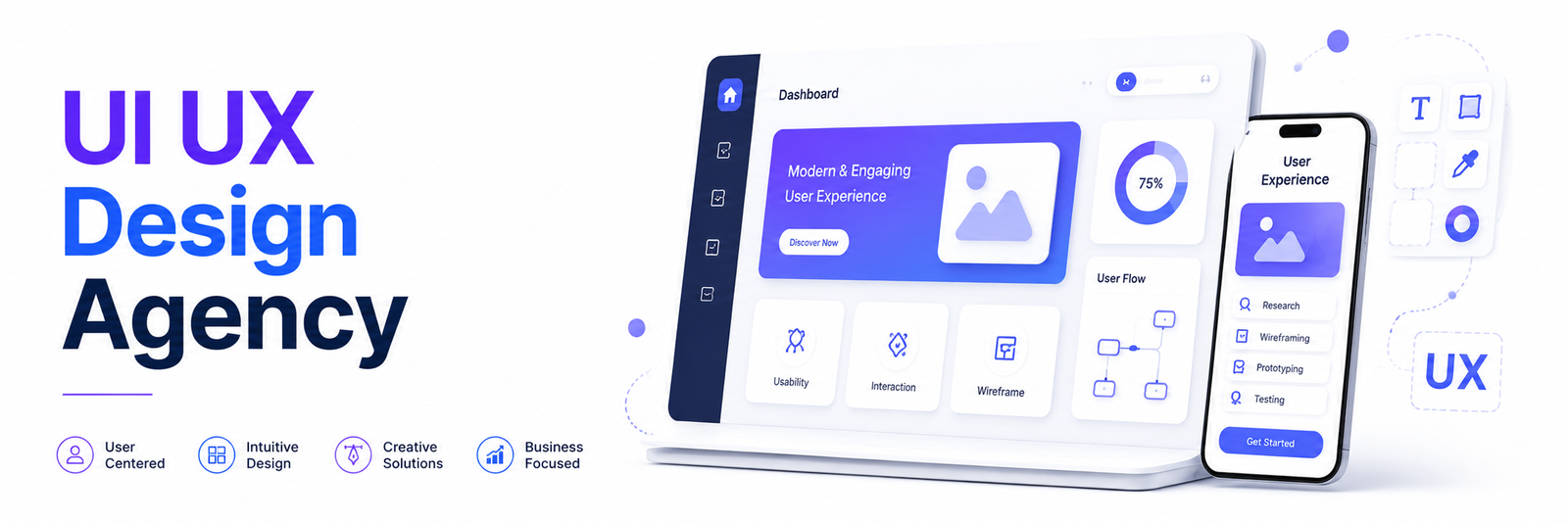
UI UX Design Agency Cost: How Much Do Agencies Charge?

“How much will this cost?” is usually the first question founders ask, and honestly, it is a fair one. Good UI UX design is an investment, not an expense, but that does not mean you should sign a contract without understanding what you are actually paying for.

As a UI UX Design Agency in Bangalore, we get this question in nearly every discovery call. So, instead of giving you a vague range and moving on, let’s break down exactly what drives UI UX pricing, what different engagement models look like, and how to know if a quote is fair or inflated.

Why Does UI UX Design Pricing Vary So Much Between Agencies?

If you have requested a few quotes already, you have probably noticed the numbers swing wildly, sometimes by lakhs, for what sounds like the same project. This happens because UI UX design is not a single, standardised service. It includes research, wireframing, prototyping, visual design, usability testing, and often ongoing iteration, and different agencies include different combinations of these in their pricing.

A Professional UI UX Design Company will walk you through exactly what is included before quoting a number. If an agency gives you a price without first asking about your goals, your users, or your product complexity, that is usually a sign they are quoting a template, not a strategy.

What Factors Actually Influence the Final Cost?

A few variables consistently drive pricing up or down, regardless of which agency you approach.

Project complexity matters most. A simple marketing website needs far less design work than a multi-screen SaaS dashboard or a mobile app with complex user flows. The number of screens or pages involved directly affects timeline and cost, since each screen typically needs its own wireframe, design iteration, and review cycle.

The depth of research also matters. Agencies that conduct real user research, competitor analysis, and usability testing charge more than those that skip straight to visual design, but that research is often what separates a design that looks good from one that actually converts.

Finally, the experience level of the team plays a role. A senior UX strategist and a junior visual designer bring very different value to a project, and pricing usually reflects that difference in expertise.

What Are the Common Pricing Models Agencies Use?

Understanding how agencies structure their pricing helps you compare quotes more intelligently.

Fixed project pricing is common for well-defined scopes, where the agency quotes a set amount for a specific deliverable, such as a complete app redesign. This works well when requirements are clear from the start.

Hourly or retainer-based pricing suits ongoing work, such as a product that needs continuous design support as new features roll out. This model offers flexibility but requires trust and clear communication to avoid scope creep.

Milestone-based pricing splits payment across project phases, research, wireframing, visual design, and final handoff, so you pay as value is delivered rather than committing the full budget upfront. Many growing businesses prefer this model because it keeps both sides accountable at each stage.

How Much Should You Realistically Expect to Pay?

Every project is different, but here is a general sense of how scope affects investment.

A simple website or landing page redesign, focused mainly on visual polish and basic usability improvements, sits at the lower end of the spectrum. A mid-sized product, such as a business website with multiple user journeys or a basic app with a handful of core screens, requires more research and iteration, placing it in the middle range. A complex SaaS platform or app with advanced user flows, multiple user roles, and extensive testing requirements sits at the higher end, since this level of work demands deeper strategy and significantly more design hours.

The honest advice here is to be wary of quotes that seem dramatically lower than everyone else’s. In UI UX design, unusually cheap pricing almost always means research and testing are being skipped entirely, and that gap shows up later in poor user retention and costly redesigns.

Is Cheaper UI UX Design Actually More Expensive in the Long Run?

This is the question most founders do not ask early enough, and it is the one that matters most. Poor UI/UX design not only looks unpolished but also directly costs you, users. Confusing navigation increases drop-off. Cluttered interfaces reduce conversions. A product that frustrates users in the first few minutes rarely gets a second chance.

Fixing these problems after launch is almost always more expensive than getting the design right the first time, because you are not just redesigning; you are also trying to win back user trust and rebuild lost momentum. This is exactly why working with the Best UI UX Design Agency in Bangalore you can genuinely afford is a smarter long-term decision than choosing the cheapest option available.

What Questions Should You Ask Before Accepting a Quote?

A transparent agency will not hesitate to answer these clearly. Ask exactly what is included in the price: wireframes, prototypes, user testing, revisions, and final design files. Ask how many rounds of revisions are covered before additional charges apply. Ask whether user research and usability testing are part of the process or offered as an add-on. And ask to see examples of past work at a similar scope to your project, not just their most impressive portfolio piece.

These questions quickly separate agencies who price based on genuine process from those pricing based on guesswork.

How Does Honeycomb Approach UI UX Pricing and Process?

At Honeycomb Creative Support, we believe pricing should be transparent from the very first conversation. As a UI UX Design Agency in Bangalore, our process always begins with understanding your product, your users, and your business goals before we discuss numbers, because a fair quote can only come from genuinely understanding the scope involved.

We structure most engagements around clear milestones, research, wireframing, prototyping, and final design, so you always know what you are paying for and why. Because UI UX design sits alongside our web development, branding, and digital marketing services under one roof, the interfaces we design are built with real-world performance and conversion goals in mind, not just visual appeal.

Conclusion

UI UX design pricing depends on far more than a simple per-screen rate. Complexity, research depth, and the experience of the team all shape what you should reasonably expect to pay, and understanding these factors helps you evaluate quotes with confidence rather than guesswork. The cheapest option rarely turns out to be the most cost-effective one once you factor in user retention and future redesign costs. Honeycomb Creative Support works with startups and growing businesses across Bangalore and beyond to deliver UI UX design that is priced transparently and built to genuinely perform.

Frequently Asked Questions

1. What is the average cost of hiring a UI UX design agency in India?
Costs vary significantly based on project complexity, ranging from smaller website-focused engagements to much larger investments for complex, multi-screen products. It is best to request a detailed scope-based quote rather than relying on a general average.

2. Do UI UX design agencies charge per screen or per project?
Both models exist. Some agencies quote per screen for simpler projects, while others prefer fixed project or milestone-based pricing for more complex products with multiple user flows.

3. Is it worth paying more for user research as part of the UI UX process?
Yes. User research helps identify real usability issues before launch, which typically saves significant redesign costs later and improves overall user retention and conversion rates.

4. How long does a typical UI UX design project take?
Most projects take between four and twelve weeks, depending on the number of screens, the depth of research required, and how many rounds of revisions are involved.

5. What is included in a professional UI UX design package?
This generally includes user research, wireframing, interactive prototypes, visual design, and usability testing, though the exact inclusions vary by agency and should always be confirmed upfront.

6. Why do some agencies charge significantly less than others for similar projects?
Lower pricing usually means certain steps, such as user research, testing, or multiple revision rounds, are being skipped, which can lead to a weaker end product and costlier fixes down the line.

7. Should I hire a freelancer or a professional UI UX design company?
Freelancers can work well for very small, simple projects, but a professional agency typically brings a full team, structured process, and broader expertise, which matters more as project complexity increases.

8. How do I know if a UI UX design agency’s quote is fair?
Compare quotes based on what is actually included, not just the final number. A fair quote should clearly outline research, design phases, revision rounds, and deliverables rather than a single vague figure.
GUI vs UI: What’s the Difference? Explained by a Top UI UX Design Agency in Bangalore 

A client once told us their new app “looked incredible”, but nobody was completing the signup form. The colours were on brand, the icons were custom, the typography was carefully chosen. And yet, conversions had dropped since the redesign. The GUI had improved. The UI had quietly gotten worse. Nobody had noticed the difference until the numbers made it impossible to ignore.

This mix-up happens more often than most business owners realise, and it rarely gets caught early, because “GUI” (Graphical User Interface) and “UI” (User Interface) get used interchangeably in casual conversation. They are not the same thing, and confusing them is one of the more expensive mistakes a growing business can make before hiring a UI UX Design Agency in Bangalore.

Why Business Owners Confuse GUI and UI

Here is the misconception we hear most often: “A good-looking interface automatically means a great user experience.” It is an understandable assumption. Visuals are the part everyone can see and judge instantly, so it is natural to equate a polished look with a working product. But GUI and UI answer two completely different questions. GUI asks, “Does this look good?” UI asks, “Does this work well, and does it get the user where they need to go without friction?”

A beautiful interface with a confusing checkout flow is still a broken product. A plain-looking interface that gets a user through a task in three clicks instead of eight is doing its job, even if it never wins a design award.

GUI vs UI, Explained Without the Jargon

Think of it like a restaurant menu versus the actual dining experience. The menu can be beautifully designed, with elegant fonts, tasteful photography, and a clean layout. That is the GUI. But the dining experience includes whether the waiter understood your order, how long the food took, and whether the table was even clean when you sat down. That is the UI, the entire journey, including everything that happens away from what looks pretty on the surface.

A restaurant with a gorgeous menu and a broken ordering process will still lose customers. A website with a stunning homepage and a confusing checkout will lose them just as fast.

Where GUI Ends, and UX Begins

This is where a lot of articles get muddled, so here is the simplest way to think about it. GUI is the surface, the buttons, colours, icons, and layout that a user actually sees. UX is the entire experience of using the product, including things a user never consciously notices, like page load speed, how intuitive the navigation feels, or whether a form asks for information in a logical order. UI sits in between; it is the interactive layer where GUI and UX actually meet, where visual choices either support or undermine the underlying experience.

You can think of it this way: GUI (Graphical User Interface) is what you see, UX is how it feels, and UI is where the two either work together or work against each other.

Real Examples Everyone Already Knows

Look at apps like Swiggy or Zomato. Both use fairly similar visual languages, cards, bright accent colours, and familiar iconography. The difference in experience comes down to UI decisions: how quickly you can reorder a previous meal, how clearly delivery time is communicated, and how few taps stand between opening the app and placing an order. The GUI gets you to open the app. The UI decides whether you keep using it.

Common GUI Mistakes That Quietly Hurt Trust

A few visual mistakes consistently appear: inconsistent button styles across pages, low-contrast text that strains the eye, and touch targets that are too small on mobile, even when they appear fine in a desktop preview. None of these feels dramatic individually, but together they signal a lack of attention to detail, and users read that signal as a lack of trustworthiness, even if they cannot articulate why.

UI Mistakes That Actually Cost Conversions

The GUI issues above hurt perception. These hurt the bottom line directly: long forms that ask for information before establishing any value, weak call-to-action buttons that blend into the page instead of standing out, and mobile layouts that were clearly designed for desktop first and adapted as an afterthought. Fix these, and conversion rates tend to move more than any visual refresh alone would achieve.

An Uncomfortable Truth: Most UI Problems Are Content Problems

Here is an opinion worth sitting with, one that many designers push back on: most UI problems are actually content problems wearing a design costume. A confusing form is often confusing because of unclear labels, not layout. A weak call-to-action underperforms because the words on it are vague, not because the button colour is wrong. Before redesigning an interface, it is worth asking whether the actual content is doing its job. Sometimes the fix is a sentence, not a redesign.

What Separates a Real UI Agency From a Graphic Design Studio

A graphic design studio makes things look good. A proper UI and UX practice does that too, but only after research, user flow mapping, wireframing, and testing come first. That process is what separates an agency that can explain why a button is placed where it is from one that placed it there because it looked balanced on the screen.

How AI Is Changing This Work in 2026

AI tools can now generate layout options and speed up component creation faster than ever. What AI still cannot do is replace strategic thinking, empathise with an actual user’s frustration, or make sound information architecture decisions based on business goals. The tools have gotten faster. The judgment behind using them well still has to be human.

How to Choose a UI UX Design Agency in Bangalore

Ask about their research process before you ask to see their portfolio. Ask how they test decisions, not just how they justify them after the fact. And ask whether they can support development as well, since a design that never survives the build process accurately is of little use to anyone.

A Word on Honeycomb

Honeycomb works as a UI UX Design Agency in Bangalore alongside branding, UX research, content writing, and development, which means interface decisions are grounded in strategy and tested against real user behaviour, not just visual instinct. At Honeycomb, we believe great UI is the part of an interface nobody notices, because it never got in their way.

The Real Question to Ask Before Your Next Redesign

Before approving another visual refresh, ask a harder question: Is this actually a design problem, or is it a content, structure, or strategy problem hiding behind a design request? Get that answer right, and the visual work that follows finally has a real job to do.

FAQs

1. What is the difference between GUI and UI?
GUI refers to the visual layer of a product, including colours, icons, and layout. UI is broader, covering how a user actually interacts with and moves through the product, including whether that interaction works smoothly.

2. Can a website have a great GUI but a poor UI?
Yes, and it happens often. A visually polished interface can still frustrate users if navigation is confusing, forms are too long, or key actions are hard to find.

3. Is UX the same as UI?
No. UX covers the entire user experience, including things beyond the visible interface, like load speed and overall journey. UI is the interactive layer where that experience actually gets delivered.

4. How do I know if my website needs a UI redesign or just a content fix?
If users understand what to do but the process feels slow or unclear, it may be a content or structure issue. If users get confused about what to do at all, that points to a genuine UI problem.

5. What should I look for in a UI UX design agency in Bangalore?
Look for a documented research and testing process, not just a strong visual portfolio. An agency that can also support content and development tends to deliver more consistent results.

6. How is AI changing UI UX design in 2026?
AI speeds up layout generation and component design work, but strategic decisions around user experience and information architecture still require human judgment and testing.

Industries That Benefit Most from UI UX Design Services?

In today’s digital-first world, user experience can make or break a business. Customers expect websites, apps, and digital platforms to be intuitive, fast, and easy to use. If users struggle to navigate a platform, they are likely to leave and choose a competitor instead.

This is why businesses across industries are investing in professional UI/UX design. A skilled UI UX Design Agency in Bangalore helps companies create digital experiences that improve customer satisfaction, increase engagement, and drive conversions.

While every business can benefit from better design, some industries gain particularly significant advantages from partnering with a UI UX Design Company. Let’s explore them.

IT and SaaS Companies

Software products succeed when users can understand and use them easily.

Many SaaS platforms and enterprise software solutions offer powerful features, but poor design can make them difficult to navigate. A well-designed user interface simplifies complex workflows and improves user adoption.

Benefits include:

  • higher user engagement
  • reduced learning curves
  • improved customer retention
  • lower support costs
  • better product adoption

This is why technology companies often work closely with a UI UX Design Agency in Bangalore to create seamless digital experiences.

E-commerce Businesses

In e-commerce, every click matters. Customers expect smooth browsing, easy product discovery, and hassle-free checkout experiences.

Poor user experience can lead to abandoned carts and lost sales.

A professional UI UX Design Company helps ecommerce brands improve:

  • product navigation
  • search functionality
  • checkout processes
  • mobile shopping experiences
  • customer journey optimization

Even small UX improvements can significantly impact conversion rates and revenue.

Healthcare and Medical Platforms

Healthcare websites and applications often serve diverse audiences, including patients, doctors, caregivers, and administrators.

These users need clear, accessible, and easy-to-understand interfaces.

UI/UX design helps healthcare organizations improve:

  • appointment booking systems
  • telemedicine platforms
  • patient portals
  • health information accessibility
  • mobile healthcare apps

A well-designed healthcare platform improves both user satisfaction and operational efficiency.

Banking and Financial Services

Financial platforms deal with sensitive information and complex transactions. Customers need confidence when using online banking, investment platforms, insurance portals, and fintech applications.

A strong UI UX Design Agency in Bangalore helps financial institutions create:

  • secure user experiences
  • simplified financial workflows
  • intuitive dashboards
  • easy transaction processes
  • trust-building interfaces

Good design reduces confusion and improves customer trust in digital financial services.

Education and E-Learning

Online education has grown rapidly, making user experience a key factor in learning success.

Students expect platforms that are simple, engaging, and easy to navigate.

A professional UI UX Design Company can improve:

  • learning management systems
  • course navigation
  • student engagement
  • assessment experiences
  • mobile learning accessibility

Better design helps learners focus on education rather than struggling with the platform itself.

Manufacturing and Industrial Businesses

Many manufacturing companies now use digital platforms for customer portals, distributor networks, product catalogs, and internal operations.

However, industrial software is often complex and difficult to use.

UI/UX design helps simplify:

  • product information systems
  • customer dashboards
  • procurement platforms
  • inventory management tools
  • industrial applications

This improves efficiency for both customers and employees.

Real Estate and Property Platforms

Real estate buyers expect rich digital experiences when searching for properties.

A well-designed platform can help users:

  • browse properties easily
  • filter search results
  • view virtual tours
  • compare listings
  • contact agents quickly

A UI UX Design Agency in Bangalore can significantly improve lead generation and customer engagement for real estate businesses.

Travel and Hospitality

Travel websites and booking platforms depend heavily on user experience. Customers need fast access to information, booking options, pricing, and support.

Good UI/UX design improves:

  • booking conversions
  • mobile experiences
  • trip planning
  • customer satisfaction
  • repeat bookings

The easier the booking process, the higher the likelihood of conversion.

Final Thoughts

UI/UX design is no longer limited to technology companies. Businesses across industries are realizing that customer experience directly impacts growth, engagement, and revenue.

Whether it is SaaS, ecommerce, healthcare, finance, education, manufacturing, or travel, investing in professional design can create a significant competitive advantage.

By partnering with an experienced UI UX Design Agency in Bangalore or a trusted UI UX Design Company, businesses can create digital experiences that are not only visually appealing but also user-friendly, efficient, and conversion-focused.

In 2026 and beyond, great user experience will continue to be one of the strongest drivers of business success.

Stop Googling “Best UI UX Design Company in India” Ask These 5 Questions Instead 

Finding the right UI UX Design Agency in Bangalore can feel exhausting. Every agency claims to be “user-focused,” “creative,” and “innovative.” Every website showcases polished screens, trendy animations, and vague promises about “transforming digital experiences.” Somewhere along the way, businesses are expected to make a major decision based on a few mockups and a contact form. Humanity truly built the internet just to recreate arranged marriages for agencies.

But good UI UX design is not about choosing the flashiest portfolio. It is about choosing a partner that understands your business, your users, and the outcomes you actually care about.

Instead of endlessly searching for the “best” agency, ask better questions. The answers will tell you far more than any homepage ever will.

Do they understand your business beyond design?

A reliable UI UX Design Company should do more than create visually appealing interfaces. They should understand the business behind the product. Because design without strategy is decoration. And decoration rarely improves retention, conversions, or user trust. The best UI UX partners spend time understanding why users drop off, where friction exists, and how design can simplify the experience. They approach design as a business tool, not just a creative exercise.

Good interfaces look clean. Strategic interfaces solve problems.

Can they explain why they designed something?

This question immediately separates thoughtful agencies from trend-followers. If the explanation sounds like “it just looks modern”, that should concern you a little. Good UI UX design is rooted in reasoning. It considers user psychology, accessibility, navigation patterns, and usability. Every design decision should support clarity and ease of use. Because users do not stay loyal to products that simply look attractive. They stay loyal to products that feel effortless to use.

Do they prioritize collaboration or just deliverables?

One of the biggest frustrations businesses face with agencies is communication. Projects often begin with excitement and slowly turn into endless follow-ups, delayed responses, and unclear processes. Suddenly, the client is doing half the strategic thinking themselves. A deeply inspiring business model, really. The best partnerships are built on alignment, not transactions. Especially for growing businesses, UI UX decisions affect multiple departments, from marketing and sales to product and development. Agencies that collaborate effectively create smoother workflows and better outcomes for everyone involved.

Can their process scale with your business?

Designing a single landing page is easy. Designing scalable digital experiences that evolve with your business is where expertise truly matters. A good UI UX process should support long-term growth, not just short-term launches. As businesses expand, inconsistent design creates confusion for users and inefficiencies for teams. A scalable approach ensures that every future update feels connected, intuitive, and aligned with the brand experience. Strong UI UX design is not only about launch day. It is about building systems that continue performing as your business grows.

Are they focused on metrics or just aesthetics?

Design should support measurable business outcomes. Beautiful interfaces alone do not guarantee results. Clarity does. Simplicity does. Trust does. Users rarely remember a design because it was “creative.” They remember how easy it felt to accomplish what they came to do. And in competitive digital markets, that experience becomes a business advantage. 

Conclusion

The search for the right UI UX Design Agency in Bangalore should not begin with portfolios alone. It should begin with conversations. The best agencies are not just presenting designs. They are asking smarter questions, understanding business goals, identifying friction points, and building experiences around real user behavior. Great UI UX is not about making things look impressive for a presentation. It is about making digital experiences feel natural for the people using them. Strange concept, apparently. Yet somehow still rare enough to be valuable.

Contact Us:

Call Us: 90352 90915

E-mail: vani@honeycombindia.net

Location: No. 29, 3rd Cross, Venkata Reddy Layout, 6th Block, Koramangala, Bengaluru – 560 095.

Why Bangalore Startups Are Choosing a UI UX Design Agency in Bangalore Before Hiring Developers

Discover why Bangalore startups are prioritizing UI UX design agencies before development to build better products, reduce costs, and improve user experience.

For the longest time, the default approach was simple:
Hire developers, build fast, and figure things out along the way.

It worked too, until it didn’t. What so many startups are realising now is that building without any clarity doesn’t actually save time. All it does is shift the cost to later- more revisions, more fixes, and more delays, of course. 

But there’s a noticeable shift happening now. Startups are choosing a UI UX design agency in Bangalore before they even begin development. Not as an add-on, but as a starting point. 

The Traditional Approach: Build First, Fix Later

Most early-stage teams still fall into this pattern. There’s an idea. Then, there’s urgency. Developers are brought in quickly, and the product starts taking shape. But somewhere along the way, things start feeling off.

Flows stop making any sense. Users drop off. Features get reworked. And suddenly, the “fast build” becomes a slow correction process. It’s not a development problem. It’s a clarity problem.

Without defined user journeys and structure, development becomes guesswork.

What Startups Are Doing Differently Now

The approach is surely changing. It’s a practical shift too, and not just a trend. 

Designing Before Development

Instead of jumping into code, startups are mapping out flows first. What the user sees, how they move, what they do, all of this gets defined early.

Validating Ideas Early

Wireframes and prototypes are being used to test ideas before development begins. It’s definitely faster to adjust a flow than rebuild a feature.

Reducing Development Uncertainty

When the direction is clear, development is no longer experimentation, but an execution.  And that changes timelines completely.

Why UI UX Design Comes First Today

Clarity Before Code- Good UI UX Design defines how a product works before it is built. It removes ambiguity and gives developers a clear path to follow.

Cost Efficiency in the Long Run- Fixing a design issue after development is expensive. While fixing it at the design stage is not. This is where most startups really start seeing the value. 

Faster Time to Market- When teams are aligned from the beginning, there’s less back-and-forth. Development moves faster because decisions are already made.

Better Product-Market Fit- Design forces you to think from the user’s perspective. That alone improves how well the product connects with its target audience.

Role of a UI UX Design Agency in Bangalore

This is where working with a UI UX design agency in Bangalore changes things. Because it’s not just about screens or visuals. A good team brings structure, like understanding user behavior, mapping flows, creating wireframes, and building design systems that developers can actually use. They act as a bridge between idea and execution.

So, instead of figuring things out during development, you walk into it with a clear plan.

Why Bangalore Startups Specifically Are Adopting This Approach


Highly Competitive Ecosystem

Bangalore startups are not just competing locally. They’re building for global users. And that raises the bar.

Faster Iteration Cycles

Speed matters. But speed without direction leads to rework. Startups here are learning to get it right early.

Investor Expectations

A well-designed product communicates clarity. Whether it’s a demo or a pitch, design truly makes a difference.

When Should You Hire a UI UX Design Agency?

  • Before starting development
  • When launching a new product
  • When redesigning an existing platform
  • When user experience feels unclear

If you’re already questioning the flow, it’s usually a great sign to pause and rethink.

Common Mistakes Startups Still Make

  • Jumping straight into development
  • Treating design as just visuals
  • Skipping user validation
  • Rushing MVPs without structure

These are small decisions early on, but they compound quickly.

The order in which you build matters more than most people think. Startups that invest in UI UX design early are not just making better products. They are, however, avoiding unnecessary complexity later.

In a fast-moving ecosystem like Bangalore, that clarity becomes an advantage. And working with the right UI UX design agency in Bangalore is often what makes that shift possible.

Because in the end, it’s not just about building fast. It’s about building right the first time.

FAQs


Q1: Why should a startup hire a UI UX design agency before hiring developers? 

Because building without a validated design is one of the most expensive mistakes a startup can make. A UI UX design agency defines the product structure, user flows, and interface before a single line of code is written, giving developers a clear, tested blueprint to build from. This eliminates costly rework, reduces development time, and ensures the final product is built around real user needs from day one.

Q2: How does UI UX design save development costs for Bangalore startups? 

When developers build from unvalidated ideas, changes mid-development can cost 5–10x more than fixing them at the design stage. A UI UX design agency in Bangalore identifies usability issues, flow gaps, and structural problems during wireframing and prototyping before any development investment is made. Startups that design first consistently ship faster, spend less on revisions, and launch with products users actually understand.

Q3: What does a UI UX design agency deliver that a startup actually needs before development? 

A UI UX design agency delivers user research, information architecture, wireframes, interactive prototypes, and a finalized UI design system, everything developers need to build confidently. For startups, this also means investor-ready prototypes that communicate the product vision clearly, validated user journeys that reduce assumption-based decisions, and a scalable design foundation on which the product can grow.

Q4: Is UI UX design relevant for early-stage startups with limited budgets? 

Absolutely, in fact, it matters most at the early stage. A UI UX design agency helps startups avoid building the wrong thing by validating concepts through low-cost prototypes before committing to expensive development. The return on design investment at the pre-development stage is significantly higher than at any other point in the product lifecycle. Getting design right early is not an added expense; it is the smartest cost control a startup can exercise.

Q5: How do I choose the right UI UX design agency in Bangalore for my startup? 

Look for an agency that starts with user research rather than jumping straight to visuals, has experience working with early-stage products, communicates transparently throughout the process, and delivers developer-ready design systems, not just pretty screens. A strong portfolio across diverse product types, honest timelines, and a collaborative working style are the clearest signals that an agency will be a genuine partner in your startup journey.

Q6: What is the right time for a Bangalore startup to engage a UI UX design agency? 

The right time is before you write your first requirement document, not after. Once you have a product idea and a target user in mind, a UI UX design agency can help you validate assumptions, shape the product concept, and build a prototype that tests real user behavior. Engaging design early means your development phase starts with clarity, confidence, and a validated direction rather than guesswork.

For Bangalore startups, the decision to design before you develop is not just a best practice; it is a competitive advantage. In a city where hundreds of products launch every month, the ones that gain traction are almost always the ones that understood their users before they wrote their first line of code.

Honeycomb Creative Support works closely with Bangalore startups at exactly this stage, turning early-stage ideas into research-backed, developer-ready design systems that teams can build on with confidence. Whether you are validating your first MVP or redesigning a product that isn’t converting the way it should, Honeycomb brings the design thinking, strategic clarity, and execution quality your startup needs to move forward faster and smarter.

Contact Us:

Call Us: 90352 90915

E-mail: vani@honeycombindia.net 

Location: No. 29, 3rd Cross, Venkata Reddy Layout, 6th Block, Koramangala, Bengaluru – 560 095. 

Your Product Looks Good, But Does It Work? How a UI UX Design Agency in Bangalore Builds User-First Experiences

Discover how a UI UX Design Agency in Bangalore builds user-first digital experiences that go beyond visual appeal to improve usability, engagement, and business performance.

A polished digital product can make a great first impression. Clean layouts, modern colour palettes, and refined interfaces often help a brand look credible, current, and professional. But looking good alone is not enough. If users feel lost, struggle to take action, or leave before completing a task, the product is not doing its job. That is exactly where a UI UX Design Agency in Bangalore becomes important.

Today’s Users Expect More Than Attractive Screens

Digital products are no longer judged only by how they look. Users now expect speed, clarity, and smooth interactions across websites, mobile apps, dashboards, and other platforms. A skilled UI UX Design Agency understands that design is not just about decoration. It is a practical business tool that improves usability, supports conversions, and builds trust with customers.

The Real Difference Between Attractive and Effective Design

A product can have sleek visuals and still perform poorly. If the navigation feels confusing, the journey is disconnected, or key actions are hard to complete, the overall experience falls apart. A leading UI UX Design Agency in Bangalore approaches every project with one essential question: how does the user actually experience this product from start to finish?

Research Creates the Foundation

The process begins with research. Before designing screens, wireframes, or systems, a UI UX Design Agency studies user behaviour, business objectives, audience expectations, and pain points. The goal is to understand what users need, what frustrates them, and what encourages them to move forward. When design decisions are based on real insights instead of assumptions, the final product becomes far more effective.

Structure Shapes the Experience

Once the research is detailed, the next focus is structure. Information architecture, user flows, and content hierarchy determine how users move through a product. This is often the stage that separates average digital experiences from exceptional ones. A strong UI UX Design Agency in Bangalore knows that users should never have to overthink simple tasks. The interface should guide them naturally, reduce friction, and make every interaction feel easy.

UI Design Brings the Product to Life

UI design gives structure a visual identity. Typography, spacing, colours, buttons, icons, and interaction patterns all influence how intuitive a product feels. But good UI is never only about style. Every visual decision should improve clarity and support usability. A dependable UI UX Design Agency creates interfaces that feel polished while staying functional, accessible, and consistent across every touchpoint.

Testing Helps Prevent Costly Mistakes

Many brands assume they understand their users until real behaviour proves otherwise. That is why testing is such an important part of the process. Prototypes and usability testing reveal where users pause, get confused, misunderstand the flow, or drop off completely. A seasoned UI UX Design Agency in Bangalore uses these insights to improve the product before development or launch, helping save time, reduce costs, and increase user satisfaction.

A User-First Approach Drives Business Growth

User-focused design has a direct impact on business performance. Better UX can improve engagement, increase retention, lower bounce rates, and support stronger conversions. When users can navigate a product with confidence, they are more likely to trust the brand behind it. That is why many businesses now see a UI UX Design Agency not simply as a creative service provider, but as a strategic partner in growth.

What Helps Products Stand Out in a Competitive Market

In a crowded digital market, the products that succeed are not always the ones with the most dramatic visuals. They are the ones that solve problems clearly, guide users effectively, and create experiences that feel effortless. Working with a UI UX Design Agency in Bangalore gives businesses access to design thinking that balances creativity with logic, aesthetics with performance, and brand identity with real usability.

Great Design Is About What Users Can Do

At its core, user-first design is about making sure a product does more than just impress. It should work smoothly, communicate clearly, and create value at every stage of interaction. A thoughtful UI UX Design 

Agencies, like Honeycomb, help turn attractive products into meaningful digital experiences that people genuinely want to return to. Because in the end, great design is not only about what users see. It is about what helps them move forward, make decisions, stay engaged, and come back again.

If you are looking for an agency for your UI UX design needs, speak to Honeycomb today and give your business the boost it needs.

7 UI UX Design Trends Bangalore Businesses Should Adopt to Stay Competitive in 2026

Discover 7 essential UI UX design trends Bangalore businesses should adopt in 2026 to improve user experience and stay competitive in the digital market.

As digital competition continues to grow in 2026, businesses in Bangalore are recognizing that strong UI UX design is essential for staying ahead. Customers expect seamless experiences, fast-loading pages, and intuitive interfaces across all devices. A modern website is no longer just a digital presence—it is a key business tool that shapes customer perception and drives conversions. Partnering with a professional UI UX Design Agency in Bangalore helps businesses adopt emerging trends that improve engagement and strengthen brand credibility.

Here are seven important UI UX design trends Bangalore businesses should consider to remain competitive in 2026.

1. Minimal and Purpose-Driven Design

Clean and uncluttered layouts continue to dominate modern website design. Users prefer websites that present information clearly without overwhelming them with too many elements.

Minimal design focuses on essential content, making it easier for visitors to find what they need quickly. Clear spacing, simple color schemes, and structured layouts improve readability and usability.

Businesses working with a UI UX Design Agency in Bangalore can create streamlined interfaces that balance simplicity with strong visual identity.

2. Mobile-First Design Approach

Mobile devices account for a large portion of web traffic, and this trend continues to grow. Designing websites primarily for mobile users ensures a smooth experience across all screen sizes.

Mobile-first design prioritizes fast loading speeds, simple navigation, and easy interaction. Websites that perform well on smartphones tend to achieve higher engagement and conversion rates.

Optimizing for mobile users is no longer optional—it is a necessity for competitive businesses.

3. Faster and Performance-Focused Interfaces

Website speed has become a critical factor in user experience. Visitors expect pages to load instantly, and even small delays can lead to lost opportunities.

Optimized images, efficient coding, and reliable hosting solutions help improve performance. Faster websites not only improve user satisfaction but also contribute to better search engine rankings.

Speed-focused design ensures that visitors stay engaged rather than leaving out of frustration.

4. Personalized User Experiences

Modern websites increasingly use personalization to create relevant experiences for users. Tailored content and recommendations help visitors find what they need faster.

Personalization can include location-based information, product suggestions, and customized messaging. When users feel that a website understands their needs, they are more likely to engage with the brand.

Personalized experiences also help businesses improve customer relationships and retention.

5. Strong Visual Hierarchy

Visual hierarchy helps guide users through a website naturally. Headlines, images, and calls-to-action should be positioned strategically to direct attention.

Well-structured content makes it easier for visitors to scan information and make decisions. A strong hierarchy reduces confusion and improves overall usability.

Professional design ensures that the most important information stands out clearly.

6. Micro-Interactions and Subtle Animations

Small interactive elements such as hover effects, loading animations, and button feedback enhance user engagement. These micro-interactions make websites feel dynamic and responsive.

Subtle animations help users understand how to interact with the interface without being distracting. When used correctly, these elements create a more enjoyable browsing experience.

A skilled UI UX Design Agency in Bangalore can integrate micro-interactions that improve usability while maintaining a professional appearance.

7. Trust-Focused Design Elements

Users are more cautious about online interactions than ever before. Websites must communicate credibility and reliability through design.

Trust-building elements include:

  • Client testimonials
  • Certifications
  • Case studies
  • Clear contact information
  • Secure browsing indicators

These features help visitors feel confident about engaging with the business. Strong trust signals can significantly improve conversion rates.

Staying Competitive in 2026

UI UX design continues to evolve as user expectations grow. Businesses that keep their websites updated with modern trends gain a clear advantage in attracting and retaining customers.

Investing in professional design ensures that websites remain effective and aligned with customer needs. Instead of reacting to changes later, forward-thinking businesses adopt new trends early and maintain their competitive edge.

Conclusion

Adopting modern UI UX design trends helps businesses create better digital experiences and stronger customer relationships. From mobile-first design to trust-focused interfaces, these trends shape how users interact with brands online.

Working with the right design partner ensures that your website remains competitive and future-ready. Choosing an experienced team helps you implement the right strategies with confidence.

Is Your Website Design Hurting Brand Authority? 3 Signs & Who to Call in Bangalore

There’s a moment every brand eventually encounters. This is the moment when a once-satisfactory website unexpectedly becomes the cause of a slowdown in growth.
It’s not always obvious. 

  • There’s no warning alarm.
  • No error message.
  • But something feels off. 
  • Visitors aren’t staying. 
  • Leads aren’t converting.

Competitors feel sharper, faster, and more polished.

Your website might be quietly weakening your brand authority. Today, a website is no longer just a digital asset—it’s the heart of your brand’s credibility, your 24/7 sales engine, and the space where customers decide whether to trust you or move on. That’s why working with an experienced UI UX Design Agency in Bangalore can make all the difference, ensuring your website not only looks good but builds confidence, clarity, and conversions at every touchpoint.

Here are the three that matter most.

Your Website Looks Outdated, and Users Feel It Instantly.

We like to believe users spend time evaluating our offerings, but the truth is, they judge the brand long before they read anything.

A website that looks outdated, even slightly, triggers an immediate emotional response: If they haven’t updated this, what else haven’t they updated? It’s not just about aesthetics. It’s about what the design implies.

How outdated design chip away at authority? 

Old-school layouts suggest the brand isn’t evolving. Inconsistent spacing and clutter signal a lack of detail and care.

Unresponsive design on mobile makes the brand feel behind the curve. Slow load times create frustration and drop SEO performance simultaneously. People don’t consciously analyze fonts or layout grids. They feel the website.

This is exactly the feeling that shapes their perception of your brand. A modern, well-structured interface communicates confidence. An outdated one communicates hesitation.

Users Struggle to Navigate, and Confusion Weakens Trust

If a user has to think too much, they leave. When navigation feels confusing or pages feel disconnected, users instinctively question the brand behind the website. A difficult website creates a silent but powerful concern: If the experience is this confusing online, will their service be the same? 

Common friction points that signal deeper issues

  • Menus cluttered with too many items.
  • Important information is buried three clicks deep.
  • Buttons that don’t guide, or guide too late.
  • Forms that feel long or poorly structured.
  • Pages with no clear entry point or journey.

The UX of your website becomes a reflection of your business maturity. A smooth, predictable flow earns trust. A fragmented flow creates doubt, and doubt is the enemy of authority.

Why is this more than a usability problem?

When UX breaks, conversion rates drop, lead quality weakens, sessions shorten, and bounce rates rise. But what’s more important is that the brand looks less reliable, less structured, and less capable. A brand that values user time always appears more professional.

Your Website and Brand Story Don’t Match, Creating Credibility Gaps

A brand builds authority when every element, visuals, tone, content, and interactions work in harmony. Yet this is where most websites fail quietly. The website may be functional. It may even be good-looking. But something feels disconnected.

Signs of misalignment

  • Colors that don’t match the brand tone.
  • Typography that doesn’t reflect positioning.
  • Stock images that lack authenticity.
  • Content that talks to users instead of speaking to them.
  • Layouts that don’t highlight what makes you different.
  • Value propositions that feel diluted or hidden.

When a brand and website don’t speak the same language, the experience feels hollow. Humans trust brands that feel cohesive.

When the story feels fragmented, trust dries up, even if the product is excellent.

Why consistency equals authority: A consistent brand experience tells users: 

We are meticulous.
We are dependable.
We understand who we are.
Authority is built on clarity, and clarity comes from alignment.

Why Do You Need More Than a Developer? Why Do You Need Strategic UX Expertise?

Most brand authority issues originate from deeper problems than visuals.
Your website may be lacking behaviour-led user flows, 

  • conversion-optimized content hierarchy
  • Predictable interactions
  • A mobile-first structure
  • SEO-aligned architecture
  • Fast performance
  • Consistent brand expression
  • Accessibility best practices and AI-powered personalization fundamentals.

This requires not just design but strategic UX thinking, the kind that aligns brand, business, user behavior, and technology. It comes from collaboration with a specialist UI UX design agency in Bangalore, which truly understands how websites shape trust in competitive markets. 

Who to Call When Your Website Needs to Restore Brand Authority?

If the design of your website seems outdated, confusing, or not in line with the story of your brand, you are not only losing visitors but also losing confidence.

A strategic UX partner will help you do the following

  • Rebuild trust through clarity. 
  • Strengthen brand authority through consistency. 
  • Improve conversions with behavior-led design. 
  • Increase speed and SEO performance.

Craft a modern experience with analytics and UX science. Long-term digital value creation through future-ready design systems. A credible brand deserves a credible digital headquarters. It starts with the right team shaping the right experience.

Begin your next web transformation with the right UI UX Design Agency in Bangalore. Connect with us

5 Hottest AI in UX Design Trends That Will Define 2026 Interfaces

Artificial Intelligence is rapidly transforming digital experiences at an unprecedented speed. What was once limited to automation and basic personalization is now evolving into intelligent, human-like interactions that understand user intent, emotions, and behavior. As we move into 2026, AI isn’t just influencing UX design; it’s redefining it entirely.

Interfaces are shifting from reactive systems that wait for user input to predictive systems that anticipate actions before they happen. Every forward-thinking UI UX Design Agency in Bangalore is preparing businesses to welcome this era of smart, intuitive, and self-evolving digital experiences.

Below are the five most powerful AI-driven UX trends that will shape the future of digital interfaces in 2026.

1. Predictive UX for Effortless User Journeys

Predictive UX is becoming the new standard for frictionless user experiences. AI analyzes interaction patterns, user intent, browsing history, and contextual data to forecast what a user is most likely to do next. Instead of forcing users to navigate multiple steps, predictive UX reduces unnecessary clicks and cognitive effort.

Let’s expect to see interfaces that:

  • Auto-suggest next steps based on behavior and intent
  • Auto-fill forms and fields using contextual cues
  • Trigger smart recommendations at ideal decision points
  • Simplify workflows by predicting most-used features
  • Personalize journeys without requiring user input

For users, the result ca n create magic, everything appears faster, smoother, and tailored to their needs. For brands, this translates into higher engagement, fewer drop-offs, and improved conversion rates.

2. Emotion-Aware UI That Responds Like a Human

AI is now capable of identifying emotional states through micro-interactions, cursor hesitation, voice tone, and facial expression, where they are permitted. In 2026, emotion-aware interfaces will begin adapting themselves in real time to match user mood and behavior.

These systems can detect:

  • Frustration during long forms or confusing tasks
  • Confusion while navigating unfamiliar features
  • High engagement with certain content
  • Positive sentiment after completing milestones

Based on these signals, the interface may:

  • Offer guided assistance when frustration rises
  • Simplify steps when confusion is detected
  • Recommend relevant content when engagement peaks
  • Trigger celebratory micro-animations to reinforce momentum

A leading UI UX Design Agency in Bangalore can already integrate emotion-responsive systems to create interfaces that feel empathetic, supportive, and deeply human.

3. Continuous UX Optimization Instead of Occasional Redesigns

Gone are the days when brands waited for quarterly or annual UX upgrades. AI allows continuous optimization by observing user interactions at scale and making real-time improvements.

Modern AI-driven UX systems automatically adjust:

  • Layout blocks based on engagement heatmaps
  • CTA positions for maximum visibility and clicks
  • Spacing and alignment to enhance readability
  • Micro-interactions and transitions for smoother flow
  • On-page hierarchy depending on user priorities

This approach transforms UX from a static system into a living, evolving organism that improves every week. Startups and enterprises benefit from constantly increasing conversion rates without constant redesign costs.

4. Adaptive, Learning-Based Navigation Systems

Navigation is undergoing a major revolution. Instead of rigid menus, AI enables navigation structures that learn from user habits and adapt accordingly.

Adaptive navigation will:

  • Reorder menus based on frequently accessed features
  • Surface shortcuts for tasks the user performs often
  • Hide or deprioritize irrelevant options
  • Create personalized dashboards unique to each user
  • Organize pathways dynamically as behavior changes

This removes complexity and transforms traditional navigation into an intuitive, self-optimizing experience. Users get to what they need almost instantly, boosting satisfaction and product stickiness.

5. Conversational UX as a Core Interaction Layer

In 2026, conversational interfaces, AI-powered voice and text will no longer be add-ons. They will become primary navigation tools across apps, websites, and digital ecosystems.

Conversational UX allows users to:

  • Search using natural language
  • Troubleshoot issues without external help
  • Execute tasks instantly through prompts
  • Navigate entire workflows via chat or voice
  • Complete forms, bookings, and actions hands-free

With advancements in generative AI, these conversational layers will feel more like intelligent digital assistants than chatbots. For startups and enterprises alike, this is a major opportunity to reduce friction, enhance accessibility, and accelerate task completion.

Ready to Build Future-Ready AI UX?

To stay competitive in 2026 and beyond, brands need more than clean design. They need an intelligent, adaptive, AI-powered UX that evolves with users.

A specialized UI UX Design Agency in Bangalore, like Honeycomb, can help you integrate these AI trends into your website, app, or digital product.

Just go ahead and explore Honeycomb’s UI/UX capabilities: https://www.honeycombindia.net/

Future-ready UX starts today. Let AI elevate your product experiences.

UI UX Design Agency in Bangalore: Common UI Mistakes and How to Avoid Them

How often do you lose highly intentional users due to the tiniest of design misfires? We’ve seen it happen hundreds, if not thousands, of times. Eyeballs glaze over at inconsistent fonts. Fingers fumble through irregularly nested menus, and attention spans evaporate before the third tap.

Now imagine you’ve poured lakhs into your product, and your user’s first reaction is, “Wait, where’s the login button?”

It’s really painful.

Common UI Mistakes to Watch Out For

At our UI UX design agency in Bangalore, we’ve clocked decades of watching interfaces try, fail, succeed, stumble again, and finally find their perfect spot. And through all those cycles, we’ve noticed recurring patterns like the classic UI faux pas that plague startups and unicorns alike.

So here’s a breakdown of those errors without any fluff, wrapped in with some practical ways to dodge the mess.

Clutter that screams, “Run!”

You know that feeling when you open a dashboard and everything’s shouting for attention without any particular hierarchy of importance?
That’s what experts define as UI clutter.

Overstuffed screens filled with buttons next to buttons. Icons crammed together like Mumbai traffic. It happens when no one says, “Enough.”

What you need is negative space, not noise. Breathing room in the screen that lets users think, not squint.
And no, reducing content isn’t “dumbing down”—it’s clarifying.

The smart folks at any seasoned UI UX design agency in Bangalore will tell you that no matter the circumstances, clarity is always equal to usability.

Fonts and shapeshifting buttons

There’s a special place in UX limbo for products that use Arial, Roboto, and Comic Sans on the same screen. (Yes, we’ve seen that. No, we won’t name names.)

Inconsistent design components are the UI equivalent of mood swings. Users notice all of this even if subconsciously, and it breaks the seamless flow. You’re asking them to trust your app while your CTAs switch between neon green and moody charcoal? Pick a style or format and stick to it.

Solution? A living, breathing design system that promises one language across the board. From fonts, colors, shadows, and hover states, every little detail is synced like a great ensemble cast. That’s what a capable UI UX design agency in Bangalore brings to the table. 

Where is the menu?

Imagine a user lands on your app with a clear goal with an open mind, and 20 seconds in, they’re lost in a jungle of half-labeled icons and sliding drawers that never slide back. That’s bad navigation, or rather, it’s the absence of navigation pretending to be smart minimalism.

Here’s the truth: most users want the familiar. Give them a clear path, logical structure, and obvious exits. This isn’t an escape room. It’s an app.

The fix? Test your IA and build mental models. Don’t reinvent the wheel if the wheel works fine. A sharp UI UX design agency in Bangalore knows that good UX isn’t always about novelty; rather, it’s all about intuition.

The mobile mirage

Desktop-first design in 2025? You might as well ship your site on a floppy disk.

Still, mobile responsiveness is where too many products fall apart. Collapsed menus that don’t un-collapse. Text scaling that feels like a PowerPoint transition. Buttons that go into hiding on smaller screens. It’s like your UI joined witness protection on mobile.

Pro tip: design mobile-first, then scale up. It forces you to prioritize. Forces you to think vertically. Forces you to stop hiding crucial actions behind 14 hamburger menus.

Want it to behave beautifully on everything from a 6-inch Redmi to a 32-inch Mac display? You need elastic layouts. You need breakpoints that make sense. You need a UI UX design agency in Bangalore that sweats the shift from one screen to another like it’s a live performance.

Accessibility? Or afterthought?

If your color palette looks like a sunburn, your forms scream in red with no explanation, and your buttons require 20/20 vision to locate, then you’ve got some big problems on your hands.

Accessibility is no longer just optional; rather, it is the baseline. Which includes alt text, keyboard-friendly actions, logical reading order, and high enough contrast to ensure that the user doesn’t have to squint throughout the experience.

Want real reach? Bake accessibility into your design from the Figma stage. Trust a UI UX design agency in Bangalore that takes all these traits not as another checklist but as fundamental building blocks for a successful website.

CTA Confusion

“Click here”
“Submit”
“Continue”

Continue what? Into the void? Give them a reason and context behind every click.

Good CTAs are verbs with vision. “Start Free Trial.” “Download Now.” “Book a Consultation.” They tell users what happens next.

Style matters a lot in the conversion stage, too, so make them look tappable. If your button looks like a badge or a floating label, you’re asking for missed clicks.

Feedback Ghost Town

Feedback is the glue between interaction and trust. A subtle bounce, a spinner, and a checkmark matter a lot in the grand scheme of things, as silence from the UI is the loudest failure.

Error messages should help, not haunt the users enough to ghost the website. While success messages should feel like a little celebration. 

Final Tap

Users don’t read documentation. They feel design. They know when something works and when something’s…off. If your product feels like work, they’ll bounce. If it feels like flow, they’ll stay.

Avoiding these UI mistakes isn’t about just following another set of rules. It’s about making your interface human, responsive, coherent, clear, and usable.

And if you’re looking for a partner who can help you get there, choose a UI UX design agency in Bangalore that obsesses over these things. One that questions every pixel, pokes every prototype, and prioritizes the user before the aesthetic.

Looking to avoid these UI UX pitfalls in your next project?
Then let’s connect.

Our team at Honeycomb blends creativity with research to design digital products your users will love and remember.